
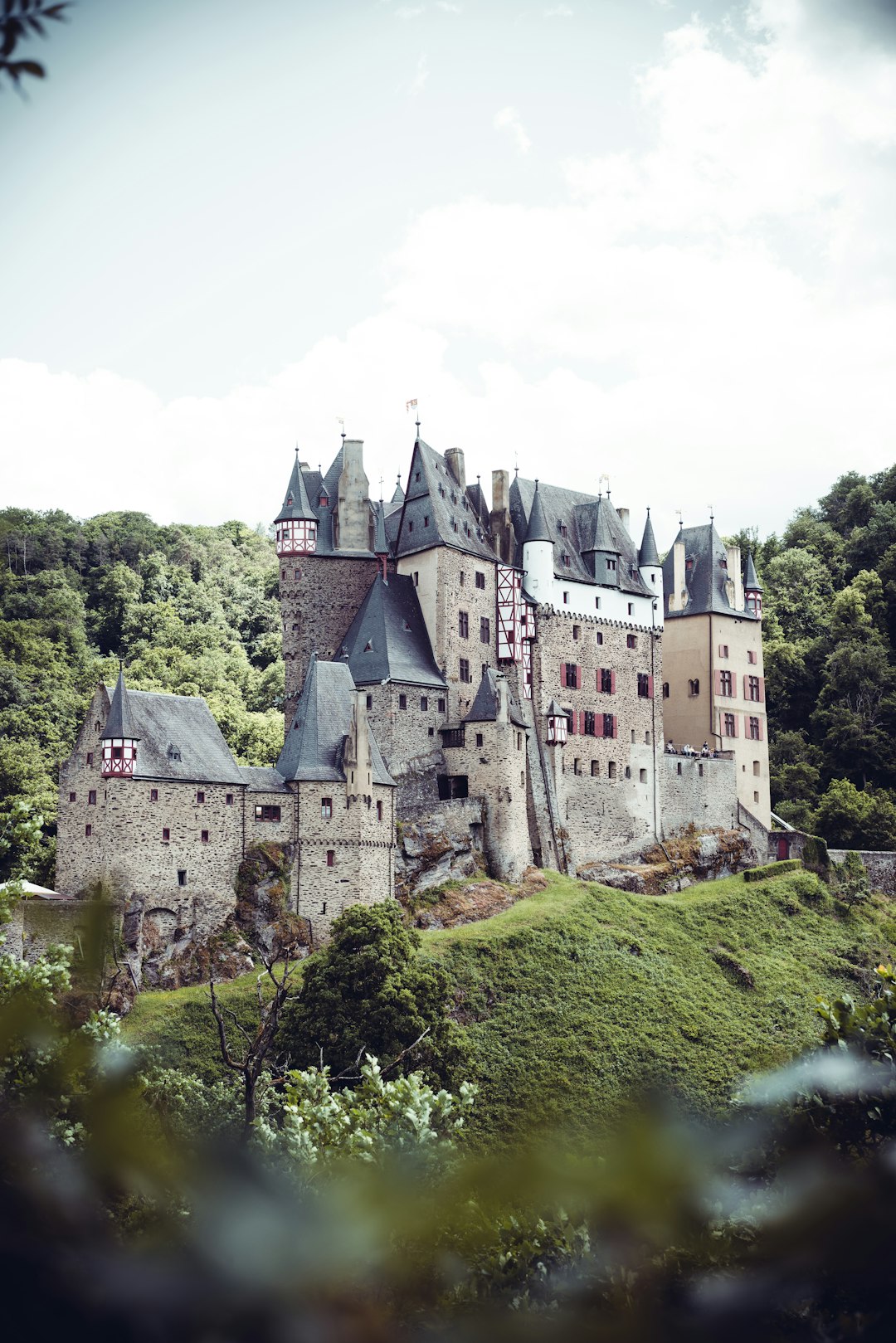
When Jacob and Wilhelm Grimm published the first volume of their Kinder- und Hausmärchen in 1812, it was not a glossy children’s book but a scholarly collection with footnotes, aimed at fellow academics. Over the next 45 years they revised it seven times, softening the violence, sharpening the morals, and turning cruel mothers into stepmothers. The tales we think of as timeless were edited, reshaped, and argued over by two working philologists who cared far more about German grammar than about princesses. This is Guide № 010 in The Love Germany Guide series.
Who the Brothers Actually Were
Jacob (born 1785) and Wilhelm (born 1786) Grimm came from Hanau and grew up in nearby Steinau an der Straße, where their childhood home is now the Brüder Grimm-Haus museum. They studied law at the Philipps-Universität Marburg, but a professor’s interest in medieval literature pulled them toward language and folklore instead. They worked as librarians and later as professors, and they were rarely apart for their entire lives.
Their fairy-tale collection was, to them, almost a side project. The brothers considered their monumental Deutsches Wörterbuch — a historical dictionary of the German language begun in 1838 — their life’s real work. It was so vast that it was not completed until 1961, more than a century after both men had died. In 1837 both were among the Göttingen Seven, professors at the Georg-August-Universität Göttingen who were dismissed after protesting the Hanoverian king’s suspension of the constitution.
How the Tales Were Really Collected
A common picture has the brothers tramping through villages writing down stories from elderly peasants. In truth, many of their sources were educated, literate, middle-class women from their own social circle in and around Kassel. One of the most important, Dorothea Viehmann, was a tailor’s widow of French Huguenot descent, which means some “German” tales carry clear French threads. A number of stories also came straight from printed books, including French collections by Charles Perrault.
Wilhelm did most of the stylistic rewriting across the editions, giving the tales their familiar storybook rhythm and adding Christian and domestic morals. The scholarly 1812–1815 editions were long and plain; the shorter, polished 1857 edition is the one most later translations are based on. In 2005 the UNESCO Memory of the World Register added the Kinder- und Hausmärchen, recognising its global influence.
The German Fairy Tale Route
Germany links the Grimm sites along the Deutsche Märchenstraße (German Fairy Tale Route), a roughly 600-kilometre touring road that runs from Hanau in the south up to Bremen in the north. It threads together towns and castles associated with the brothers and with individual tales, and it is one of Germany’s oldest themed holiday routes, established in 1975.
Along the way, the Reinhardswald forest holds the Sababurg, widely marketed as the Sleeping Beauty castle, while the town of Alsfeld leans on its Little Red Riding Hood connections. The route is signposted for drivers but also suits cyclists and anyone combining several stops over a few days rather than rushing one castle.
Grimm Landmarks You Can Visit
The flagship museum is GRIMMWELT Kassel, which opened in 2015 on the Weinberg terraces. Kassel is where the brothers spent many of their most productive years, and the museum organises itself around the German alphabet, mixing original manuscripts with interactive and contemporary art installations. It is as much about language as about fairy tales.
Two of the best-known tales are tied to real northern towns. In Hameln, the Pied Piper story is kept alive by the city of Hameln with summer open-air plays and a costumed rat-catcher, and the tale is unusual in that it may echo a genuine medieval event in which many of the town’s children vanished in 1284. Far to the north, the city of Bremen is home to the Town Musicians statue near the town hall, where visitors rub the donkey’s front legs for luck — though in the tale itself the four animals never actually reach Bremen.
How the Tales Changed Over Time
If you read an early Grimm edition, the darkness is striking. In their Snow White, the jealous queen is Snow White’s own biological mother in the 1812 text; she becomes a stepmother only in later editions. Cinderella’s stepsisters cut off parts of their feet to fit the slipper, and birds peck out their eyes. The brothers steadily removed sexual content and intensified punishments for villains, shaping the tales toward a 19th-century idea of what children should read.
The brand most people associate with these stories today is Disney, whose 1937 Snow White and later films smoothed the endings even further. It is worth remembering that the Grimms did not invent these plots; they collected and edited versions that had circulated orally and in print across Europe for generations.
Myths Worth Retiring
Myth: The Grimms wrote the fairy tales. They collected, compiled, and heavily edited them. The underlying stories came from oral tellers and earlier printed sources, many of them not uniquely German.
Myth: The tales were always gentle children’s stories. The first editions contained graphic violence and were written for scholars; the softening happened edition by edition over four decades, mostly in response to what adult buyers wanted for their children.
Myth: Their fairy-tale book was their greatest achievement. The brothers themselves prized their linguistic work, especially the Deutsches Wörterbuch and Jacob’s foundational studies of German grammar and sound changes.
Frequently Asked Questions
Where were the Brothers Grimm born?
Both were born in Hanau, in the state of Hesse — Jacob in 1785 and Wilhelm in 1786. The family later moved to Steinau an der Straße, where their former home is now a dedicated museum.
What is the best single place to learn about them?
For most visitors, GRIMMWELT in Kassel is the strongest all-round museum, combining original materials with modern exhibits. If you want the birthplace-and-childhood angle, pair it with the Brüder Grimm-Haus in Steinau.
Are the tales really that different from Disney versions?
Often, yes. Endings are harsher, villains are punished more brutally, and some figures Disney made kindly were originally crueller. Reading a close translation of the 1857 edition, or an early edition, shows just how much was changed on the way to the screen.
More The Love Germany Guides
The Love Germany Guide is a numbered series — one tightly focused subject at a time, each with its own downloadable collectible edition. Guide № 001 is The Pretzel (Brezel), Guide № 002 is Oktoberfest, Guide № 003 is The Beer Stein, Guide № 004 is German Beer & the Purity Law (Reinheitsgebot), Guide № 005 is German Beer Garden Etiquette, Guide № 006 is German Slang & Denglisch, Guide № 007 is German Riesling & Wine Culture, Guide № 008 is Oompah Bands, Guide № 009 is Lederhosen & Dirndl, This is Guide № 010. More editions are on the way.
🇩🇪 Join Love Germany
Every week, get hidden stories, local secrets, and travel inspiration from people who live and love it.
Tours & experiences in Germany


Powered by Viator. Some links are affiliate links — we may earn a small commission at no extra cost to you.