
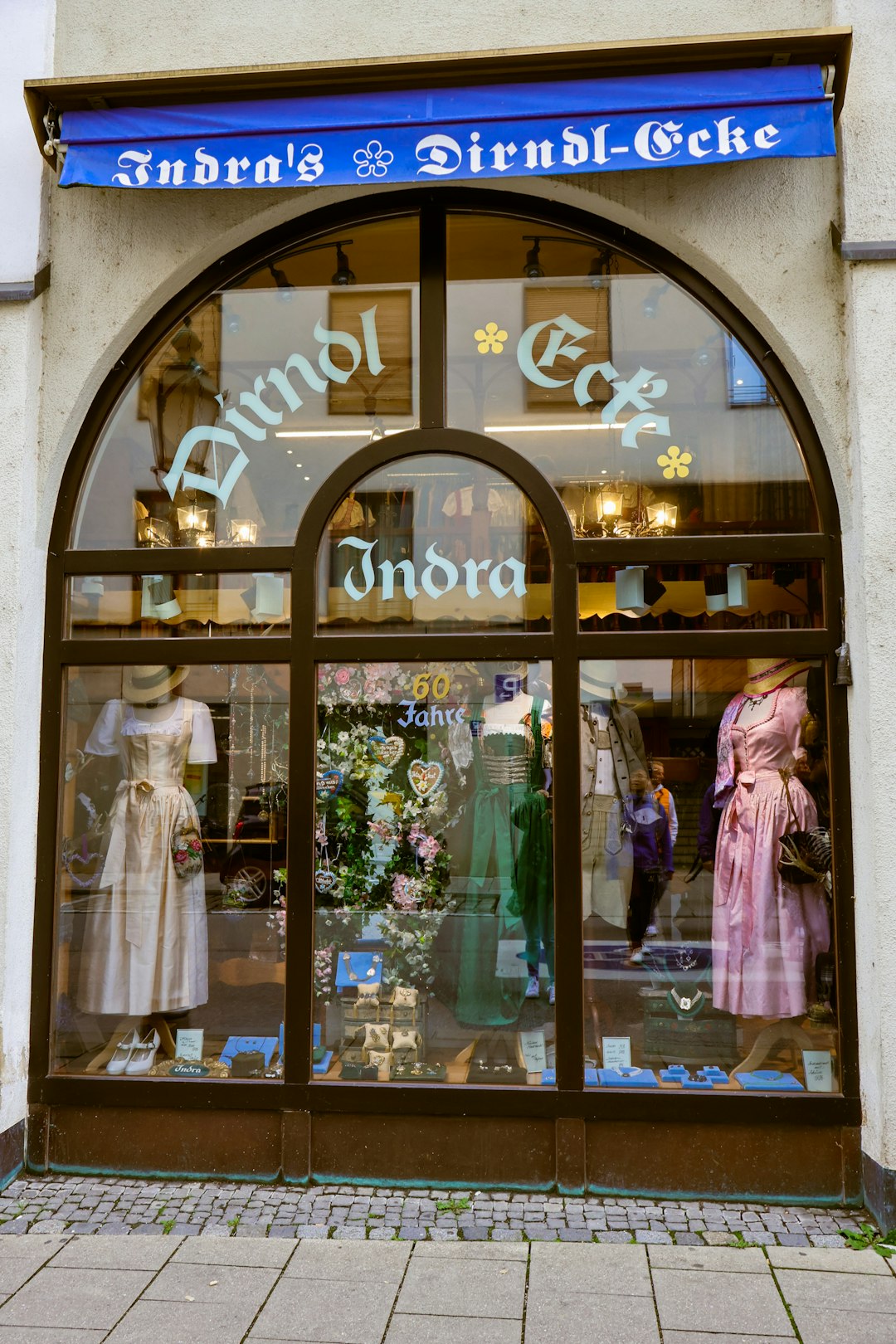
A properly made pair of Lederhosen is not bought for a single season — it is bought to be handed down. Tanned deer or goat leather softens with every wearing, darkens where hands rest, and picks up a grease-and-weather patina that collectors prize so highly that a decades-old pair often costs more second-hand than new. That stubborn durability is the whole point: these were working clothes long before they were festival clothes. This is Guide № 009 in The Love Germany Guide series.
Get the Full Collectible Guide (Free PDF)
Lederhosen & Dirndl — in a beautifully designed, printable booklet. The Love Germany Guide № 009.
From Workwear to Heritage Dress
Lederhosen — literally “leather trousers” — began as practical breeches for farmers, hunters, woodsmen and labourers across the Alpine stretch of Bavaria, Austria and Tyrol in the 18th century. Leather survived mud, splinters, horn and thorn in a way that woven cloth could not, which is why it clothed people who worked outdoors for a living. The garment’s shift from humble workwear to proud regional dress came in the 19th century, helped along when aristocrats and royalty adopted peasant styles for hunting and country life, lending the clothes a prestige their original wearers never enjoyed.
The Dirndl followed a similar arc. The word comes from the Bavarian-Austrian Dirn, meaning a young woman or maidservant, and the dress started as the everyday outfit of domestic and farm workers. From roughly the 1870s onward, city dwellers and holidaymakers took up a prettier, tailored version as fashionable summer “country” wear, and by the early 20th century it had become firmly associated with Alpine identity rather than with service.
How a Pair of Lederhosen Is Actually Made
A traditional pair is cut from deerskin, goatskin or cowhide, with deerskin treated as the finest and most expensive. The defining feature is the drop-front flap — the Latz — a buttoned panel across the front that folds down, a design once genuinely practical and now the garment’s signature. Braces (H-shaped suspenders) hold the breeches up, joined across the chest by a decorated horizontal bridge called the Steg, often carved from bone or stamped metal.
Lengths vary by region and occasion: short kurze Lederhosen end above the knee, while Bundhosen reach to just below it and are usually worn with calf-warmers known as Loferl and sturdy Haferlschuh shoes. The embroidery is not random decoration — motifs such as oak leaves and edelweiss, and particular colours of thread, historically signalled a wearer’s home valley or club.
Anatomy of the Dirndl
A Dirndl is really four pieces working together: a fitted bodice (Mieder), a blouse worn beneath it (Bluse), a full gathered skirt, and an apron (Schürze) tied over the front. The blouse is traditionally short, ending near the ribcage so it sits cleanly under the bodice. Everyday and work Dirndls use plain cotton or linen in muted colours; the elaborate silk versions seen at weddings and festivals are the dressed-up end of a very broad spectrum.
Styles are strongly regional. The Miesbacher Tracht from Upper Bavaria, with its distinctive dark bodice and silver fittings, became something of a reference standard in the 20th century and influenced how outsiders picture the “classic” look. What counts as correct in one Alpine valley can look subtly wrong in the next.
The Trachten Clubs That Kept It Alive
Much of what survives today was deliberately preserved by Trachtenvereine — traditional-costume clubs that document, sew and wear regional dress. The movement is usually traced to a club founded in 1883 in Bayrischzell in the Bavarian Alps, after which similar societies spread rapidly through the region. These clubs still parade, dance and worship in full Tracht, which is the simplest proof that Lederhosen and Dirndl are living garments and not merely festival fancy dress.
Where to See, Buy, and Wear It
Munich is the natural starting point. Established Trachten houses such as Loden-Frey and Angermaier sell everything from entry-level pieces to heirloom-grade leather, and the department store Ludwig Beck on Marienplatz carries Tracht as well. For the historical thread, the Bayerisches Nationalmuseum holds folk costume among its collections, and the city’s official portal at muenchen.de is a reliable guide to what is on.
The best-known place to see Tracht worn en masse is of course the Oktoberfest, but it is far from the only one. Stuttgart’s Cannstatter Volksfest and the Gäubodenvolksfest in Straubing draw their own crowds in full regional dress, and countless village festivals, weddings and church parades across Bavaria and Austria do the same throughout the year.
Myths Worth Retiring
Myth: Lederhosen and Dirndl are “the German national costume.” They are specifically Alpine — rooted in Bavaria, Austria and Tyrol. Most of northern and central Germany has its own, quite different folk dress, and plenty of Germans elsewhere never wore Lederhosen at all until modern festival culture spread south-to-north.
Myth: The side you tie the apron bow on is an ancient, strict rule. The convention — right for taken or married, left for single, centre-front often read as neutral or for children, and back for widows or servers — is widely repeated today, but it is a relatively modern and informal code rather than a centuries-old law, and not everyone observes it.
Myth: Real Lederhosen are just an expensive version of a costume. Genuine leather breeches are built to be worn for decades and improve with age; the stiff, cheap polyester “Wiesn” outfits sold for a single night are a separate product entirely, closer to fancy dress than to Tracht.
Frequently Asked Questions
Which side should a Dirndl apron be tied on?
By the common modern convention, a bow on the wearer’s right signals married or spoken-for, on the left means single, tied at the centre-front is read as neutral (or traditionally for children), and at the back is associated with widows or with serving staff. It is a social cue rather than a binding rule, so nobody will be offended if you simply tie it where it looks best.
Why are authentic Lederhosen so expensive?
Good pairs are hand-finished from tanned deer, goat or cowhide, with hand embroidery and solid fittings, and they are made to last a lifetime of wearing. That craftsmanship puts quality new pairs into the hundreds of euros, which is also why well-worn vintage leather is sought after and holds its value.
Can visitors who aren’t Bavarian wear them?
Yes — wearing Tracht at Oktoberfest and similar festivals is welcomed rather than frowned upon, and locals generally take it as a compliment. If you want to look the part rather than touristy, buy from an established Trachten shop instead of a costume stall, and keep accessories simple.
More The Love Germany Guides
The Love Germany Guide is a numbered series — one tightly focused subject at a time, each with its own downloadable collectible edition. Guide № 001 is The Pretzel (Brezel), Guide № 002 is Oktoberfest, Guide № 003 is The Beer Stein, Guide № 004 is German Beer & the Purity Law (Reinheitsgebot), Guide № 005 is German Beer Garden Etiquette, Guide № 006 is German Slang & Denglisch, Guide № 007 is German Riesling & Wine Culture, Guide № 008 is Oompah Bands, This is Guide № 009. More editions are on the way.
🇩🇪 Join Love Germany
Every week, get hidden stories, local secrets, and travel inspiration from people who live and love it.
Tours & experiences in Germany


Powered by Viator. Some links are affiliate links — we may earn a small commission at no extra cost to you.