The first Oktoberfest was a wedding party. In October 1810, Crown Prince Ludwig of Bavaria married Princess Therese of Saxe-Hildburghausen, and the citizens of Munich were invited to celebrate on the fields outside the city gates. Those fields were named Theresienwiese — “Therese’s Meadow” — in the bride’s honour, and Münchners still call the festival grounds “die Wiesn” to this day. This is Guide № 002 in The Love Germany Guide series.
Get the Full Collectible Guide (Free PDF)
Oktoberfest — in a beautifully designed, printable booklet. The Love Germany Guide № 002.
A Royal Wedding That Never Ended
The 1810 celebration closed with a horse race, and the decision to repeat the race the following year is what turned a one-off royal event into an annual tradition. Over the nineteenth century the fair grew to include agricultural shows, carousels, and beer stands, gradually shifting from a rural festival into the beer-centred event recognised today. Because the horse race was the original centrepiece, the festival kept its October identity even as its start date crept earlier.
Why It Actually Happens in September
Despite the name, most of Oktoberfest takes place in September. The festival runs for roughly 16 to 18 days and traditionally ends on the first Sunday of October. The start was moved earlier in the calendar during the nineteenth century for a practical reason: September nights in Munich are warmer and the days longer, which made the outdoor celebration far more comfortable. So while the closing days fall in October, the bulk of the drinking, dancing, and parading happens under late-summer skies.
The Beer Is Strictly Regulated
Only beer brewed within Munich’s city limits by one of six breweries may be served in the festival tents and called Oktoberfestbier. Those six are Augustiner, Hacker-Pschorr, Löwenbräu, Paulaner, Spaten, and Hofbräu. The beer is a stronger, maltier lager than the everyday German helles, and it is served exclusively in the one-litre glass stein known as a Maß (pronounced “mass”). The breweries also brew to the standards associated with the 1516 Reinheitsgebot, the Bavarian purity rules limiting beer to water, barley, and hops.
“O’zapft is!” — The Tapping of the First Keg
Oktoberfest officially begins when the Mayor of Munich taps the first keg in the Schottenhamel tent and declares “O’zapft is!” — Bavarian dialect for “It’s tapped!” No beer may be poured across the grounds until this ceremony is complete, usually around noon on the opening Saturday. A mayor’s skill is measured by how few blows of the mallet it takes to set the tap; the record is a matter of local pride, and a clumsy tapping is remembered for years.
Tents, Tracht, and What to Actually Wear
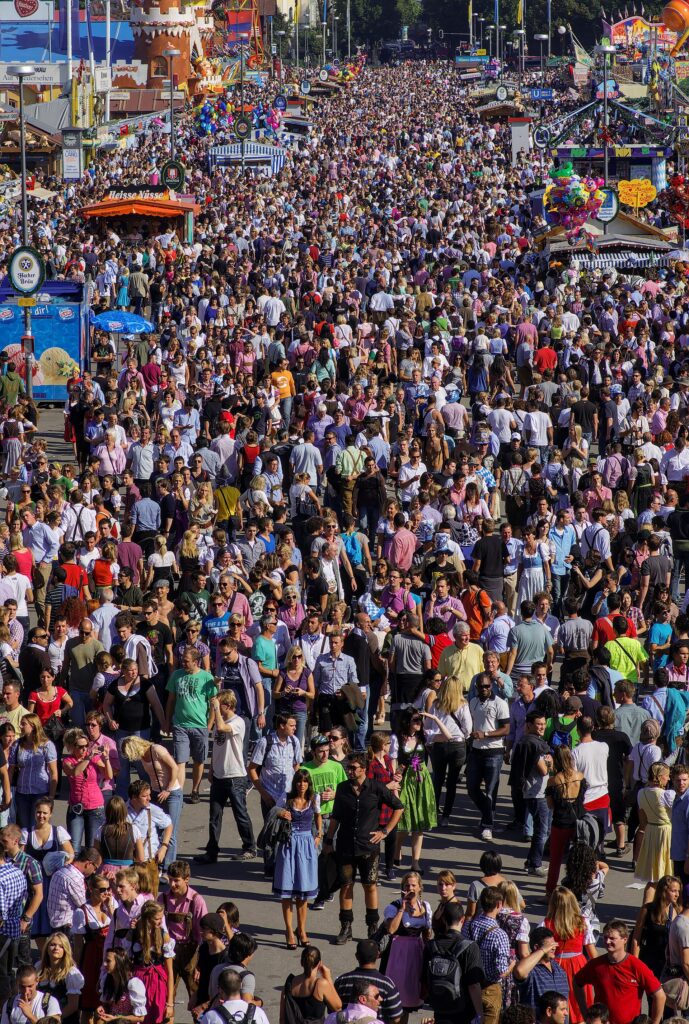
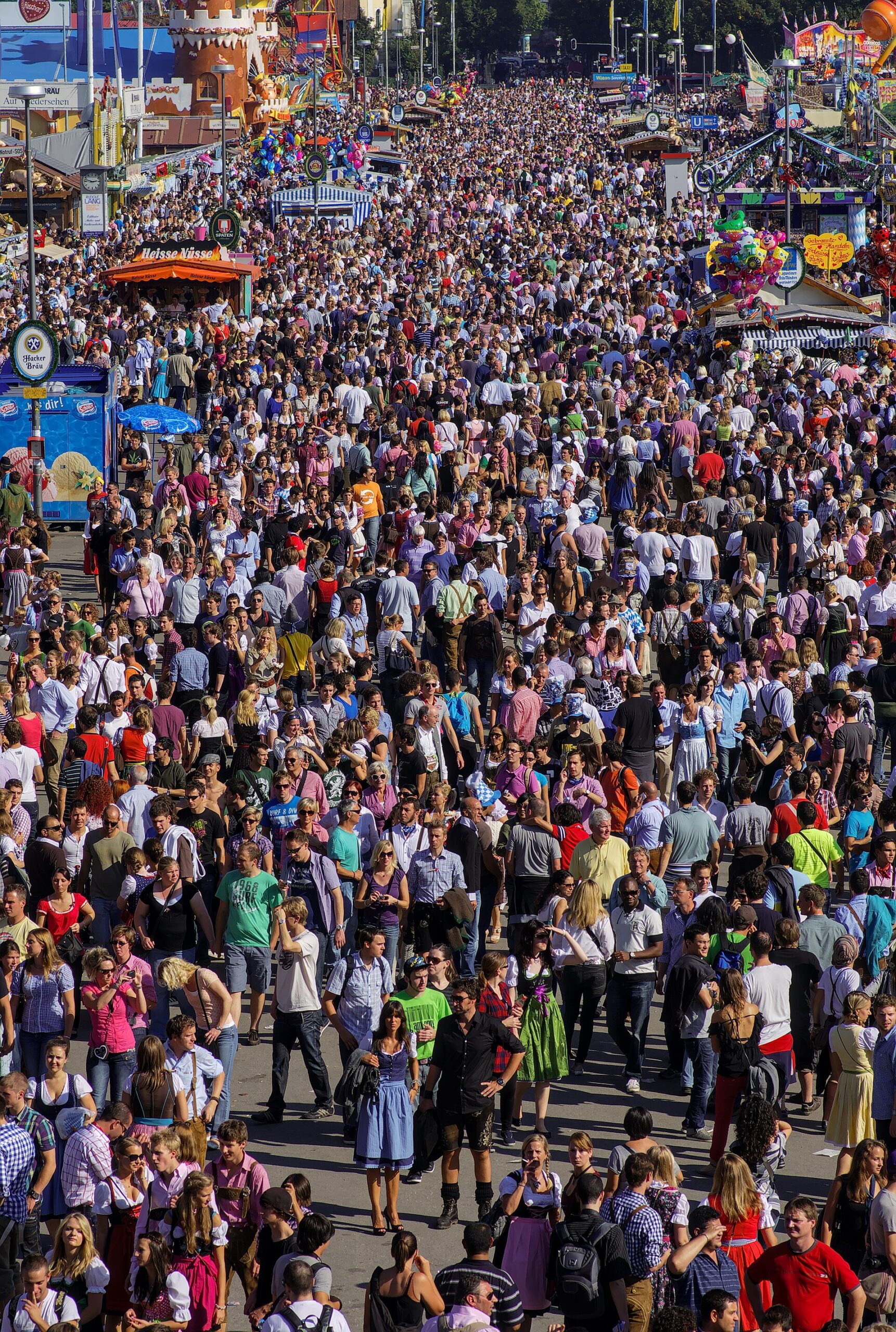
The festival is built around large temporary beer halls run by the breweries and Munich restaurateurs — some seating several thousand people — plus a full funfair of rides and stalls. Many visitors wear traditional Bavarian Tracht: Lederhosen for men, and the Dirndl dress for women. There is a widely repeated bit of folklore about the Dirndl apron bow signalling relationship status — tied on the left for single, on the right for taken — though this is treated more as a playful custom than a strict rule.
Getting a Seat and Reserving a Table
Entry to the grounds and to the tents is free, and there is no admission ticket for Oktoberfest itself. The catch is that beer and food are only served to people seated at a table, and during peak evenings and weekends the tents fill completely and close their doors when full. Table reservations are made directly with individual tents, often months in advance, and usually come bundled with vouchers for beer and food rather than being sold as a bare seat.
Myths Worth Retiring
Myth: Oktoberfest is mostly in October. In reality, the festival now starts in mid-to-late September, and only its final days spill into October — a change made generations ago to take advantage of milder weather.
Myth: You can order any German beer you like. Only the six Munich breweries may serve their special Oktoberfestbier inside the official tents, and it comes in a one-litre Maß — there is no small pour on the standard menu.
Myth: Lederhosen and Dirndl are tourist costumes. Tracht is genuine regional dress with deep roots in Bavaria and the Alps, worn earnestly by locals well beyond the festival, at weddings and holidays throughout the year.
Frequently Asked Questions
When does Oktoberfest take place?
It runs for roughly 16 to 18 days, beginning in mid-to-late September and traditionally ending on the first Sunday of October. In some years the closing date extends to 3 October to include the German Unity Day holiday.
Do I need a ticket to get in?
No. Entry to the Theresienwiese grounds and to the beer tents is free. You only pay for what you eat, drink, and ride, though you must be seated at a table to be served beer, and reserving a table in advance is wise for busy times.
How much beer is in a Maß?
A Maß holds one full litre — a little over two US pints. It is the only standard serving size in the tents, and the Oktoberfestbier inside it is stronger than typical German lager, so it is worth pacing yourself.
More The Love Germany Guides
The Love Germany Guide is a numbered series — one tightly focused subject at a time, each with its own downloadable collectible edition. Guide № 001 is The Pretzel (Brezel), This is Guide № 002. More editions are on the way.
🇩🇪 Join Love Germany
Every week, get hidden stories, local secrets, and travel inspiration from people who live and love it.
Tours & experiences in Germany


Powered by Viator. Some links are affiliate links — we may earn a small commission at no extra cost to you.