
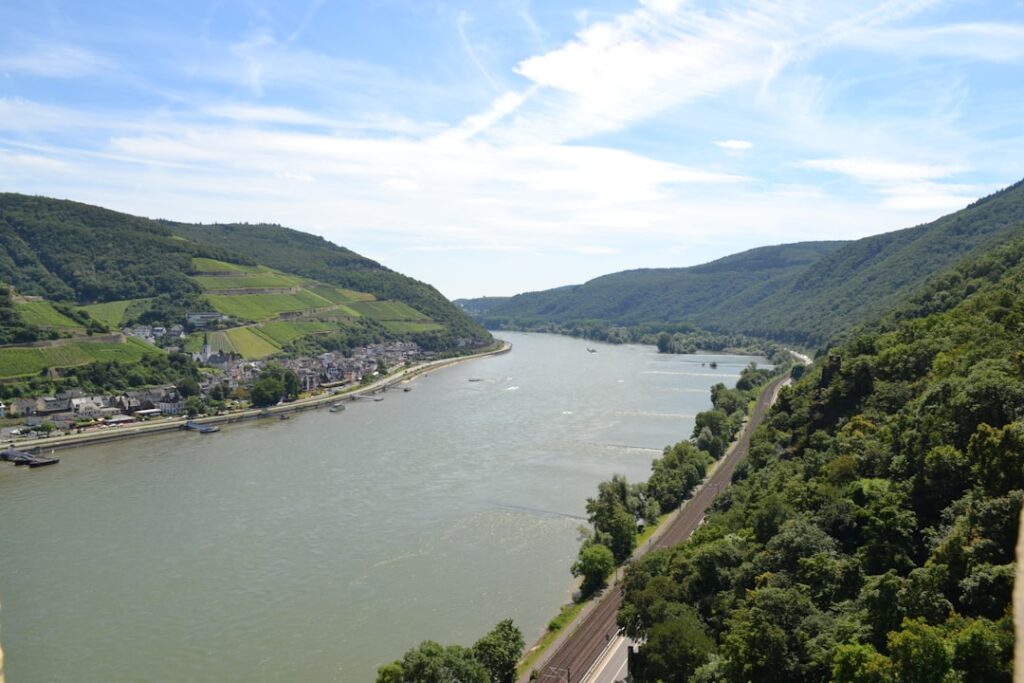
The Rhine Gorge between Rüdesheim and Koblenz is Germany’s most dramatic wine region. Steep slate slopes rise directly from the river, terraced vineyards cling to hillsides at impossible angles, and every bend reveals another ruined castle watching over the water. This is where Germany’s finest Riesling wines are born, in a landscape so striking that UNESCO designated the entire 65-kilometer stretch a World Heritage Site.
The town of Rüdesheim am Rhein serves as the southern gateway to this wine wonderland, and it’s where you’ll find some of the region’s best wine experiences packed into cobblestoned lanes barely wide enough for a delivery truck.
Drosselgasse: The Rhine’s Wine Lane
Drosselgasse is Rüdesheim’s famous wine alley, a 144-meter pedestrian lane crammed with wine taverns, each spilling music and laughter into the street from spring through fall. Yes, it’s touristy—unabashedly so—but it’s also genuine. These aren’t theme-park replicas; they’re real family-run Weinstuben that have been pouring local Riesling for generations.
Visit in late afternoon before the river cruise crowds arrive. Order a glass of Riesling Spätlese from the Rüdesheimer Berg, the steep slope that rises directly behind the town. The slate soil here produces wines with a distinctive mineral edge and crisp acidity that cuts through the richness of local dishes like Spundekäs, a creamy cheese spread seasoned with onions and paprika.
For a quieter experience, skip Drosselgasse entirely and head to the wine estates themselves. Weingut Georg Breuer on Grabenstrasse and Weingut Leitz on Theodor-Heuss-Strasse offer tastings in their historic cellars, where you can sample single-vineyard Rieslings while learning directly from the winemakers.
Assmannshausen: The Red Wine Village
Just three kilometers upstream from Rüdesheim, the village of Assmannshausen clings to a particularly steep bend in the river. While the rest of the Rhine Gorge is white wine country, Assmannshausen has specialized in Spätburgunder—Germany’s Pinot Noir—since the 12th century.
The Höllenberg vineyard here produces some of Germany’s finest red wines, grown on slate slopes so steep that harvest must be done entirely by hand. The microclimate in this sheltered bend provides just enough warmth for the finicky Pinot Noir grape to ripen fully.
Stop at Krone Assmannshausen, a historic hotel and wine estate that has been in the same family since 1541. Their wood-paneled restaurant serves local game dishes paired with their estate Spätburgunder, including vintages from their oldest vines, some over a century old. The venison ragout with spätzle and their 20-year-old Spätburgunder is worth the splurge.
The Niederwald Monument and Vineyard Views
Above Rüdesheim, the Niederwald Monument offers the Rhine Gorge’s best panorama. You can hike up through the vineyards in about 45 minutes, or take the cable car from the edge of town. The monument itself—a massive allegory of German unity erected in 1883—is impressive, but the view is what you came for.
From this height, you can see the entire geography that makes Rhine Riesling special: the river reflecting light back onto the grapes, the slate slopes storing heat through cool nights, the steep angles that maximize sun exposure. In late September and early October, the vineyards turn gold and rust, and the air smells of fermenting grapes.
On the way down, take the chairlift to Assmannshausen rather than returning to Rüdesheim. It’s a gentle 20-minute glide over the vineyards, with the river far below and castle ruins dotting the opposite bank.
Practical Wine Touring Tips
The Rhine Gorge is easily reached by train from Frankfurt (one hour to Rüdesheim) or from Cologne via Koblenz. The train line hugs the river through the entire gorge, with stations in every wine village. If you’re visiting multiple towns, buy a Rheinland-Pfalz-Ticket, which covers unlimited regional trains for a day.
Wine estate tastings typically require advance booking, especially during harvest season in September and October. Most estates require a minimum of two people and charge €15-25 per person for a structured tasting of 5-6 wines. English is widely spoken at the larger estates.
The KD Rhine river cruise between Rüdesheim and Koblenz offers a different perspective on the vineyards and passes more than 20 castles in two hours. Trains run frequently in both directions, so you can cruise one way and train back.
For the best wine tavern experience, visit on a weekday evening or Sunday afternoon when locals outnumber tourists. Don’t be shy about sharing a table—it’s standard practice, and you’ll likely end up in conversation with vineyard workers and winemakers.
Want more stories from Germany’s wine regions, hidden villages, and local traditions? Subscribe to the Love Germany newsletter and get one short story a day, delivered to your inbox each morning.
Tours & experiences in Germany


Powered by Viator. Some links are affiliate links — we may earn a small commission at no extra cost to you.