
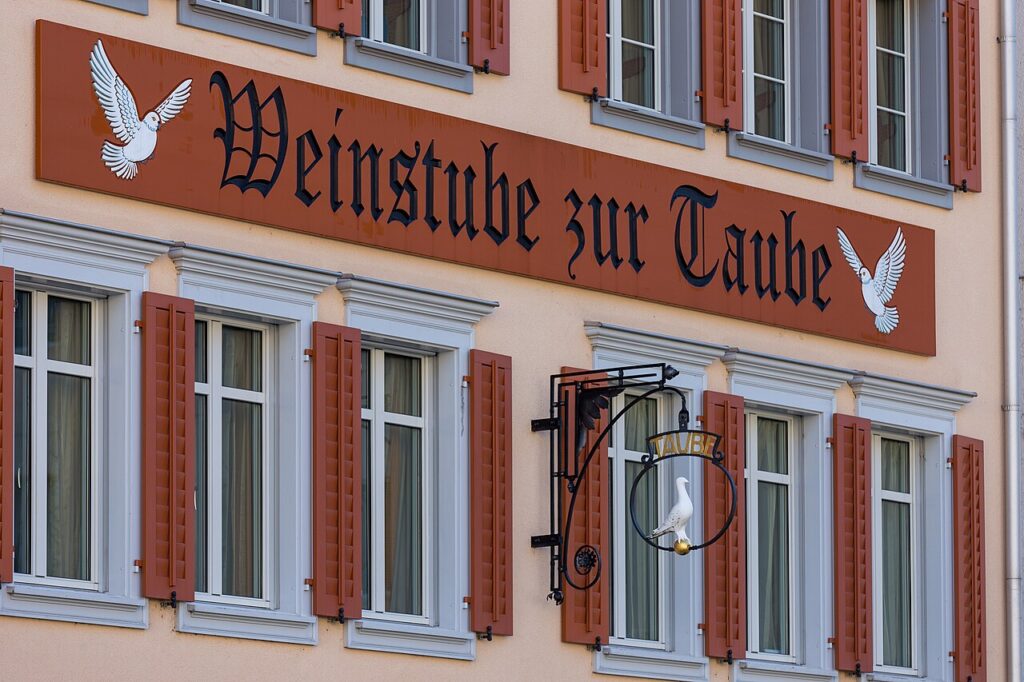
If you want to understand German wine culture, skip the formal tasting rooms and find a Weinstube. These unpretentious wine taverns—often family-run for generations—are where winemakers pour their own bottles, locals settle in for the evening, and the line between guest and regular blurs after the second glass of Riesling.
A Weinstube isn’t a wine bar in the modern sense. It’s a neighborhood institution, usually attached to a small winery or tucked into the cellar of a centuries-old building. The menu is short, the wines are local, and the atmosphere is exactly what you’d hope for: wood tables, low ceilings, and conversations that last until closing.
Where to Find the Best Weinstuben
The Rhine and Moselle valleys claim the highest concentration, but nearly every wine region has its own traditions. In Rüdesheim and Bingen, Weinstuben line the narrow streets behind the Rhine promenade, pouring Rheingau Rieslings by the glass or the traditional Römer—a squat, dimpled wine glass that’s been used here for centuries.
The Moselle towns of Bernkastel-Kues, Traben-Trarbach, and Cochem hide some of the coziest examples. Look for hand-painted signs and vine-covered doorways. In Cochem, Alte Gutsschänke and Weinstube Rademacher pour wines from the steep slate slopes visible through the windows.
Franconia’s Weinstuben are a world apart. In Würzburg and Volkach, the wine comes in the signature Bocksbeutel—a flat, rounded bottle—and the grape is Silvaner, not Riesling. The food leans toward hearty: Schäufele (pork shoulder), Bratwurst, and Zwiebelbrot (onion bread). Juliusspital Weinstuben in Würzburg is attached to a historic charitable foundation that’s been making wine since 1576.
The Palatinate (Pfalz) offers a more relaxed, sunny style. In Deidesheim, Forst, and Bad Dürkheim, Weinstuben double as seasonal Straußwirtschaften—temporary taverns where winemakers open their own homes or barns for a few weeks each year, serving their new vintage with cold cuts, cheese, and fresh bread.
What You’ll Drink
Weinstuben specialize in wines from their own cellars or their immediate neighbors. The selection is rarely more than a dozen bottles, but each one represents the terroir of the region. In the Rhine valley, that means crisp, mineral Rieslings from steep vineyards. On the Moselle, expect lighter, fruit-forward styles with a touch of slate. In Baden, near Freiburg and along Lake Constance, you’ll find Pinot Noir (Spätburgunder) and Grauburgunder (Pinot Gris).
Ask for the Hauswein—the house wine—or try a Schoppen, a traditional quarter-liter pour. Many Weinstuben offer a Probierteller, a tasting flight of three or four wines, often with a small plate of cheese or sausage.
Don’t overlook the Federweißer in autumn. This partially fermented grape must is cloudy, sweet, and slightly fizzy—served only during the weeks of harvest, typically late September through October. It pairs perfectly with Zwiebelkuchen (onion tart), the seasonal specialty that appears on every Weinstube menu when the grapes come in.
The Food (And Why It’s Simple)
Weinstuben aren’t restaurants. The kitchen, if there is one, serves a handful of cold and warm dishes designed to complement the wine, not compete with it. Expect Wurstsalat (sliced sausage salad with onions and vinegar), Handkäse mit Musik (sour milk cheese with onions and caraway), Flammkuchen, and seasonal specials like asparagus in spring or game in winter.
In Franconia, look for Gerupfter—a spiced cream cheese spread served with dark bread. In the Rheingau, Spundekäs (whipped cheese with paprika and onions) is the standard accompaniment to a glass of Riesling.
Portions are modest. The point is to linger, order another glass, and let the evening unfold at the pace of the locals around you.
How to Behave Like a Regular
Seating is often communal. If the Weinstube is busy, you may be asked to share a table—say yes. It’s the fastest way to strike up a conversation and get wine recommendations you won’t find in any guidebook.
Don’t rush. Weinstuben open in the late afternoon and fill up slowly. Locals arrive after work, settle in with a Schoppen, and stay for hours. Order your wine, try a snack, and see where the evening takes you.
Pay attention to seasonal closures. Many Weinstuben, especially in smaller villages, operate on irregular schedules or close entirely in winter. Call ahead or check the handwritten notice on the door.
And if you’re visiting during harvest season, ask if the owner is pouring a new vintage or hosting a small tasting. You might find yourself in the cellar, tasting wine straight from the barrel.
Germany’s Weinstuben offer something no tour or tasting room can: an authentic place at the table. Subscribe to the Love Germany newsletter for one short story a day about the country’s hidden corners, local traditions, and the people who keep them alive.
Tours & experiences in Germany


Powered by Viator. Some links are affiliate links — we may earn a small commission at no extra cost to you.