
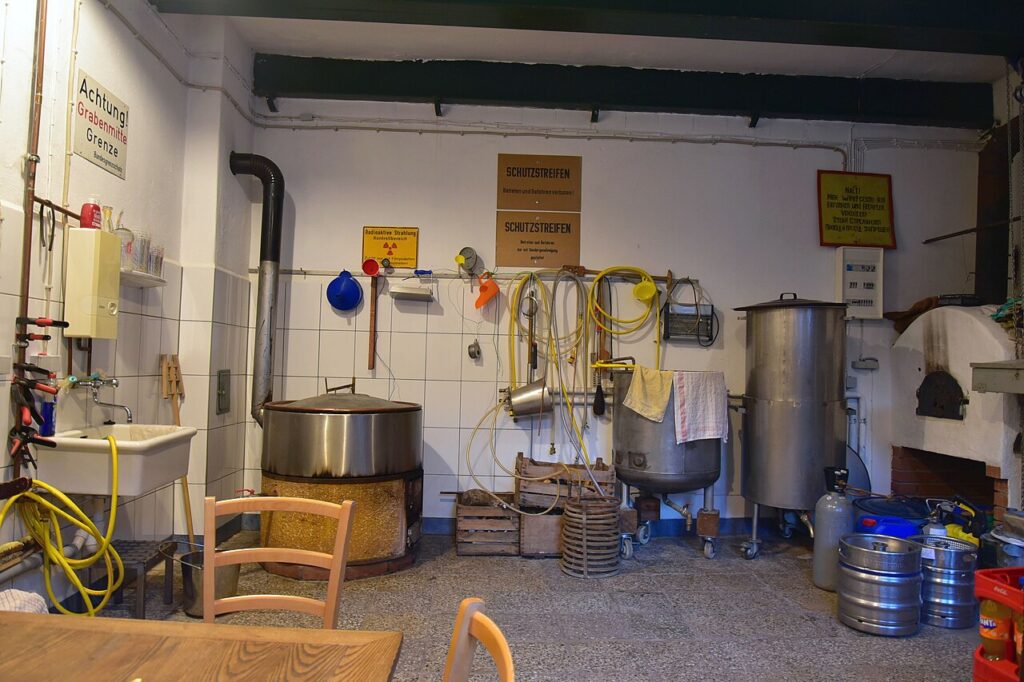
Long before Bavaria’s industrial breweries filled the world’s beer halls, monks were brewing in monastery cellars across Germany. Today, a handful of abbey breweries still operate, some run by active monastic communities, others continuing the tradition in former religious houses. These aren’t museums—they’re working breweries where centuries-old recipes meet modern quality standards, and where you can taste beer that’s been refined over generations.
Andechs: Bavaria’s Pilgrimage Brewery on the Holy Mountain
Thirty kilometers southwest of Munich, the Benedictine monastery of Andechs sits atop the Heiliger Berg, overlooking the Ammersee. Monks have brewed here since 1455, and today the monastery produces some of Bavaria’s most respected beers—seven varieties ranging from the crisp Bergbock Hell to the dark, malty Doppelbock Dunkel.
The monastery’s Bräustüberl is one of Germany’s great beer halls: vaulted ceilings, long wooden tables, and views across the lake. Order the Andechser Spezial Hell and a plate of roast pork with potato dumplings. The beer garden holds 1,500 people in summer, when pilgrims, day-trippers, and serious beer drinkers mix under the chestnut trees.
You can tour the brewery Wednesdays through Sundays (reserve ahead), but even without a tour, the on-site shop sells monastery cheeses, schnapps, and beer to take home. Take the S-Bahn from Munich to Herrsching, then bus 951 or walk the five-kilometer pilgrimage path uphill.
Weltenburg Abbey: Europe’s Oldest Monastic Brewery
Founded in 1050, Kloster Weltenburg on the Danube holds the title of the world’s oldest continuously operating monastery brewery. The baroque abbey church alone is worth the trip—it’s a Asam brothers masterpiece—but the beer is why most visitors come.
Weltenburg’s Barock Dunkel has won World Beer Cup gold multiple times: a deep mahogany lager with notes of caramel, roasted malt, and just enough bitterness to balance the sweetness. Drink it in the monastery’s beer garden, right on the Danube’s edge, with the limestone cliffs of the Danube Gorge rising behind you.
The most scenic approach is by boat from Kelheim, a 30-minute cruise through the narrowest and most dramatic section of the Danube in Germany. From April through October, boats run hourly. Alternatively, drive to the parking area and walk the final 800 meters. Benedictine monks still live and work here, so visit respectfully.
Ettal: Alpine Beer in a Rococo Setting
In the shadow of the Zugspitze, Kloster Ettal has been brewing since 1330. The monastery, with its unusual twelve-sided baroque church, anchors a small village forty minutes north of Garmisch-Partenkirchen. Benedictine monks still operate the brewery, distillery, and several small businesses on the grounds.
Ettal’s beers lean traditional: a Dunkel, a Curator Doppelbock, and a seasonal Maibock. The Kloster-Bier Dunkel is smooth and approachable, perfect after a day hiking in the Ammergau Alps. The monastery’s hotel and restaurant serve these beers alongside hearty Bavarian fare—roast venison, käsespätzle, and house-made sausages.
You can tour the brewery and distillery with advance booking, or simply stop by the monastery shop to buy beer, liqueurs, and herbal products made on-site. Ettal sits on the Deutsche Alpenstrasse scenic route, making it an easy stop between Munich and Austria.
Scheyern Abbey: A Quieter Brewery Experience
Less known than Andechs but equally traditional, Kloster Scheyern sits in the rolling hills between Munich and Ingolstadt. Benedictine monks have brewed here since the 12th century, though the current brewery dates to the 1980s rebuild. It’s smaller, quieter, and feels more local than Bavaria’s famous monastery breweries.
Scheyern produces five beers, all unfiltered and brewed according to the Reinheitsgebot. The Scheyerner Kloster-Gold is a bright, hoppy lager; the Festbier appears in autumn. The monastery’s Klosterbräustüberl serves these beers with simple, well-executed Bavarian classics. No tour buses, no crowds—just a working monastery where brewing is part of daily life.
From Munich, take the train to Pfaffenhofen, then bus 603 to Scheyern. Or drive—it’s a 40-minute trip north from the city.
What Makes Monastery Beer Different
Legally, there’s no protected designation for monastery beer in Germany, unlike Belgium’s Trappist ales. But the breweries run by or historically tied to religious communities share common traits: long lagering times, traditional recipes, and an emphasis on quality over volume. Many use their own malt houses or source barley and hops locally. Profits typically support the monastic community and its charitable work.
Most abbey breweries offer tours by appointment—contact them directly or check their websites for schedules. Visiting on a weekday means smaller groups and more opportunity to ask questions. And remember these are active religious sites: dress modestly if you plan to enter the church, and keep noise levels respectful in the cloisters.
Whether you’re a serious beer enthusiast or simply curious about how monks transformed brewing into an art, Germany’s monastery breweries offer something rare: beer with a story that stretches back centuries, poured in settings that haven’t changed much since the Middle Ages.
Want more insider stories from Germany, one email at a time? Subscribe to the Love Germany newsletter and get one short story about German culture, history, and travel every day—no fluff, just the good stuff.
Tours & experiences in Germany


Powered by Viator. Some links are affiliate links — we may earn a small commission at no extra cost to you.