Winding through western Germany like a silver ribbon, the Moselle River carves one of Europe’s most dramatic and romantic wine landscapes. Between Trier and Koblenz, the river loops through impossibly steep vineyard-covered slopes, past half-timbered wine villages, and beneath medieval castles that seem to grow straight from the rock. This is the Moselle Valley—Germany’s answer to France’s Loire Valley, but with steeper hillsides, older wines, and perhaps even more charm.
The Moselle (or Mosel in German) Valley produces some of the world’s finest Riesling wines, and the entire region feels designed for slow travel: meandering drives along riverside roads, wine tastings in family-run cellars, and lazy afternoons watching river cruise ships glide past ancient Roman settlements. Whether you’re a wine enthusiast, history buff, or simply seeking one of Germany’s most picturesque corners, the Moselle Valley delivers an unforgettable experience.
Why the Moselle Valley Is Special
What sets the Moselle apart is its dramatic topography. The river’s serpentine course creates steep, south-facing slopes that receive maximum sunlight—perfect for growing wine grapes, but incredibly challenging to farm. These steillagen (steep-slope vineyards) are among the steepest in the world, with some inclines reaching 60 degrees. Vintners must work these slopes largely by hand, creating wines that reflect both exceptional terroir and centuries of winemaking tradition.
The Moselle has been wine country since Roman times—Trier, at the valley’s southern end, was once the capital of the Western Roman Empire. The region’s slate soil, combined with the river’s moderating influence and reflected sunlight, creates ideal conditions for Riesling grapes that produce wines with distinctive minerality and elegant acidity.
Beyond wine, the valley is studded with medieval castles, many still privately owned and inhabited. The region escaped heavy bombing during World War II, leaving intact a remarkable collection of historic towns with cobblestone streets, half-timbered houses, and Gothic churches.
What to See and Do
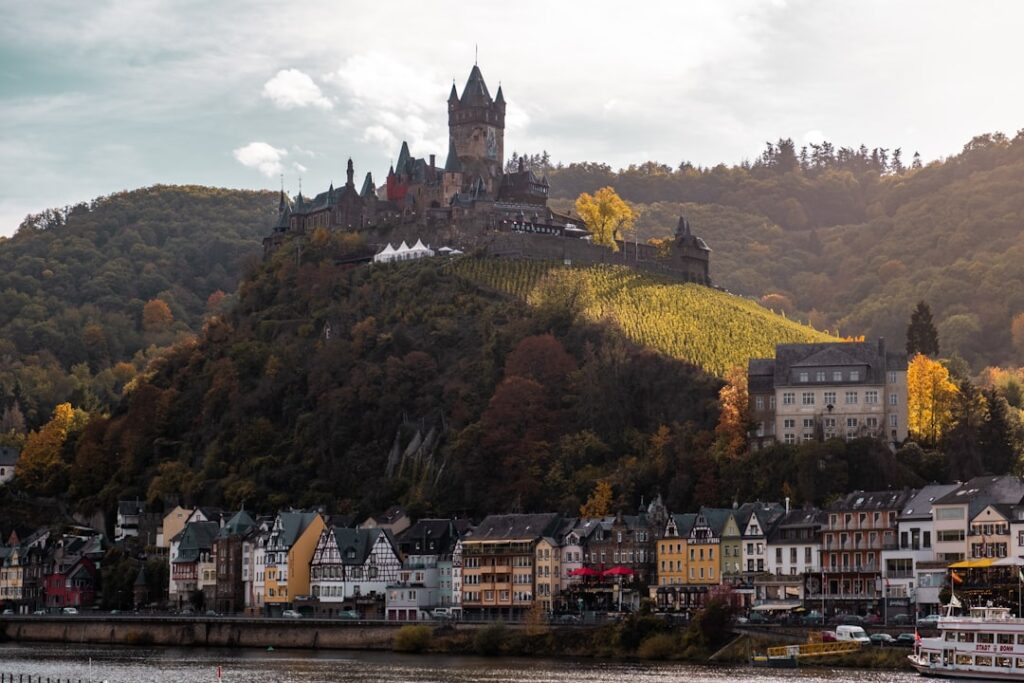
Cochem is the valley’s most picturesque town, dominated by the Reichsburg Castle perched dramatically above the river. The town’s market square, lined with colorful half-timbered buildings, feels like a step back in time. Take the castle tour for stunning valley views, then explore the old town’s winding lanes and wine taverns.
Bernkastel-Kues rivals Cochem as the valley’s most charming destination. Its market square features an ensemble of Renaissance and medieval buildings so perfect it seems almost unreal. The ruined Landshut Castle above town rewards the 30-minute hike with panoramic views. Don’t miss the Moselweinmuseum to understand the region’s winemaking heritage.
Burg Eltz, though technically in a side valley, is one of Germany’s most beautiful castles. Unlike many German castles, it was never destroyed and remains in original condition, still owned by the same family for 33 generations. The 90-minute guided tour reveals stunning medieval interiors.
Trier, Germany’s oldest city, anchors the valley’s southern end. Here you’ll find the country’s best-preserved Roman monuments, including the Porta Nigra gate, Constantine’s throne room, and Roman baths—all UNESCO World Heritage sites.
Of course, wine tasting is the valley’s primary activity. Countless weingüter (wine estates) offer tastings, often by appointment but sometimes walk-in. Look for family operations where the winemaker personally pours and explains their work. Many estates also offer rooms, providing an authentic stay among the vines.
Getting There and Getting Around
The Moselle Valley is easily accessible from several major cities. From Frankfurt, it’s about 90 minutes by car to the mid-valley towns. Koblenz, at the valley’s northern end where the Moselle meets the Rhine, has excellent train connections to Cologne (one hour) and Frankfurt (90 minutes). Trier connects to Luxembourg (45 minutes) and is reachable from Frankfurt in 2.5 hours by train.
Within the valley, driving offers maximum flexibility. The roads along both riverbanks provide constantly changing views, though they’re narrow and winding—not routes for hurrying. Alternatively, regional trains run the valley’s length, stopping at most towns, though service can be infrequent. River cruises, from day trips to multi-day journeys, offer a relaxing way to experience the landscape from water level.
Cycling the Moselradweg, a 240-kilometer dedicated bike path from Metz, France, to Koblenz, has become increasingly popular. The mostly flat, paved trail follows the river closely and passes through all major towns.
Best Time to Visit and Insider Tips
Late spring through early autumn (May-October) is ideal. May and June bring lush green vineyards without summer crowds. September and October offer harvest season atmosphere, with many estates hosting special events and federweisser (partially fermented wine) available. Summer (July-August) is warmest and busiest, especially on weekends.
Winter has its own appeal—fewer tourists, cozy wine taverns, and Christmas markets in December—but some attractions close and weather can be gray.
Insider tips: Book accommodation well ahead for September-October. Consider staying in smaller villages like Beilstein or Ediger-Eller rather than tourist-heavy Cochem. For the best castle view, visit Beilstein and look back at its ruined Metternich Castle. Wednesday and Saturday are market days in Bernkastel—perfect for local produce and atmosphere. If driving, fill up before entering the valley; gas stations are scarce. Finally, pace yourself with wine tastings—the slopes are steep and the wines deceptively easy-drinking.
The Moselle Valley rewards lingering. Give yourself at least three days to truly appreciate this enchanting region where wine, history, and natural beauty blend into one unforgettable experience.