
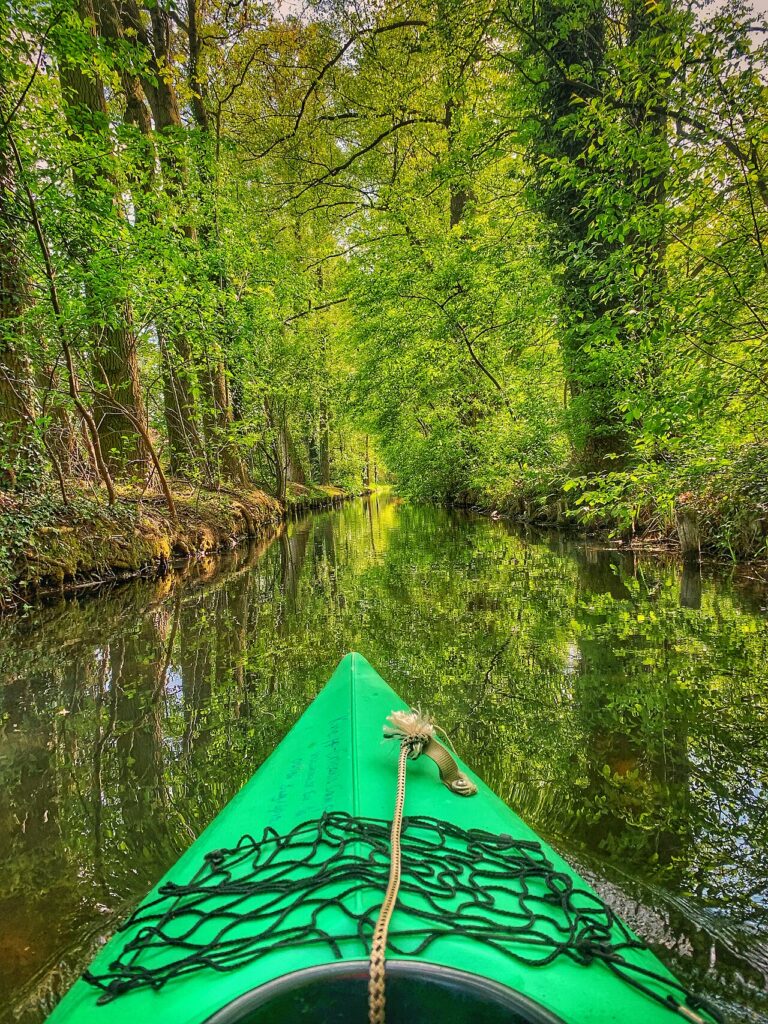
An hour southeast of Berlin, the Spreewald feels like another country. This UNESCO biosphere reserve is a maze of narrow waterways threading through alder forests, where traditional wooden punts glide silently past timbered farmhouses and villagers still speak Sorbian, a Slavic language that predates German settlement by centuries.
The Spree River splits into hundreds of channels here, creating a landscape unlike anywhere else in Germany. Before roads arrived, boats were the only way to move people, goods, and even mail. Today, the Spreewald remains one of Germany’s most distinctive natural areas—and one of its most rewarding day trips from Berlin.
Getting There and Getting Around
Regional trains run hourly from Berlin Hauptbahnhof to Lübbenau and Lübben, the Spreewald’s two main gateways. Lübbenau is the busier tourist hub with more punt operators and restaurants, while Lübben offers a quieter, more authentic feel. The journey takes about an hour, and a Brandenburg-Berlin day ticket covers the round trip.
Once you arrive, the waterways are the point. Traditional punts—flat-bottomed boats propelled by a standing boatman with a long pole—depart from multiple docks in both towns. Tours range from one-hour loops (around €12) to three-hour excursions through remote channels where the only sounds are birdsong and the gentle splash of the pole. Book directly at the docks or reserve ahead during summer weekends.
For more independence, rent a kayak or canoe. Several outfitters near the Lübbenau harbor offer half-day and full-day rentals, with waterproof maps marking routes, locks, and landing spots. The channels are clearly marked, and the current is gentle—perfect for beginners.
What to See and Do
The Spreewald’s charm is in its slowness. Punts drift past riverside beer gardens, pickle farms, and half-timbered houses with gardens that run straight to the water. In Lehde, a hamlet accessible only by boat or footbridge, the Freilandmuseum shows how Spreewald families lived a century ago, with traditional Sorbian costumes, fishing gear, and farmhouses you can walk through.
Sorbian culture remains visible throughout the region. In Burg, the Wendish Museum explores the language, folk art, and Easter egg traditions of the Sorbs, Germany’s only indigenous Slavic minority. Many older residents still speak Sorbian at home, and village signs are bilingual. During Easter, elaborately decorated eggs hang from trees and fountains—a tradition worth timing a spring visit around.
The Spreewald is also Germany’s pickle capital. Cucumber fields stretch across the floodplain, and nearly every town has a pickle shop selling everything from classic dill spears to sweet-and-sour varieties and even pickle schnapps. Stop by Rabe in Lübbenau or Spreewälder Gurkenmuseum in Lehde to sample and stock up.
Where to Eat
Spreewald cuisine centers on freshwater fish, potatoes, and, of course, pickles. At Wotschofska in Lehde, a waterside restaurant accessible by punt or footpath, the menu features smoked eel, pike-perch with dill sauce, and Flammkuchen topped with local cheese. Portions are generous, and tables on the terrace overlook the canal.
For a lighter meal, try Gurkensuppe, a tangy pickle soup that’s more refreshing than it sounds, especially on a warm afternoon. Pair it with fresh rye bread and a glass of Spreewälder cucumber lemonade.
In Lübbenau, Kartoffelhaus serves variations on the potato theme—pancakes, dumplings, and gratin—all made with local varieties. It’s hearty, filling, and exactly what you want after a few hours on the water.
When to Visit
Late spring through early fall offers the best weather for punting and paddling. May and June bring wildflowers and nesting birds, while September offers cooler temperatures and fewer crowds. Autumn colors peak in mid-October, though some punt operators close for the season by then.
Winter transforms the Spreewald into a quieter, more contemplative place. The waterways freeze, and locals skate between villages on the ice. It’s magical if you’re dressed for the cold, and the Christmas markets in Lübbenau and Burg offer Sorbian handicrafts and mulled wine by the canal.
Practical Tips
Bring cash—many smaller restaurants and punt operators don’t take cards. Wear layers and pack sunscreen; there’s little shade on the open water. If you’re kayaking, waterproof bags are essential for phones and cameras.
For the quietest experience, skip Lübbenau’s main harbor and head to the smaller docks in Lehde or Burg-Kauper. The channels are less crowded, and you’re more likely to spot kingfishers, herons, and even otters.
A day trip is enough to get a taste, but an overnight stay lets you experience the Spreewald after the tour groups leave. Small guesthouses and farm stays dot the region, many offering home-cooked Sorbian meals and boat access right from the garden.
Ready to explore more of Germany’s hidden corners? Subscribe to the Love Germany newsletter and get one short story a day—travel tips, cultural insights, and the Germany you won’t find in the guidebooks.
Tours & experiences in Germany


Powered by Viator. Some links are affiliate links — we may earn a small commission at no extra cost to you.