
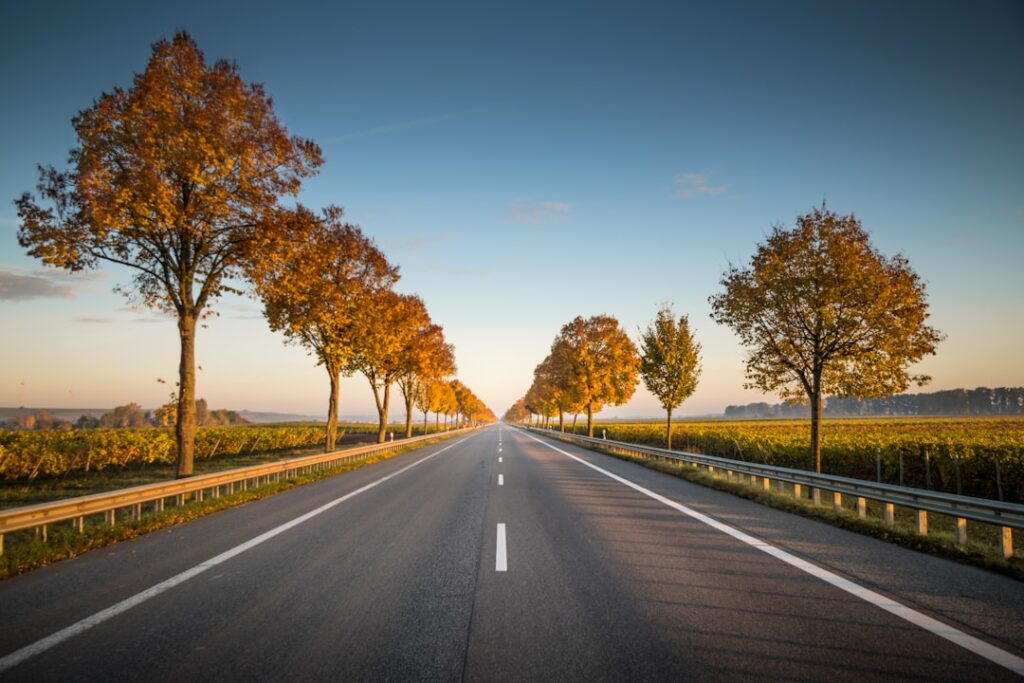
The Romantic Road—Romantische Straße—is Germany‘s original themed driving route, and nearly 70 years after its creation, it remains the most rewarding way to experience the country’s southern heartland. Stretching 280 miles from the wine-rich Main River valley to the Alpine foothills, this legendary route threads together 28 towns and villages, each one worth a stop, many worth an overnight stay.
Unlike autobahn travel, the Romantic Road demands you slow down. Medieval town squares, half-timbered houses, and fortified walls appear around every bend. You’ll drive through Franconian vineyards, cross the Swabian plateau, and end in sight of snow-capped peaks. This isn’t a highway—it’s a curated journey through centuries of German history.
The Route: Würzburg to Füssen
The Romantic Road begins in Würzburg, home to the magnificent Residenz palace and surrounded by sloping vineyards. From here, the route follows the Tauber River valley south, passing through Weikersheim with its Renaissance palace and Creglingen’s exquisite carved altarpiece by Tilman Riemenschneider.
Rothenburg ob der Tauber is the route’s undisputed crown jewel—a perfectly preserved medieval town where every alley and tower feels frozen in the 1500s. Plan to spend at least half a day here, walking the town walls and exploring the cobbled lanes.
Beyond Rothenburg, the road continues through Dinkelsbühl, another walled gem with less tourist traffic but equal charm. Nördlingen sits inside a massive meteor crater, its walls forming a perfect circle you can walk in about an hour. Near Donauwörth, you’ll cross the Danube—just a modest river this far upstream—before entering deeper Bavarian territory.
Augsburg, Germany’s third-oldest city, offers Renaissance grandeur and the world’s oldest social housing complex still in use. The final stretch passes through Landsberg am Lech and the pilgrimage church at Wies—a UNESCO-listed Rococo masterpiece that looks plain outside but explodes with decoration within. The route ends in Füssen, gateway to Neuschwanstein Castle and the Bavarian Alps.
When to Drive the Romantic Road
Late spring and early fall deliver the best combination of weather, light, and manageable crowds. May and June bring blooming orchards and long daylight hours without peak-season congestion. September and early October offer harvest colors, wine festivals in the northern towns, and comfortable temperatures for walking.
Summer, especially July and August, means full hotels and packed streets in Rothenburg and Füssen. If you must visit then, book accommodations months ahead and arrive at major stops early in the morning or late afternoon when tour buses have moved on.
Winter transforms the route into something quieter and more contemplative. Christmas markets light up the medieval squares in late November and December, though some smaller attractions close for the season. Snow on the rooftops makes the half-timbered towns look like illustrations from a storybook.
How Long You’ll Need
You could technically drive the entire Romantic Road in a single day, but that would miss the point entirely. Three to five days gives you time to actually experience the towns rather than simply photograph them from the street.
A sensible three-day itinerary might look like this: Day one from Würzburg to Rothenburg with stops in Weikersheim and Creglingen. Overnight in Rothenburg. Day two exploring Rothenburg in the morning, then continuing to Dinkelsbühl or Nördlingen for the night. Day three through Augsburg to Füssen, with a stop at Wieskirche.
Five days allows you to add Augsburg as an overnight destination, explore smaller villages like Bad Mergentheim and Harburg (with its hilltop castle), and spend a full extra day in the Füssen area visiting both Neuschwanstein and Hohenschwangau castles.
Practical Tips for Driving the Route
The Romantic Road isn’t a single highway—it’s a marked route that follows federal and state roads, primarily the B25, B27, and B17. Brown tourist signs with a white castle symbol mark the way, though a GPS or good map app makes navigation simpler.
Rental cars are easy to pick up in Munich, Nuremberg, or Frankfurt. Würzburg is roughly 90 minutes from Frankfurt Airport and makes a logical starting point if you’re beginning from there. Many travelers prefer starting in Füssen and driving north, ending near major airports, but the classic south-bound route saves the Alps as a dramatic finale.
Parking in the walled towns requires patience. Most historic centers are pedestrianized, with parking lots just outside the walls. In Rothenburg, the P5 lot near the Galgentor offers easy access. Arrive before 10 a.m. in summer to snag a spot without circling.
For those without a car, the Romantic Road Coach runs the full route with hop-on, hop-off flexibility from April through October. It’s slower but removes driving stress and parking headaches.
Where to Stay Along the Way
Every town along the route offers accommodations, from family-run guesthouses to boutique hotels in converted historic buildings. Rothenburg, Dinkelsbühl, and Füssen have the most options but also the highest prices and earliest bookings.
Consider staying in smaller villages like Weikersheim, Feuchtwangen, or Landsberg am Lech for better value and a more local experience. Many guesthouses include breakfast—real German breakfast with fresh bread, local cheese, and cold cuts—which makes for an excellent start before a day of exploring.
In Würzburg, stay in the Altstadt near the Alte Mainbrücke to walk to restaurants and wine bars. In Füssen, hotels near the Lech River offer Alpine views and easy walking to the old town.
The Romantic Road isn’t the fastest way through Bavaria, but it’s the most rewarding. Every turn reveals another perfectly composed scene—a church spire rising above red rooftops, a castle commanding a hilltop, a village square where time seems negotiable. This is Germany as you imagined it, and it’s all real.
Want more stories like this delivered to your inbox? Subscribe to the Love Germany newsletter—one short story about Germany every day, from castle legends to where locals actually eat.
Tours & experiences in Germany


Powered by Viator. Some links are affiliate links — we may earn a small commission at no extra cost to you.