
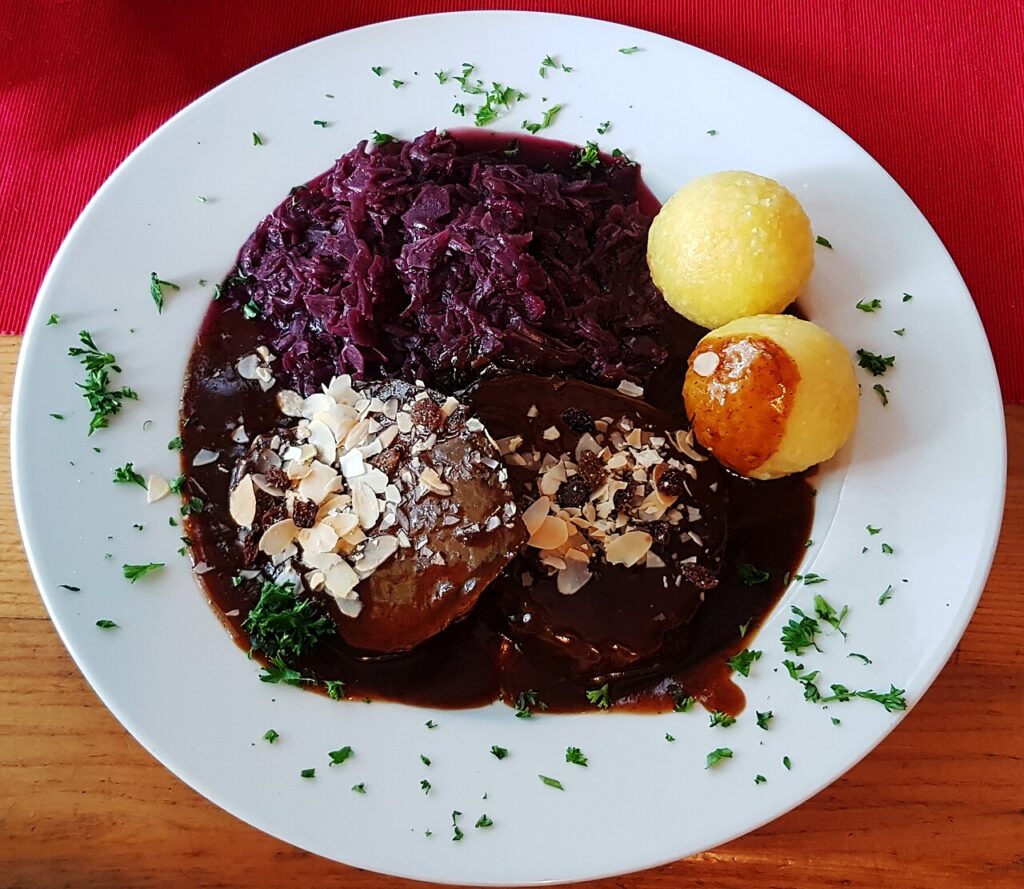
Walk into almost any traditional German restaurant on a Sunday afternoon, and you’ll likely spot sauerbraten on the menu. This marinated pot roast—tender, tangy, and dark with gravy—is one of Germany‘s most beloved comfort foods, a dish that transforms tough cuts of meat into something extraordinarily tender through days of patient marination and slow cooking.
The name tells you everything: sauer means sour, braten means roast. But that simple description barely captures the complexity of flavors in a properly made sauerbraten, where vinegar, wine, and spices work their magic over three to ten days before the meat ever sees heat.
The Rhineland’s Crown Jewel
Sauerbraten is most closely associated with the Rhineland, particularly around Cologne and Düsseldorf, where the dish has been a staple since the Middle Ages. Some food historians trace it back to Roman times, when soldiers needed ways to preserve meat on long campaigns. Others credit Charlemagne. Whatever the origin, Rhinelanders have perfected it.
The Rheinischer sauerbraten is the most famous version. Beef—usually from the round or rump—marinates in a mixture of wine vinegar, red wine, onions, carrots, and a spice blend that typically includes juniper berries, cloves, bay leaves, and peppercorns. After days in this acidic bath, the meat is browned and braised low and slow for hours.
What sets the Rhineland version apart is the gravy. Cooks strain the marinade, reduce it with the braising liquid, and finish it with crushed gingersnap cookies (Printen in Cologne) or lebkuchen. The result is a dark, slightly sweet, deeply savory sauce that’s become the defining characteristic of the dish. Some recipes add raisins for extra sweetness; purists debate whether this belongs.
Regional Variations Worth Seeking Out
Travel through Germany, and you’ll find sauerbraten takes on regional personalities. In Swabia, around Stuttgart, the dish often uses less sugar and more vinegar for a sharper tang. In Franconia, particularly around Nuremberg, you might find it made with lamb instead of beef, a holdover from times when sheep were more common than cattle.
Bavaria’s version tends toward the robust, with dark beer sometimes joining or replacing the wine in the marinade. In Thuringia, venison sauerbraten appears on menus, especially in autumn when hunting season is in full swing. The wild game stands up beautifully to the strong marinade.
In Cologne, seek out traditional brewhouses like Früh am Dom or Gaffel am Dom, where sauerbraten arrives with potato dumplings (Kartoffelklöße) and red cabbage. In Düsseldorf, Zum Schiffchen, which dates to 1628, serves what many consider the definitive version—Napoleon allegedly dined here.
What to Order Alongside
Sauerbraten rarely comes alone. The classic accompaniments are potato dumplings or Spätzle, which soak up that rich gravy perfectly. Red cabbage (Rotkohl) braised with apples and a touch of vinegar provides the traditional side, its slight sweetness and acidity balancing the heavy main dish.
In the Rhineland, you might also see it served with Reibekuchen (potato pancakes) or boiled potatoes. Apple sauce sometimes appears on the side—it works better than you’d expect.
For beer pairings, stick with whatever’s local. In Cologne, that means Kölsch, served in small 200ml glasses that stay cold. The crisp, delicate beer cuts through the richness beautifully. In Düsseldorf, order Altbier, darker and more robust. If you’re drinking wine, a Riesling from the Mosel or Rheingau—something with good acidity—stands up to the bold flavors.
When and Where to Find It
While sauerbraten appears on menus year-round, it’s quintessential cold-weather food. From October through March, when Germany’s weather turns gray and damp, this is what locals crave. Sunday lunch (Mittagessen) is prime time—many restaurants offer it as a weekly special.
Look for it in traditional German restaurants (Gaststätten) rather than modern bistros. The best versions come from places that have been making it the same way for generations. In smaller towns throughout the Rhineland and beyond, family-run restaurants often prepare sauerbraten only once or twice a week because it’s so labor-intensive.
If you’re in Cologne during Christmas market season, some market stalls serve sauerbraten sandwiches—not traditional, but surprisingly good when you need warming up between browsing wooden stalls.
The dish takes patience—days of marinating, hours of cooking—but that’s precisely what makes it special. It’s German cooking at its most fundamental: transforming humble ingredients through time, care, and centuries of accumulated wisdom into something deeply satisfying.
Want more insider tips on Germany’s regional dishes and where to find them? Subscribe to the Love Germany newsletter and get one short story about Germany delivered to your inbox each day.
Tours & experiences in Germany


Powered by Viator. Some links are affiliate links — we may earn a small commission at no extra cost to you.