
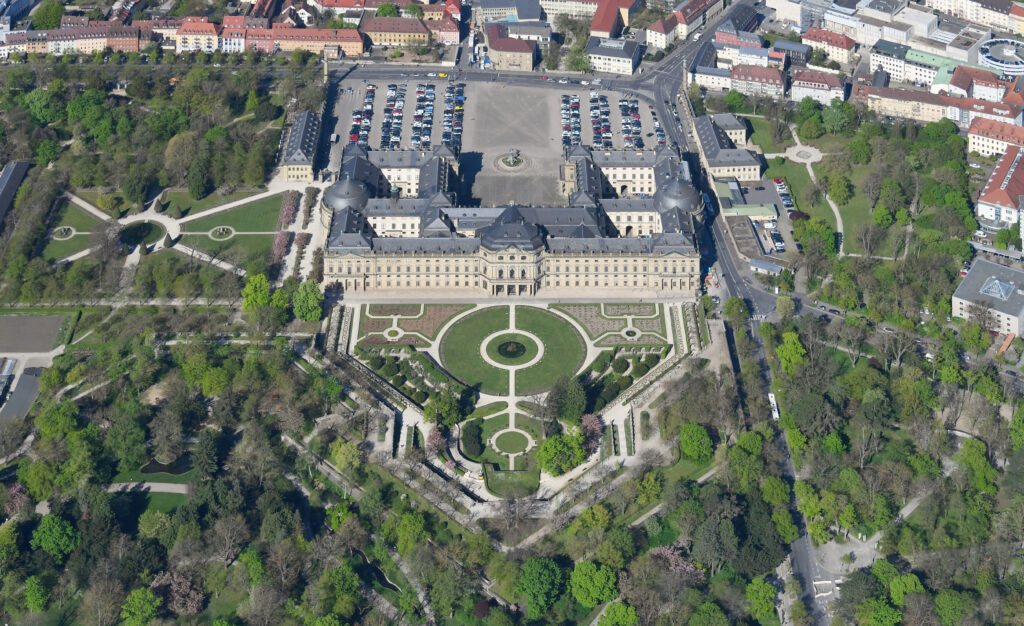

Rising above the Main River in northern Bavaria, the Würzburg Residence is often called the most beautiful Baroque palace in Germany—and once you step inside, you’ll understand why. Built between 1720 and 1744 for the Prince-Bishops of Würzburg, this UNESCO World Heritage site showcases the absolute pinnacle of European Baroque architecture, with interiors so stunning that Napoleon reportedly called it “the nicest parsonage in Europe.”
What sets the Residence apart from other German palaces isn’t just its scale or grandeur. It’s the collaboration of the era’s greatest artists, led by architect Balthasar Neumann, who created something truly extraordinary on the banks of the Main.
The Staircase That Defies Gravity
Your visit begins with what many consider the palace’s crowning achievement: the grand staircase. Neumann designed a massive unsupported vault that his contemporaries said would collapse—it didn’t, and it survived World War II bombing that destroyed much of the rest of the palace. Above you spreads the world’s largest ceiling fresco, painted by Venetian master Giovanni Battista Tiepolo between 1752 and 1753.
Tiepolo’s fresco depicts the four continents known at the time—Europe, Asia, Africa, and America—in a riot of color and movement that covers 7,287 square feet. The artist included inside jokes and contemporary figures, including a self-portrait. Stand at the bottom of the stairs and slowly walk up, watching how the perspective shifts and the figures seem to move. It’s one of those rare artistic experiences that genuinely takes your breath away.
The best time to visit is mid-morning on weekdays, when tour groups thin out and you can appreciate the fresco without craning around crowds.
The Imperial Hall and State Rooms
Beyond the staircase, the Kaisersaal (Imperial Hall) continues the visual feast. More Tiepolo frescoes crown the white and gold chamber, telling the story of Würzburg’s history through allegorical scenes. The three ceiling frescoes here show the marriage of Emperor Frederick Barbarossa, and the illusion of depth Tiepolo creates is masterful—architectural elements seem to extend far beyond the actual ceiling.
The state rooms that follow showcase Baroque design at its most refined. The White Hall offers a moment of relative restraint with its delicate stucco work, while the mirror cabinet displays intricate glasswork and painted decorations that covered every surface. Much of what you see today is the result of painstaking post-war restoration—fire from the 1945 bombing destroyed the roofs and much of the interior, but the main vaults survived.
The reconstruction effort, which took decades, stands as one of the most successful palace restorations in Europe. Archivists used original plans, photographs, and salvaged fragments to recreate what was lost.
The Court Gardens
Exit the palace into the Hofgarten (Court Garden), where formal Baroque landscaping transitions into English-style romantic gardens. In spring, the gardens explode with tulips and flowering trees. Summer brings carefully maintained parterres and shaded walkways perfect for escaping the midday heat.
The gardens include whimsical statues, fountains, and carefully planned sightlines back to the palace. Pack a picnic and claim a bench near the East Garden—locals do, and it’s one of Würzburg’s most pleasant spots on a sunny afternoon. The gardens stay open later than the palace, making them ideal for an early evening stroll.
Planning Your Visit
The Residence sits a ten-minute walk from Würzburg’s Hauptbahnhof, making it an easy stop on the Romantic Road or a day trip from Frankfurt (about 75 minutes by train) or Nuremberg (around 90 minutes). The palace is open daily except Monday, with last entry at 4:30 PM in winter and 5:30 PM in summer.
Entry costs €9 for adults, with reduced rates for students and seniors. The admission includes an excellent audio guide available in multiple languages—take it, because the historical context deepens your appreciation of what you’re seeing. Photography is allowed in most areas, but skip the flash to protect the centuries-old frescoes.
Würzburg itself deserves at least a full day. After the Residence, climb to Fortress Marienberg across the river for panoramic views, then explore the old town’s wine taverns. This is Franconian wine country, and the local Silvaner wines pair perfectly with the region’s hearty cuisine.
Ready to discover more of Germany’s hidden treasures and insider tips? Subscribe to the Love Germany newsletter and get one short story about Germany delivered to your inbox each day—the perfect daily dose of travel inspiration.
Tours & experiences in Germany


Powered by Viator. Some links are affiliate links — we may earn a small commission at no extra cost to you.