
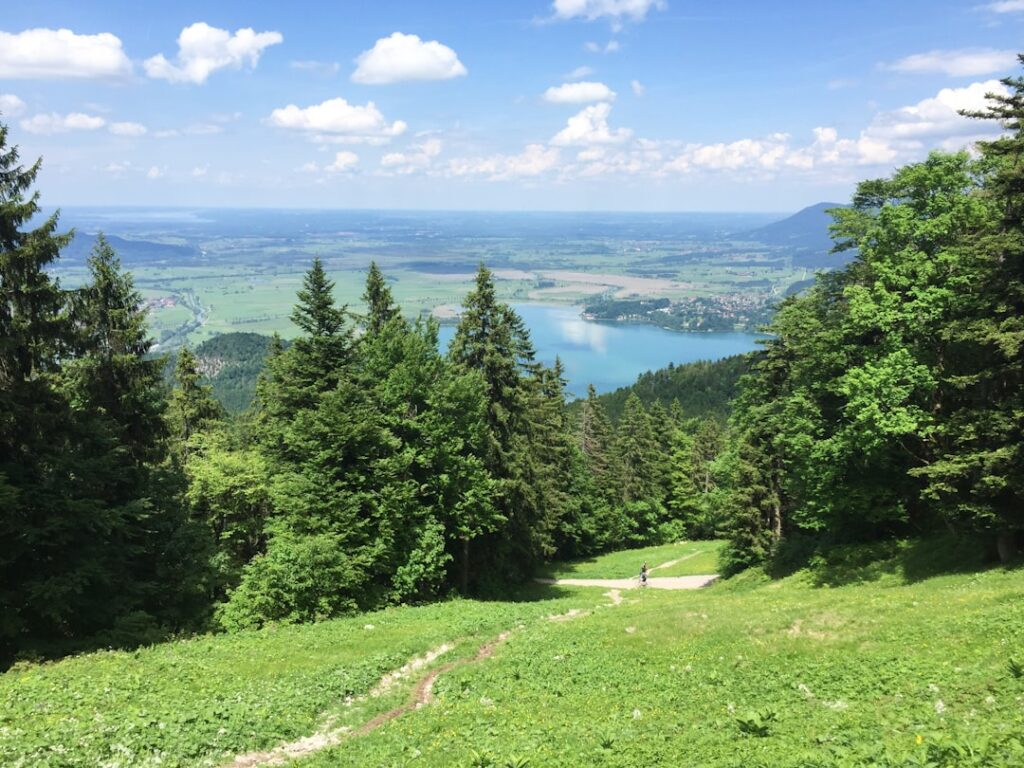
While the Black Forest and Bavarian Alps grab most of the hiking headlines, the Swabian Alb quietly delivers some of the finest trails in southern Germany. This limestone plateau stretches roughly 125 miles from Tuttlingen near Lake Constance northeast to Aalen, rising gently from the valleys below to plateau heights around 3,000 feet. What makes it special isn’t dramatic elevation—it’s the combination of ancient beech forests, limestone cliffs, wildflower meadows, and a network of well-marked trails that feel remarkably uncrowded even in summer.
The region also packs serious historical depth. You’re walking through landscapes inhabited since the Ice Age, past medieval castles perched on karst outcrops, and through villages where Swabian dialect and traditions remain very much alive.
The Trails Worth Planning For
The Swabian Alb’s signature long-distance route is the Albsteig, a 220-mile trail running the length of the plateau from Tuttlingen to Donauwörth. You don’t need to tackle the whole thing—most hikers cherry-pick stages. The section between Mössingen and Bad Urach is particularly rewarding, passing through the Urach waterfall and the dramatic escarpment known as the Albtrauf, where the plateau drops sharply toward the valleys below.
For a shorter day hike, the loop around Lichtenstein Castle near Reutlingen combines castle views, forest trails, and panoramic overlooks in about four hours. The castle itself—a 19th-century rebuild inspired by a novel—sits on a limestone crag and looks exactly like something out of a fairytale. The trail drops down through beech forest, loops past the Nebelhöhle cave system, and climbs back up through meadows with views across the Echaz Valley.
Another standout is the trail network around the Blautopf in Blaubeuren, where an impossibly blue spring feeds into a former monastery complex. The surrounding trails wind through the Ach Valley, passing limestone cliffs and the entrances to cave systems where some of Europe’s oldest Ice Age art was discovered.
Caves, Castles, and Karst Landscapes
The Swabian Alb sits on porous limestone, which means sinkholes, disappearing streams, and hundreds of caves. Several are open to visitors. The Nebelhöhle near Lichtenstein offers guided tours through chambers filled with stalactites, while the Bärenhöhle near Sonnenbühl shows off impressive dripstone formations. These aren’t just geological curiosities—caves in the Lone and Ach valleys yielded the oldest known figurative art, including the famous Lion Man and Venus of Hohle Fels, now displayed in museums in Ulm and Blaubeuren.
Castles dot the plateau wherever a defensible outcrop presented itself. Hohenzollern Castle, the ancestral seat of Prussia’s royal family, sits atop an isolated peak near Hechingen and offers 360-degree views on clear days. It’s touristy but genuinely impressive. For something quieter, hike to the ruins of Hohenurach above Bad Urach—a sprawling fortress complex that fell into romantic decay after being destroyed in the 18th century.
Practical Information and When to Visit
The Swabian Alb is easiest to explore with a car, though regional trains connect the larger towns like Reutlingen, Tübingen, and Ulm, and local buses serve many trailheads—just check schedules carefully on weekends. Trails are well-marked with the Swabian Alb’s distinctive yellow signs, and most are maintained by the Schwäbischer Albverein, Germany’s regional hiking club.
Spring brings wildflowers to the plateau meadows—orchids, gentians, and pasqueflowers turn the grasslands into botanical showcases from April through June. Summer offers long days and warm weather, though the lack of shade on plateau trails means early starts are wise. Fall is ideal: cooler temperatures, autumn color in the beech forests, and the chance to sample fresh-pressed apple cider and new wine in the villages. Winter hiking is possible but requires checking trail conditions, as ice can make the steeper sections treacherous.
Base yourself in towns like Bad Urach, Blaubeuren, or Münsingen for easy access to trailheads. Accommodation ranges from family-run guesthouses to small hotels, and most villages have at least one traditional Gasthof serving hearty Swabian cooking—think Maultaschen, Spätzle, and Zwiebelrostbraten.
Why the Swabian Alb Works
This isn’t a region that overwhelms with drama. The beauty here is quieter—beech forests filtering afternoon light, a castle ruin appearing suddenly above the trees, a trail dropping through a hidden gorge. The trails are manageable for most fitness levels, the infrastructure is excellent without feeling overdeveloped, and you’re far more likely to encounter local hikers than tour groups.
If you’re looking for an alternative to Germany’s better-known hiking regions, or simply want to explore a corner of Baden-Württemberg that delivers consistent rewards without the crowds, the Swabian Alb makes a strong case for itself. Pack good shoes, a trail map, and an appetite for both scenery and Swabian cooking.
Want more stories about Germany’s hidden corners and local favorites? Subscribe to the Love Germany newsletter—one short story a day, straight to your inbox.
Tours & experiences in Germany


Powered by Viator. Some links are affiliate links — we may earn a small commission at no extra cost to you.