
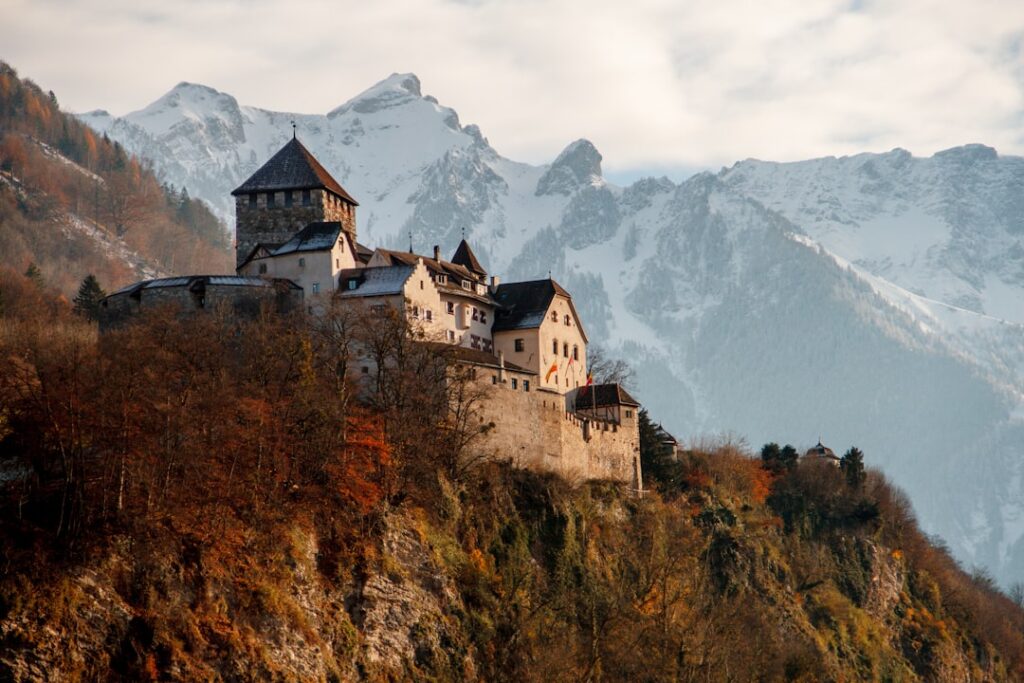
Rising suddenly from the North German Plain, the Harz Mountains feel like they’ve been lifted straight from the Brothers Grimm. These forested highlands straddle Lower Saxony and Saxony-Anhalt, packing medieval mining towns, steam railways, and Germany’s most storied mountain peak into a compact region that’s easy to explore and endlessly rewarding.
Unlike the Alps, the Harz won’t overwhelm you with scale. Instead, it charms with intimacy: half-timbered towns tucked into valleys, narrow-gauge trains chugging through spruce forests, and hiking trails that weave through landscapes where legend and history blur together.
The Brocken: Germany’s Most Mythical Peak
At 1,141 meters, the Brocken isn’t Germany’s highest mountain, but it’s certainly its most famous. Goethe set a scene from Faust here during Walpurgis Night, when witches supposedly gather on its summit. On April 30 each year, costumed revelers still recreate the tradition with bonfires and festivities across the region.
The easiest way up is aboard the Brockenbahn, a narrow-gauge steam railway that climbs from Wernigerode through dense forest to the windswept summit. The journey takes 50 minutes each way, and watching the steam locomotive strain against the grade never gets old. At the top, you’ll find a weather station, a visitors’ center, and on clear days, views stretching to the Thuringian Forest.
Serious hikers can tackle the ascent on foot. The Goethe Way from Torfhaus covers 8.5 kilometers and takes about three hours up. Start early in summer—the Brocken’s microclimate means fog and wind are common, even when valleys below are sunny.
Goslar: Silver, Emperors, and UNESCO Glory
At the foot of the Harz, Goslar is where the region’s mining wealth translated into architectural splendor. The town’s 1,500 half-timbered houses earned it UNESCO status, but what really sets it apart is the Imperial Palace, one of the best-preserved Romanesque secular buildings in Germany.
Built in the 11th century when Goslar was a favorite residence of Holy Roman Emperors, the palace sits on a rise above the old town. Inside, the vast Great Hall features 19th-century murals depicting German imperial history—heavy-handed but impressive.
Below the town, the Rammelsberg Mine tells the story of the silver and copper deposits that made Goslar rich for a thousand years. Guided tours descend into the tunnels where miners worked until 1988, and the underground train ride through flooded galleries is worth the visit alone. The mine is also UNESCO-listed and remarkably well-presented.
Don’t miss the Marktplatz, where the Kaiserworth building hosts mechanical figurines that perform at 9 a.m., noon, 3 p.m., and 6 p.m.—a tradition dating to 1968 but charming nonetheless.
Steam Railways and Forest Trails
The Harz is Germany’s narrow-gauge railway paradise. Three steam-powered lines—the Harzquerbahn, Brockenbahn, and Selketalbahn—connect towns and mountain destinations across 140 kilometers of track. A day pass lets you hop on and off, combining train rides with short hikes.
One excellent combination: ride the Harzquerbahn from Wernigerode to Drei Annen Hohne, walk the 5-kilometer trail through the Wurmberg nature reserve to Schierke, then catch the Brockenbahn to the summit. You’ll experience deep forest, alpine meadows, and mountain views in a single afternoon.
For hikers who prefer peace to locomotives, the Harzer Hexenstieg (Witches’ Trail) crosses the entire range from Osterode to Thale, covering 94 kilometers over five or six days. The trail passes through beech forests, granite formations, and historic towns, with plenty of guesthouses along the way.
Wernigerode: The Colorful Town at the Railway Hub
Wernigerode calls itself the “colorful town in the Harz,” and the nickname fits. Its Marktplatz is ringed by timber-framed houses in ochre, rose, and forest green, with the Gothic town hall standing out in its ornate facade.
Above town, Wernigerode Castle perches on a wooded hill. Though heavily restored in the 19th century, it offers period rooms, armor collections, and panoramic views over the northern Harz. The walk up takes 20 minutes; a little tourist train saves your legs if you’d rather ride.
Wernigerode is the best base for exploring the Harz by train. All three narrow-gauge lines converge here, and the town has plenty of hotels and restaurants. Try Gaststätte Altwernigerode for hearty regional fare—the Harzer Schmorbraten (braised beef) and Harzer Käse (pungent local cheese) are both worth ordering.
When to Visit
Late spring through early fall offers the most reliable weather for hiking and sightseeing. July and August bring crowds, especially on the Brocken—visit midweek if possible. September is ideal: fewer tourists, golden foliage beginning to turn, and clear autumn air that sharpens distant views.
Winter transforms the Harz into a snow-covered landscape perfect for cross-country skiing. The Brocken often disappears into freezing fog, but lower-elevation trails around Goslar and Wernigerode remain accessible and beautiful.
Walpurgis Night (April 30) is unforgettable if you don’t mind company—towns across the Harz host bonfires, markets, and costumed processions. Book accommodation months ahead.
Getting There
Goslar and Wernigerode both have regular train connections to Hanover (one hour) and Magdeburg (90 minutes). From either city, regional trains run hourly. If you’re driving, the B6 and B27 highways provide scenic access through the northern Harz.
Once here, the narrow-gauge railway network makes it easy to explore car-free. A Harz Card covers unlimited travel on the steam trains plus entry to many attractions—if you’re spending three days or more, it pays for itself quickly.
Want more stories about Germany’s hidden corners and local treasures? Subscribe to the Love Germany newsletter and get one short story delivered daily—the Germany you won’t find in guidebooks, straight to your inbox.
Tours & experiences in Germany


Powered by Viator. Some links are affiliate links — we may earn a small commission at no extra cost to you.