
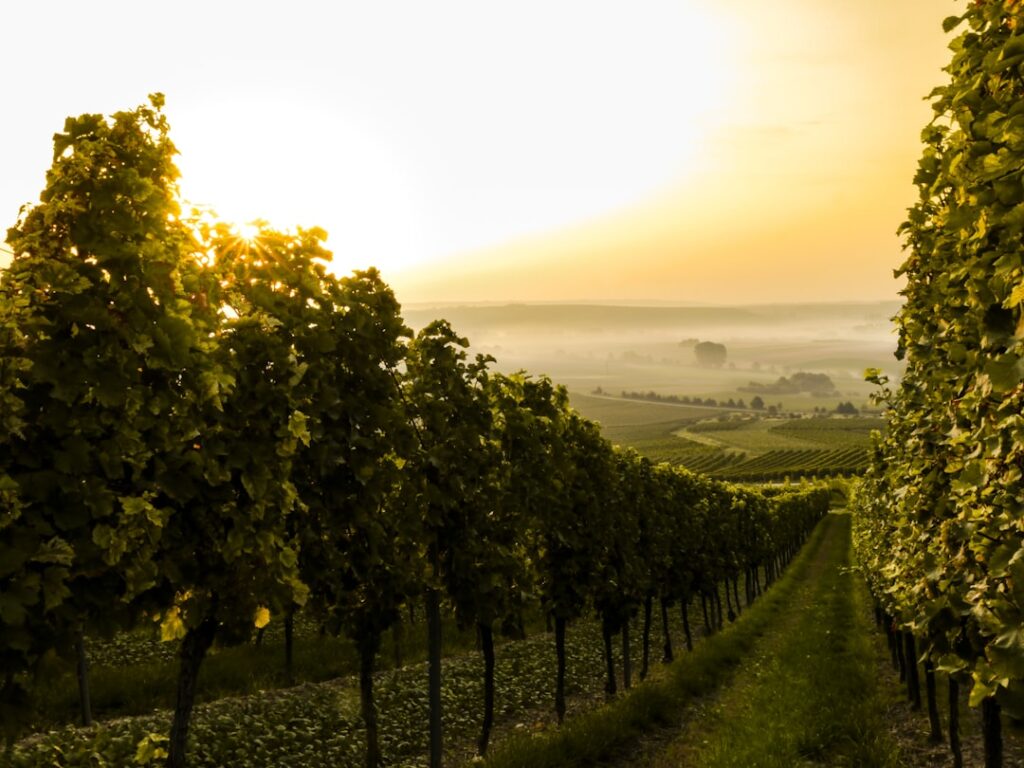
Walk through the wine villages of Baden, the Palatinate, or Franconia between late spring and autumn, and you’ll spot a curious signal: a wreath, a broom, or a bundle of straw hung above a doorway. It’s the sign that a local winemaker has opened their home as a temporary tavern, pouring their own wines alongside simple, homemade food. No menus, no pretense—just wine straight from the cellar and tables full of neighbors and travelers who know where to look.
These seasonal wine taverns go by different names depending on the region. In Baden and the Palatinate, they’re called Straußwirtschaften (wreath taverns). In Württemberg, they’re Besenwirtschaften (broom taverns). In Franconia, you’ll hear Häckerwirtschaft or Heckenwirtschaft. The concept is the same: a vintner opens their property for a few weeks each year, serving only their own wine and cold or simple warm dishes prepared in-house.
The Rules Behind the Broom
The tradition dates back centuries, rooted in laws that allowed winemakers to sell their production directly without a commercial license—but only for a limited time each year. In most regions, that’s still capped at four months total, often split into two periods. The result is a rotating calendar of openings that locals follow like a seasonal sport.
The offerings are intentionally limited. You’ll find the vintner’s current releases: Riesling, Silvaner, Müller-Thurgau, Spätburgunder, or whatever grows on their slopes. Food is rustic and regional—Flammkuchen, bread with Schmalz or lard, cheese platters, sausages, potato salad, and Zwiebelkuchen (onion tart) in autumn. In Württemberg, expect Maultaschen and lentil dishes. Everything is designed to complement the wine, not overshadow it.
The atmosphere is convivial and egalitarian. You might sit at long communal tables in a vaulted cellar, a sunny courtyard, or a barn strung with lights. Strangers share benches. The winemaker or their family pours the wine and chats about the vintage. It’s the opposite of a tasting room—more like being invited into someone’s home, because you are.
Where to Find Them
The Palatinate and Baden have the highest concentration of Straußwirtschaften. In the Pfalz, explore villages along the German Wine Road like Deidesheim, Forst, and Wachenheim. In Baden, head to the Kaiserstuhl region near Freiburg—Ihringen, Achkarren, and Burkheim are rich with options. Württemberg’s Besenwirtschaften cluster around Stuttgart, especially in the hillside wine suburbs of Uhlbach and Rotenberg. Franconian wine taverns dot the valleys around Würzburg and the Main River, in towns like Randersacker and Sommerach.
Openings are seasonal and unpredictable. Most operate in spring and again in late summer through autumn, coinciding with the wine calendar and harvest. There’s no central reservation system. Instead, local tourism offices publish lists and calendars, and many regions maintain online directories. In the Palatinate, look for the official Straußwirtschaft calendar published by the Pfalz tourism board. In Baden, the Kaiserstuhl wine association keeps a current list.
The wreath or broom outside the door signals that the tavern is open—usually Thursday through Sunday, sometimes just weekends. When the greenery is taken down, the season is over. It’s first-come, first-served seating, and popular spots fill quickly on warm weekend afternoons.
What to Expect
Don’t expect a polished experience. Service is casual, sometimes slow. The vintner’s children might be taking orders. The restroom is likely outdoors. Prices are low—wine by the glass or quarter-liter, rarely more than a few euros. Food is similarly inexpensive and portioned generously.
Come ready to linger. The rhythm of a Straußwirtschaft is unhurried. Order a Schorle (wine mixed with sparkling water) if you’re pacing yourself, or a glass of the house Riesling if you want to taste what the soil and the vintner can do together. Try the onion tart if it’s autumn, or the Flammkuchen if the oven is fired up. Ask questions—winemakers are usually happy to talk about their vineyards, the vintage, and the vagaries of weather.
If you’re visiting in September or October, you might encounter Federweißer, the cloudy, semi-fermented grape must that’s only available for a few weeks each year. It’s sweet, fizzy, dangerously drinkable, and pairs perfectly with Zwiebelkuchen.
How to Find One
Start with the local tourism office or regional wine association. Most publish seasonal guides. In the Palatinate, search for “Straußwirtschaft Pfalz Kalender.” In Baden, try “Strauße Kaiserstuhl.” For Württemberg, look for “Besenwirtschaft Stuttgart” or check the Württemberg wine growers’ association site. Franconian lists are often organized by the Franconian Wine Growers’ Association.
If you’re driving the wine roads, keep an eye out for the telltale wreath or broom. It’s perfectly acceptable to stop in without advance research—that’s part of the charm. Most taverns don’t take reservations for small groups, though larger parties should call ahead if a phone number is listed.
The best visits happen on warm afternoons when the tables spill into courtyards and gardens, the conversation flows as freely as the wine, and the vintner pauses between pours to tell you about the steep slate slope that gives their Riesling its edge. It’s Germany‘s wine culture at its most elemental and welcoming.
Want one short story about Germany in your inbox every day? Subscribe to the Love Germany newsletter and get the country beyond the guidebooks, one email at a time.
Tours & experiences in Germany


Powered by Viator. Some links are affiliate links — we may earn a small commission at no extra cost to you.