
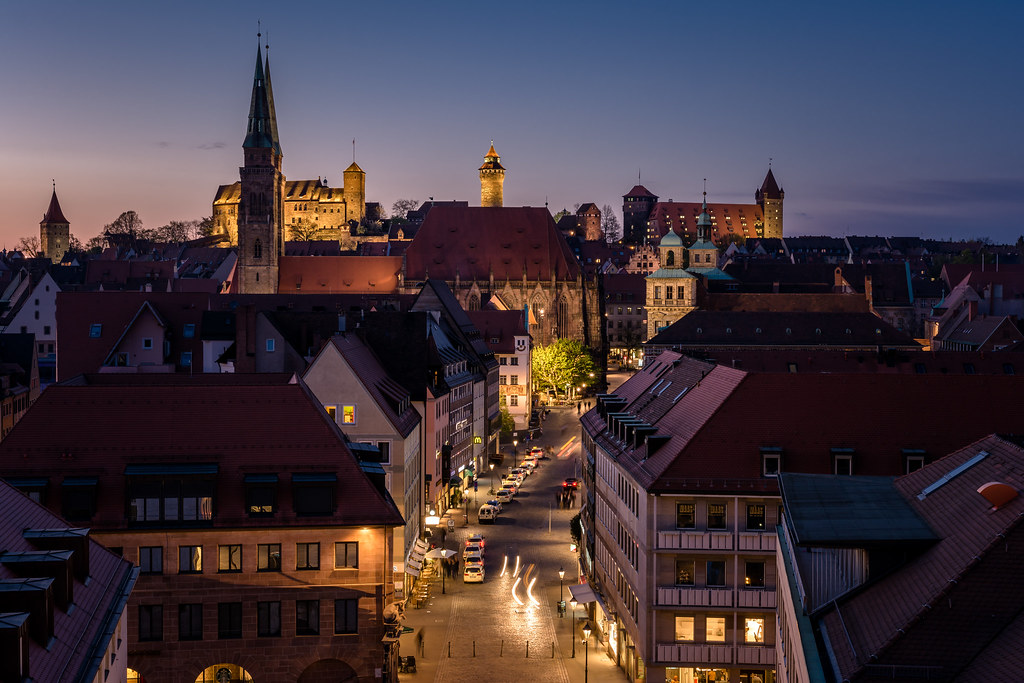
In the heart of medieval Europe, few objects held more symbolic power than the Imperial Regalia of the Holy Roman Empire—the crown, orb, scepter, and sacred relics that legitimized an emperor’s divine right to rule. For centuries, these treasures moved between cities, always seeking the most secure stronghold. Their journey connects two of Central Europe’s most formidable fortresses: Nuremberg’s Kaiserburg and the Gothic towers of Karlštejn Castle in Bohemia.
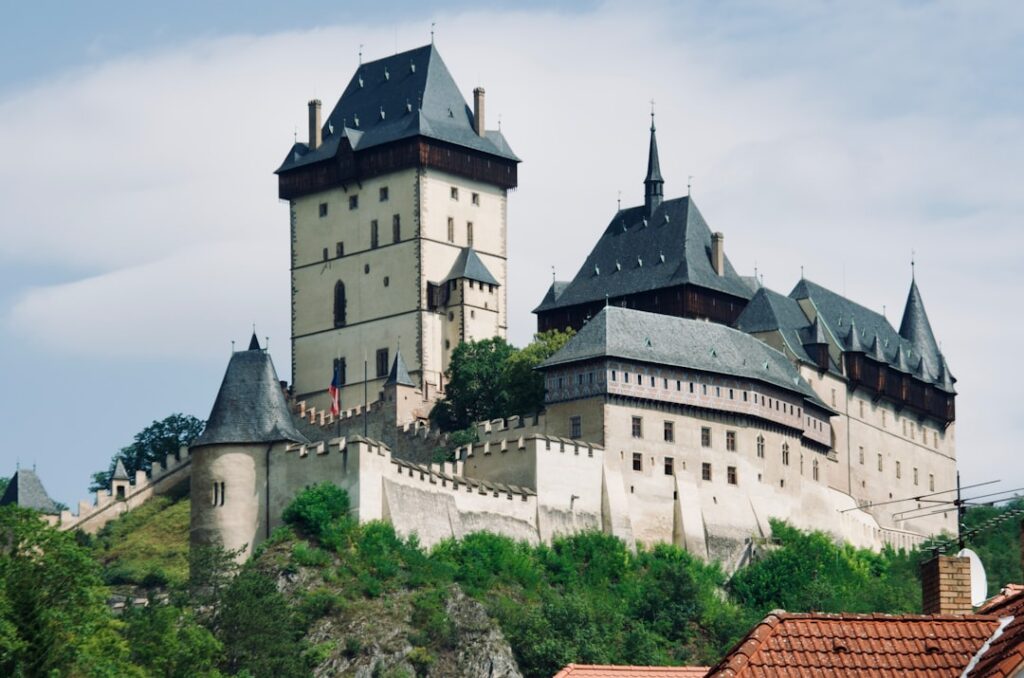
Emperor Charles IV, who ruled from 1346 to 1378, understood that symbols required sanctuaries. As King of Bohemia and Holy Roman Emperor, he commissioned Karlštejn Castle specifically to house the Imperial Crown Jewels and his extensive collection of holy relics. The fortress, perched on a cliff above the Berounka River, featured a Chapel of the Holy Cross whose walls glittered with semi-precious stones—a fitting shrine for objects believed to carry divine authority.
But Charles IV also maintained deep ties to Nuremberg. In 1356, his Golden Bull—the constitutional document of the Holy Roman Empire—decreed that every newly elected emperor must hold their first Imperial Diet in Nuremberg. The city became the de facto capital of the empire, and its Kaiserburg castle served as the primary repository for the Imperial Regalia when they weren’t traveling with the emperor.
The Relics’ Journey Between Two Fortresses
The connection between Nuremberg and Karlštejn became particularly significant in the early 15th century. During periods of instability, the Imperial Regalia were moved from Nuremberg to Karlštejn for safekeeping. In 1421, as Hussite Wars threatened Bohemia, the treasures made the reverse journey, returning from Karlštejn to the relative safety of Nuremberg’s walls.
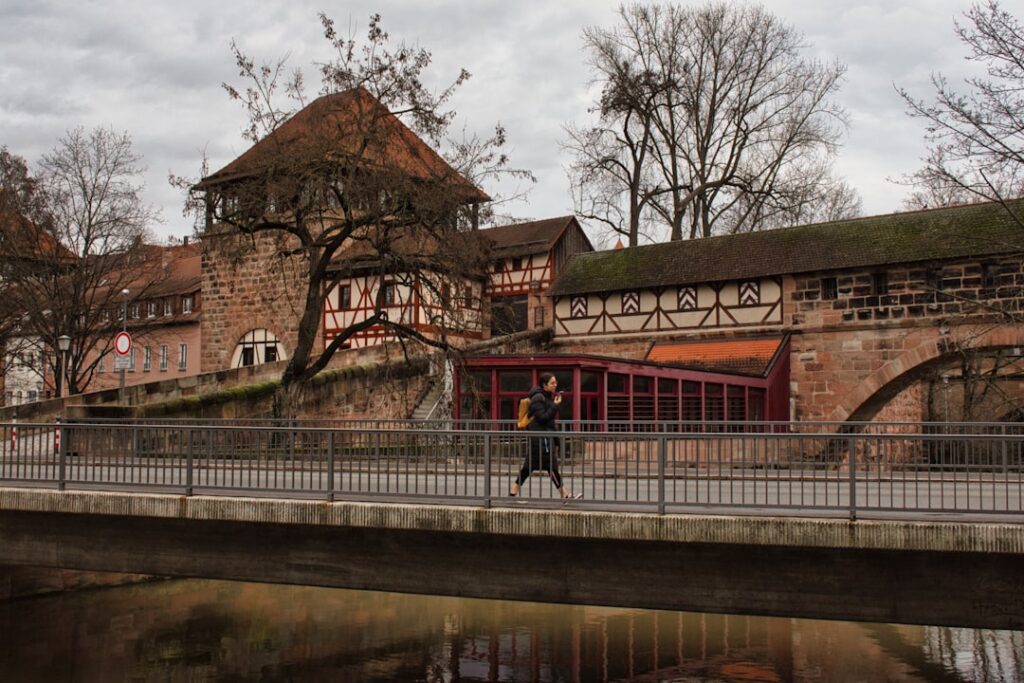
From 1424 onward, Nuremberg became the permanent home of the Imperial Crown Jewels. The city’s council took their guardianship seriously, storing the regalia in a specially constructed treasury within the Heilig-Geist-Spital (Hospital of the Holy Spirit). Once a year, on the second Friday after Easter, the treasures were displayed to pilgrims from across Europe in a ceremony called the Heiltumsweisung.
This annual exhibition transformed Nuremberg into a pilgrimage destination rivaling any cathedral city. Tens of thousands of visitors flooded the city to glimpse the crown that had touched Charlemagne’s head (or so they believed) and the Holy Lance said to have pierced Christ’s side. The economic and spiritual benefits were immense, cementing Nuremberg’s status as one of the empire’s most important cities.
A Legacy Written in Stone and Gold
Today, visitors to Nuremberg’s Germanisches Nationalmuseum can see replicas of the Imperial Regalia, while the originals reside in Vienna’s Imperial Treasury, moved there by the Habsburgs in 1796 as Napoleon’s armies approached. But the Kaiserburg still stands as a testament to the city’s imperial past, its red sandstone walls commanding views over the Altstadt.
The connection between these two fortress cities—one German, one Czech—illustrates the fluid nature of medieval power. Charles IV’s vision extended across borders, creating a network of strongholds designed to protect not just territories but ideas: the sacred authority of empire, the power of relics, and the belief that certain objects could bridge heaven and earth. Whether locked in Karlštejn’s jeweled chapel or displayed in Nuremberg’s marketplace, the Imperial Regalia were never merely treasure—they were the physical manifestation of political and spiritual legitimacy in medieval Europe.
Tours & experiences in Germany


Powered by Viator. Some links are affiliate links — we may earn a small commission at no extra cost to you.