
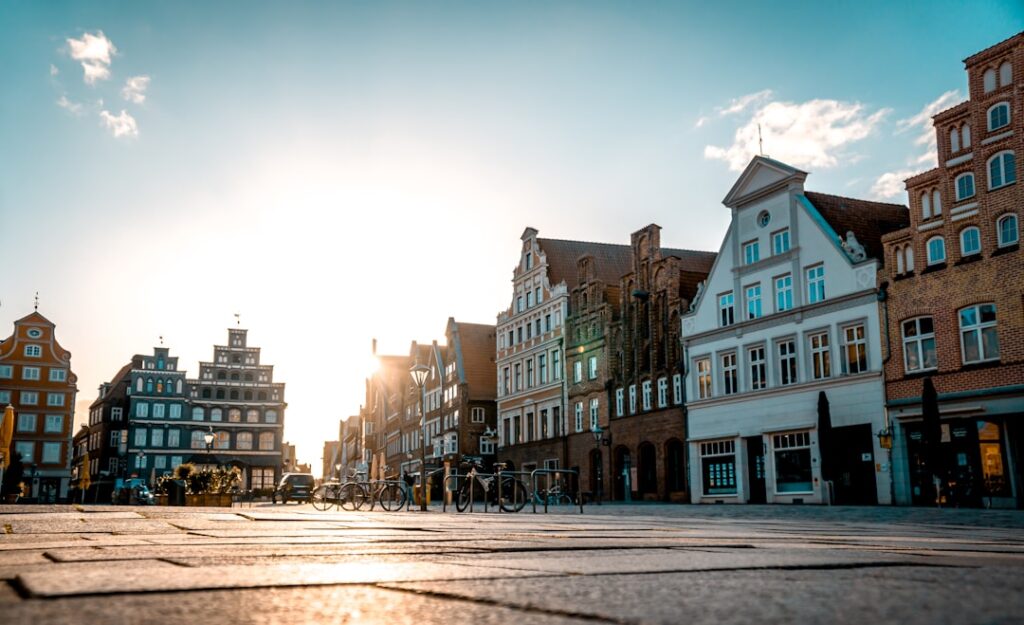
Lüneburg doesn’t appear on most first-time Germany itineraries, and that’s precisely what makes it special. This small university town an hour south of Hamburg has managed to preserve one of northern Germany’s most authentic medieval centers, complete with tilting half-timbered houses, a fascinating salt-mining heritage, and cobblestone streets that haven’t changed much since the Hanseatic League’s golden age.
Unlike many German towns rebuilt after World War II, Lüneburg emerged nearly unscathed. What you see today is genuine—crooked buildings leaning at impossible angles, Gothic brick churches, and Renaissance gables that have stood for centuries. The town’s wealth came from salt, the “white gold” that made Lüneburg one of the wealthiest cities in medieval Europe.
The Old Salt Quarter and Tilting Houses
Start at Am Sande, the vast town square lined with brick Gothic facades. The square’s name means “on the sand,” a reminder that beneath Lüneburg lies a honeycomb of old salt mines. As groundwater seeped into abandoned shafts over the centuries, buildings began to sink and tilt at dramatic angles—some lean several feet off vertical.
Walk down to the Old Harbor (Alter Hafen) along the Ilmenau River, where salt was once loaded onto barges bound for the Baltic. The half-timbered houses here lean toward each other like old friends sharing secrets. The Old Crane (Alter Kran), a wooden medieval loading crane from 1797, still stands on the waterfront.
Don’t miss the Salt Museum (Deutsches Salzmuseum) in the former salt works. Interactive exhibits explain how salt was extracted from underground brine springs, heated in massive pans, and packed for export. You can walk through original production rooms and see the technology that made Lüneburg rich for a thousand years.
St. Michael’s Church and the Town Hall
St. Michael’s Church towers over the old town from its hilltop perch. This massive brick Gothic church dates to the 14th century and houses one of northern Germany’s finest baroque organs. The church leans noticeably—another victim of subsiding salt caverns below. Climb the tower for views across Lüneburg’s sea of red-tiled roofs.
The Town Hall (Rathaus) on Am Markt is one of Germany’s most beautiful medieval civic buildings. Its Great Council Chamber features carved wood paneling, Renaissance furnishings, and stained glass windows from the 1400s. Guided tours reveal rooms that haven’t changed since Hanseatic merchants gathered here to conduct business. The ornate Prince’s Hall upstairs, with its intricate ceiling and silver chandelier, feels frozen in time.
The University Quarter and Lüneburg Heath
Lüneburg is home to Leuphana University, which brings 10,000 students to this town of 75,000. The university quarter near the medieval center buzzes with cafes, bookshops, and affordable restaurants. The student presence keeps Lüneburg lively without overwhelming its historic character.
Just outside town lies Lüneburg Heath (Lüneburger Heide), a protected landscape of purple heather moorland, juniper groves, and ancient sheep trails. Late August through early September is peak blooming season, when the heath turns violet as far as you can see. The heath is perfect for cycling—rent a bike in town and follow well-marked trails through this timeless landscape.
Getting There and Practical Tips
Lüneburg is an easy 30-minute train ride from Hamburg’s main station, making it an ideal day trip or overnight escape from the city. Direct regional trains run hourly throughout the day. If you’re staying overnight, book a room in one of the renovated half-timbered hotels in the old town—waking up to crooked gables and cobblestones feels wonderfully medieval.
The town is best explored on foot. Wear comfortable walking shoes for the uneven cobblestones. Most major sights cluster within a 10-minute walk of Am Sande square. The tourist office on the Rathaus square offers excellent walking-tour maps in English.
Visit midweek if possible—weekends bring day-trippers from Hamburg. Wednesday and Saturday mornings feature farmers’ markets on Am Markt, where you can sample regional cheeses, smoked fish, and Lüneburg’s famous marzipan.
Lüneburg rewards slow exploration. Wander the narrow lanes behind the main squares, duck into courtyards, and follow the river path. This is a town that reveals itself gradually, one tilting half-timbered house at a time.
Want more insider tips on Germany’s hidden towns and lesser-known treasures? Subscribe to the Love Germany newsletter and get one short story a day delivered straight to your inbox.
Tours & experiences in Germany


Powered by Viator. Some links are affiliate links — we may earn a small commission at no extra cost to you.