Just beyond Berlin’s city limits lies one of Germany’s most enchanting royal estates—Sanssouci Palace, the summer residence of Frederick the Great and the crown jewel of Potsdam. Often called the “Prussian Versailles,” this rococo masterpiece sits atop terraced vineyards overlooking meticulously manicured gardens that stretch across nearly 300 hectares. Built between 1745 and 1747, Sanssouci (French for “without care” or “carefree”) was Frederick’s personal retreat from the formalities of court life, a place where he could pursue his passions for philosophy, music, and the arts.
The palace and its surrounding park represent the pinnacle of 18th-century landscape design and architectural elegance, earning UNESCO World Heritage status in 1990. Today, visitors can walk in the footsteps of Enlightenment philosophers like Voltaire, explore Frederick’s private apartments, and wander through gardens that rival any in Europe.
The Palace and Its Magnificent Interiors
The single-story yellow palace may appear modest compared to other European royal residences, but its intimacy was entirely intentional. Frederick designed Sanssouci as a personal sanctuary, not a showpiece for state functions. The palace contains just twelve principal rooms, each more exquisite than the last.
The centerpiece is the Marble Hall, a stunning oval room with Corinthian columns of white Carrara marble and a dome decorated with gilded stucco ornaments. The Concert Room showcases Frederick’s love of music—he was an accomplished flautist and composer—with elaborate rococo decoration in green and gold. Don’t miss the Voltaire Room, where the famous French philosopher stayed during his tumultuous three-year residence at Frederick’s court, featuring intricate wood carvings depicting flowers, birds, and animals.
Frederick himself is buried on the uppermost terrace beside the palace, next to his beloved greyhounds, fulfilling his final wish despite being initially interred elsewhere for over 200 years.
The Gardens and Park Highlights
Sanssouci Park is where the true magic unfolds. The six terraced vineyard levels leading up to the palace create a dramatic southern facade, where figs and grapes still grow beneath 168 glazed niches. These terraces alone make Sanssouci instantly recognizable and utterly unique among European palaces.
Beyond the main palace, the grounds contain numerous other architectural gems worth exploring. The New Palace (Neues Palais), built after the Seven Years’ War, is far grander than Sanssouci itself—a baroque masterpiece with over 200 rooms that Frederick constructed to demonstrate Prussia’s strength despite the war’s costs. The Chinese House, an elaborate garden pavilion with gilt figures of Chinese musicians and golden palm trees, exemplifies the 18th-century European fascination with Asian culture.
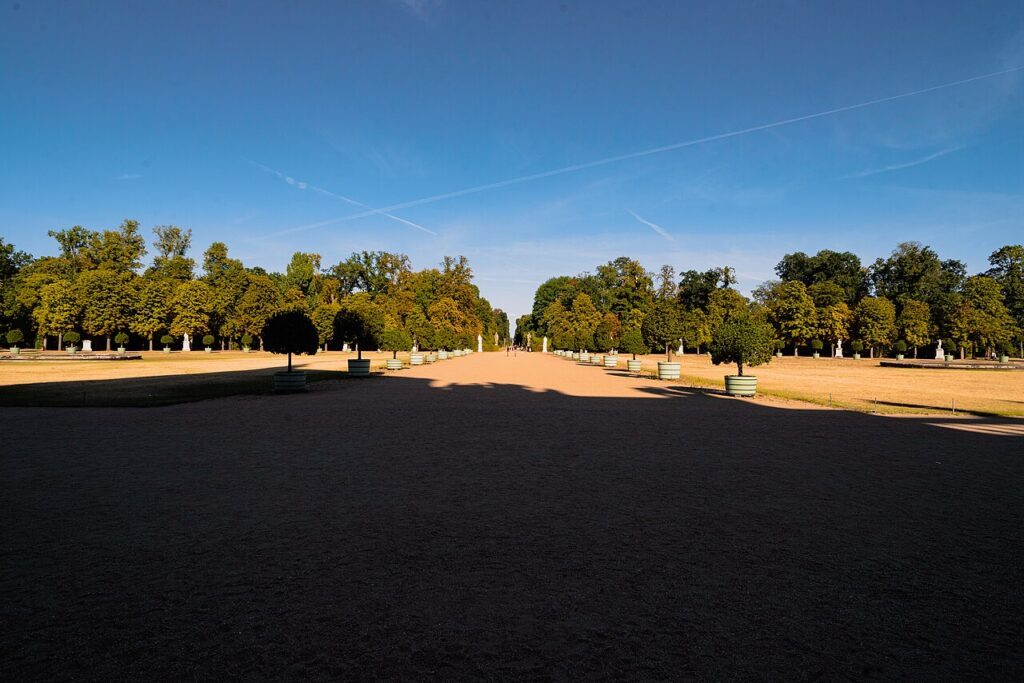
Other notable structures include the Roman Baths, the Charlottenhof Palace, and the historic Picture Gallery, one of Germany’s oldest museum buildings. The Orangerie Palace offers spectacular views over the park from its twin towers.
Planning Your Visit: Practical Information
Sanssouci is located in Potsdam, approximately 25 kilometers southwest of Berlin. The easiest way to reach it is by S-Bahn (S7 line) from central Berlin to Potsdam Hauptbahnhof, then bus 695 to Sanssouci. The journey takes about 45 minutes total. Alternatively, regional trains run frequently to Potsdam.
The palace is open Tuesday through Sunday from April to October (10am-5:30pm) and November to March (10am-4:30pm), closed Mondays. Due to the palace’s small size and fragile interiors, visitor numbers are strictly limited. Advance online booking is essential, especially during peak summer months—same-day tickets often sell out by mid-morning.
A Sanssouci+ ticket (€19 for adults) grants access to all the palaces in the park and is valid for one day. If you’re short on time, prioritize the main palace and gardens. Budget at least half a day to see the highlights, though a full day allows for leisurely exploration of the entire park.
Insider Tips for the Perfect Visit
Visit on a weekday morning in spring (April-May) or early autumn (September-October) when crowds are thinner and the gardens are spectacular. Spring brings blooming tulips and cherry blossoms, while autumn paints the park in golden hues. Summer can be crowded but offers outdoor concerts in the park.
Photography is prohibited inside the palace, so drink in the details with your eyes. However, the exteriors and gardens are perfect for photos—the view from the Chinese House toward the New Palace is particularly stunning.
Comfortable walking shoes are essential; the park is vast and includes gravel paths. Bring water and snacks, though there’s a café near the New Palace. Consider renting an audio guide or joining a guided tour for deeper historical context—Frederick’s relationships with Voltaire and his own family add fascinating layers to the experience.
If you have time, explore Potsdam’s charming Dutch Quarter and the Cecilienhof Palace, where the Potsdam Conference took place in 1945. The entire city is remarkably rich in history and architecture, making it worth an overnight stay rather than just a day trip from Berlin.
Sanssouci offers a glimpse into the mind of one of history’s most fascinating monarchs—an enlightened despot who preferred philosophical discussions and flute concerts to military parades. Walking through these rooms and gardens, you’ll understand why Frederick called this place his sanctuary.