
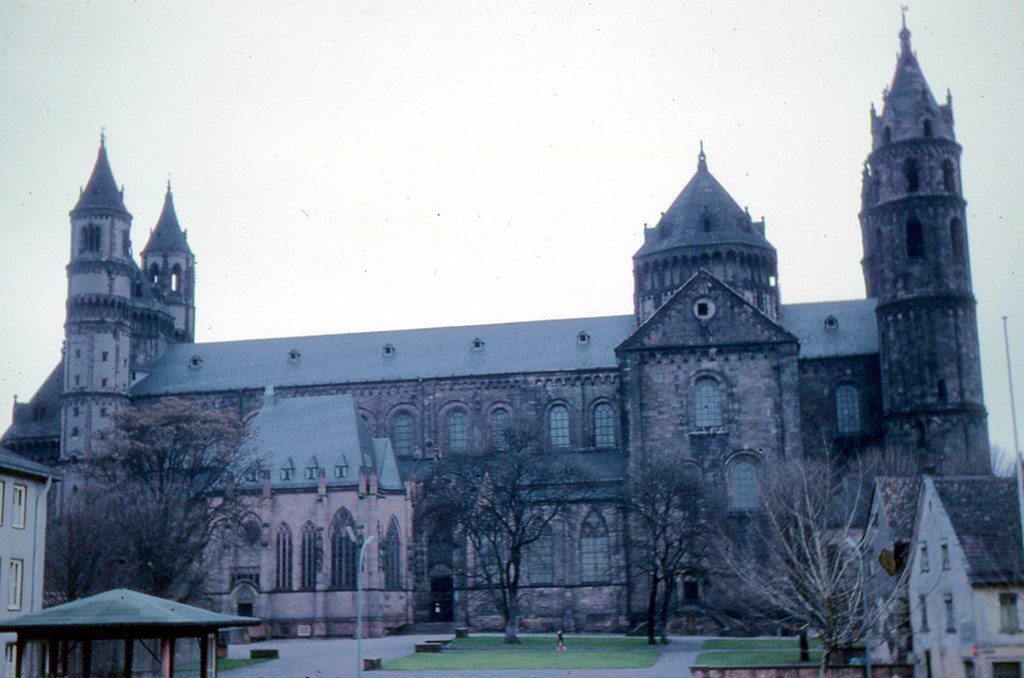
The story of medieval Sicily is one of extraordinary cultural crossroads, where Norman conquerors from France met German imperial ambition in a partnership that changed European history. While the Normans established their kingdom in southern Italy and Sicily in the 11th century, it was a German dynasty—the Staufer, or Hohenstaufen—that would inherit this realm and create one of medieval Europe’s most sophisticated courts.
The connection began with a marriage. In 1186, the future Holy Roman Emperor Henry VI of the Hohenstaufen dynasty married Constance of Sicily, the Norman heiress. When their son Frederick II was born in 1194 in Jesi, near Ancona, he inherited both the German imperial crown and the Norman Kingdom of Sicily. This union brought German rulers to the sun-drenched island that Norman adventurers had wrested from Arab emirs.
Frederick II, raised in Palermo and fluent in six languages including Arabic, became known as “Stupor Mundi”—the Wonder of the World. Though crowned Holy Roman Emperor in Rome in 1220, he preferred his Sicilian capital to his German territories. He transformed the Norman administrative system he inherited into something even more remarkable, blending German imperial authority with Norman-Arab-Byzantine traditions.
German Imperial Architecture in Norman Sicily
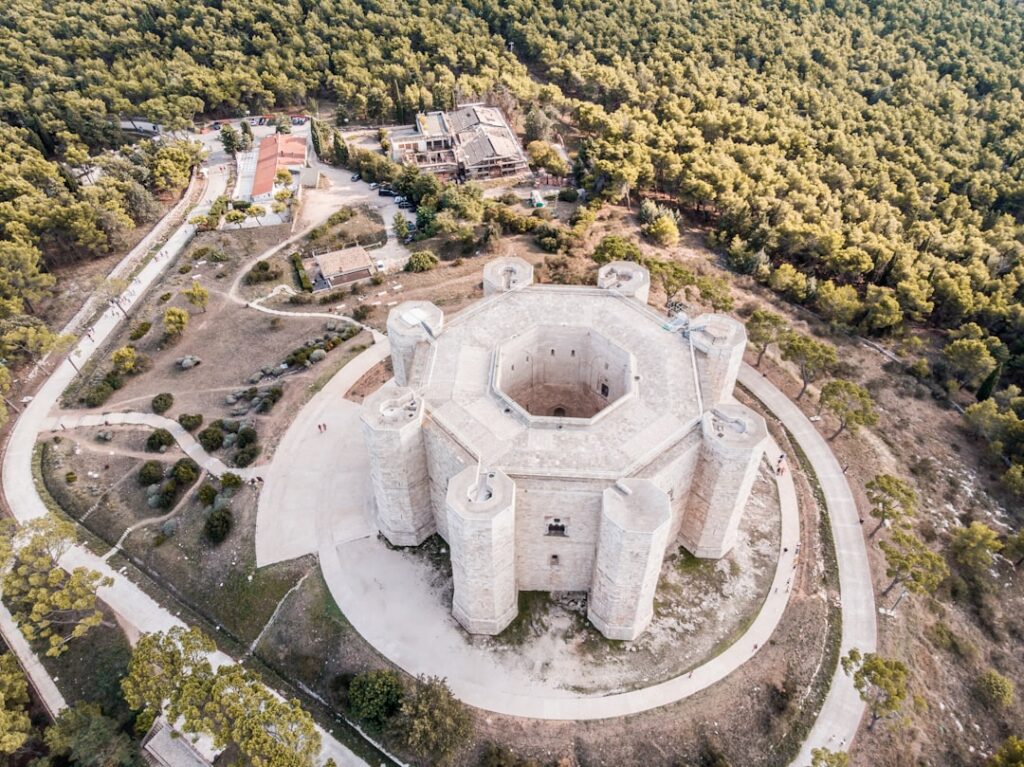
The architectural legacy of this German-Norman connection remains visible across southern Italy. Frederick II commissioned a series of castles that combined Norman military engineering with distinctive imperial German symbolism. Castel del Monte in Apulia, built around 1240, stands as the most famous example—an octagonal fortress of mathematical precision that reflects both Norman defensive design and Frederick’s own fascination with geometry and symbolism.
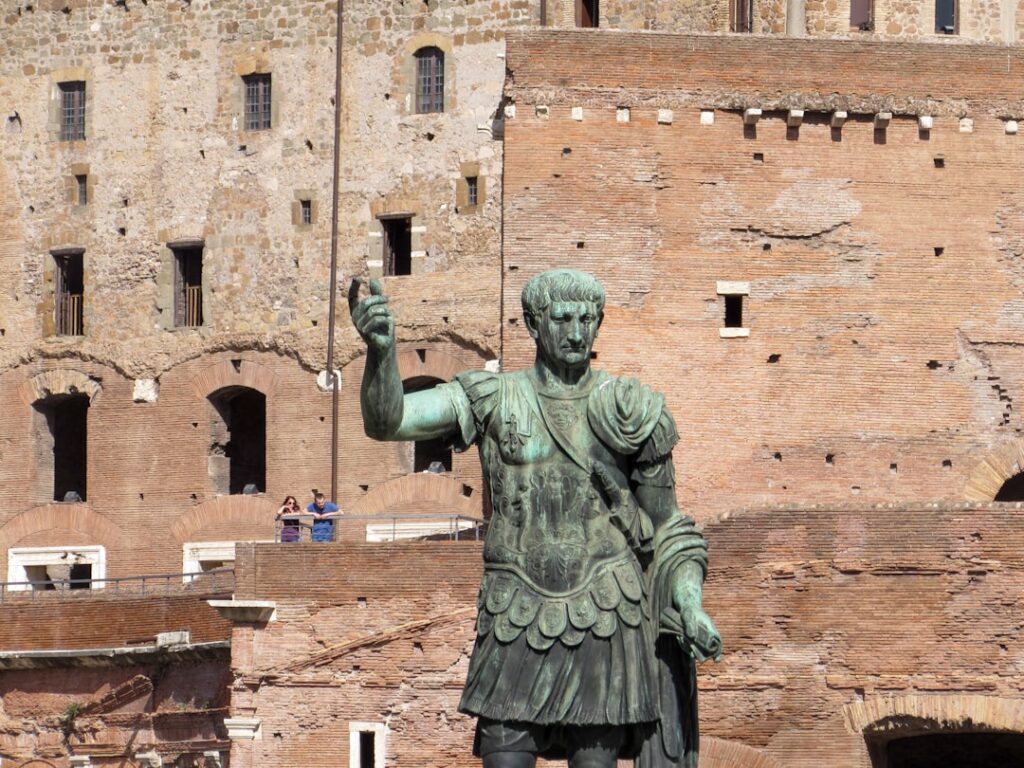
The emperor’s court at Palermo became a meeting point where German knights, Norman barons, Arab scholars, and Jewish translators collaborated. Frederick established the University of Naples in 1224, modeled partly on German scholastic traditions, while maintaining the Norman chancery system for administration. His legal code, the Constitutions of Melfi (1231), drew on both Roman law traditions preserved by the Normans and German imperial legal concepts.
The Norman-German Legacy
The Staufer connection to Norman Sicily lasted until Frederick II’s death in 1250 and the subsequent collapse of his dynasty. But the cultural synthesis achieved during this period—when German imperial power met Norman state-building in a Mediterranean crucible—influenced European statecraft for centuries. The Normans Who Changed the World had created something extraordinary in Sicily, and German rulers recognized its value enough to make it the center of their empire.
Today, visitors to Sicily and southern Italy can trace this dual heritage. The cathedrals of Palermo and Monreale display Norman architectural genius, while Castel del Monte and other Staufer fortifications represent the German imperial chapter. In German cities like Worms and Speyer, the Hohenstaufen legacy is commemorated in cathedral monuments and museums, reminding visitors that this dynasty once ruled from the Baltic to the Mediterranean.
The story illustrates how medieval Europe’s great powers intersected in unexpected ways. Norman adventurers from France built a kingdom, and German emperors transformed it into a crossroads of civilizations—a reminder that Europe’s borders have always been more fluid, and its connections more complex, than modern maps suggest.
Tours & experiences in Germany


Powered by Viator. Some links are affiliate links — we may earn a small commission at no extra cost to you.