
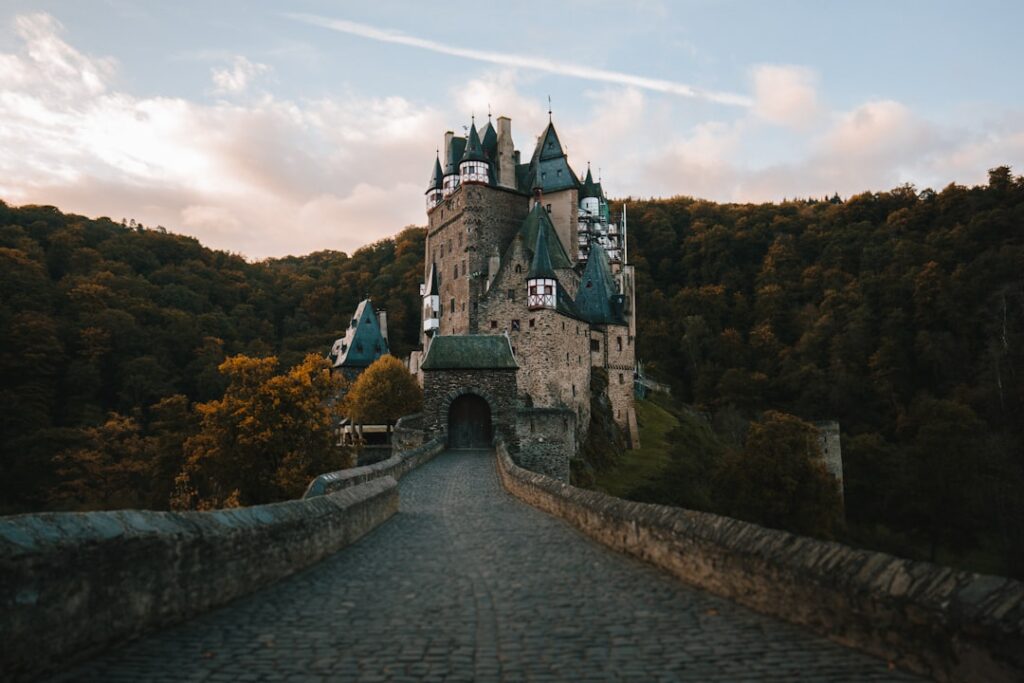
While Neuschwanstein gets the crowds and the postcards, Burg Eltz has something those castle tourists never see: authenticity. This medieval fortress, rising from a rocky outcrop in a forested valley near the Moselle, has never been destroyed. It’s never changed hands by force. And for more than 33 generations, the Eltz family has called it home.
Most German castles are reconstructions or ruins. Burg Eltz is the real thing—turrets, half-timbered walls, original furnishings, and all.
A Castle Hidden in the Hills
Burg Eltz sits in the Elzbach Valley between Koblenz and Cochem, about 10 kilometers from the Moselle River. The castle is invisible from the main roads, which is part of its magic. To reach it, you’ll walk through dense forest along a gentle trail—about 15 minutes from the nearest parking area at Ringelsteiner Mühle, or 45 minutes from the village of Moselkern if you’re coming by train.
The approach is half the experience. The path winds through beech and oak trees, crosses a small stream, and then—suddenly—the castle appears: eight towers, slate roofs, and stone walls that seem to grow out of the rock itself.
Burg Eltz was built starting in the 12th century, but what you see today is mostly from the 14th to 16th centuries. Three branches of the Eltz family lived here together, each in their own section of the castle. The result is an architectural patchwork—Gothic windows next to Romanesque arches, Renaissance gables above medieval walls.
Inside the Castle
You can only visit Burg Eltz on a guided tour, and it’s worth it. The rooms are filled with original furniture, weapons, paintings, and tapestries spanning eight centuries. The armory holds over 500 pieces, including full suits of plate armor and crossbows. The treasury displays gold and silver work, including reliquaries and jewelry that belonged to the family.
One of the most striking rooms is the bedroom in the Rübenach House, with its wooden ceiling painted in vivid reds and golds. Another is the knights’ hall, where the family once gathered for meals beneath vaulted ceilings.
Unlike many castle museums, this one feels lived-in. The current Count and Countess von Eltz still maintain apartments here, and the family’s care for the place shows in every polished bannister and dusted portrait.
When to Visit and How to Get There
Burg Eltz is open from April through October, typically from 9:30 a.m. to 5:30 p.m. Tours are offered in German and English. Arrive early or late in the day to avoid the midday tour groups—mornings around opening time are particularly atmospheric, especially when mist clings to the valley.
If you’re driving, park at Ringelsteiner Mühle and walk. If you’re coming by train, take the regional line to Moselkern station, then hike the marked trail through the forest (about 5 kilometers). From April to October, a shuttle bus runs between the parking area and the castle courtyard for those who prefer not to walk.
Combine your visit with a trip along the Moselle—Cochem is 20 minutes away, with its own hilltop castle and charming old town. Or explore the nearby town of Münstermaifeld, a quiet medieval gem with half-timbered houses and a beautiful collegiate church.
Why Burg Eltz Endures
What makes Burg Eltz special isn’t just its architecture or its setting. It’s the fact that it survived. During the Thirty Years’ War, the French wars of the 17th century, and two World Wars, this castle stood untouched—protected by diplomacy, luck, and a family that knew when to negotiate rather than fight.
It’s not grandiose. It’s not perfectly symmetrical. But it’s real, and that’s rare. Visiting Burg Eltz feels less like touring a museum and more like stepping into a place where history never stopped.
If you love Germany’s castles but crave something quieter and more authentic than the famous names, this is your castle. Pack good walking shoes, bring your camera, and give yourself time to linger in the valley. You’ll leave understanding why this place has captivated travelers for centuries.
Want one short story about Germany in your inbox every day? Subscribe to the Love Germany newsletter and discover the Germany beyond the guidebooks—one story at a time.
Tours & experiences in Germany


Powered by Viator. Some links are affiliate links — we may earn a small commission at no extra cost to you.