
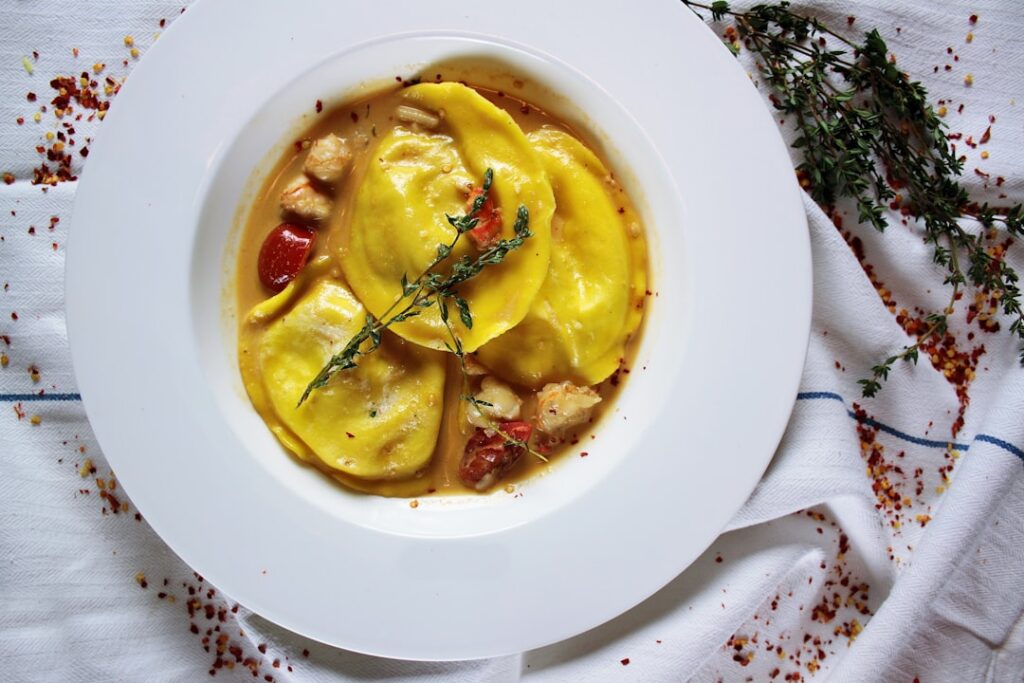
If you’ve never heard of Maultaschen, you’re not alone. Outside Baden-Württemberg, Germany’s Swabian pasta pockets remain one of the country’s best-kept culinary secrets. Think of them as Germany’s answer to ravioli—large, rectangular parcels stuffed with ground meat, spinach, breadcrumbs, and spices—but with a folk tale that makes them even more irresistible.
According to legend, Cistercian monks at Maulbronn Abbey invented Maultaschen in the 17th century as a way to hide meat from God during Lent. They chopped it up, mixed it with spinach and herbs, wrapped it in pasta dough, and figured the Almighty wouldn’t notice. The dish earned the nickname Herrgottsbescheißerle—”little God cheaters.” Whether the story is true or not, Maultaschen have been a Swabian staple for centuries, and since 2009 they’ve held protected geographical status in the European Union.
What Makes Maultaschen Special
Unlike Italian ravioli, Maultaschen are substantial. Each pocket measures about four inches square and comes stuffed with a savory filling that varies by kitchen but traditionally includes ground pork, smoked meat, spinach, onions, parsley, marjoram, and bread soaked in broth. The result is hearty, flavorful, and deeply satisfying.
You’ll find Maultaschen served two main ways in Swabia. The first is in der Brühe—floating in a clear beef or vegetable broth, often with chives or thin slices of pancake (Flädle) for garnish. This is the traditional preparation and the one locals default to. The second is geschmelzt—pan-fried in butter with onions until the edges crisp and caramelize. Both are delicious, and trying them side by side is the best way to decide your favorite.
In recent years, creative chefs have taken Maultaschen in new directions. You’ll find versions stuffed with wild garlic in spring, pumpkin in fall, or even vegetarian and vegan variations. But purists insist the original meat-and-spinach combination is still unbeatable.
Where to Eat Maultaschen in Baden-Württemberg
Stuttgart, the capital of Baden-Württemberg, is ground zero for Maultaschen culture. Head to Weinstube Schellenturm in the city center for a no-frills, authentic experience. The menu changes daily, but Maultaschen in broth are almost always available, served alongside regional wines and wooden tables that have seen decades of diners.
For a more modern take, try Cube Restaurant in Stuttgart’s Kunstmuseum. Chef Thomas Kellermann elevates Swabian classics with refined plating and seasonal ingredients, offering Maultaschen that respect tradition while embracing innovation.
In the university town of Tübingen, Gasthausbrauerei Neckarmüller serves excellent Maultaschen in a riverside beer garden setting. Pair them with a house-brewed lager and watch punts glide along the Neckar River. It’s quintessential Swabian dining.
If you’re near Maulbronn Abbey itself—about 45 minutes northwest of Stuttgart—stop by Klosterkatz, the restaurant inside the UNESCO-listed monastery complex. Eating Maultaschen where legend says they were invented adds a satisfying layer of authenticity to the meal.
Making Maultaschen at Home
Swabians take their Maultaschen seriously, and many families guard recipes passed down through generations. If you’re staying in an apartment or holiday rental, consider buying fresh Maultaschen from a local butcher or supermarket. Even pre-made versions are miles ahead of anything you’ll find outside the region.
Cooking them is simple: bring a large pot of salted water to a gentle simmer (not a rolling boil, or they’ll fall apart), add the Maultaschen, and cook for about 10 minutes until they float. Serve them in broth, or drain and pan-fry them with butter and onions. A side salad dressed with a tangy vinaigrette balances the richness perfectly.
Beyond the Plate
Maultaschen aren’t just food—they’re a window into Swabian culture, where thrift, cleverness, and hearty cooking intersect. The same spirit that supposedly tricked God during Lent shows up in the region’s famous engineering prowess and no-nonsense approach to life. Eating Maultaschen is a small but genuine way to connect with the character of southwest Germany.
You’ll find them on menus year-round, but spring and fall are especially good times to visit. Spring brings wild garlic (Bärlauch) variations, while fall means cozy Besenwirtschaften—seasonal wine taverns—are open, serving Maultaschen alongside new wine and onion tart.
Whether you try them in a centuries-old Weinstube or a modern bistro, Maultaschen deliver something rare: a dish that’s both deeply rooted in tradition and completely accessible to first-timers. One bite, and you’ll understand why Swabians have kept this secret to themselves for so long.
Want more stories about Germany’s hidden food traditions and regional specialties? Subscribe to the Love Germany newsletter and get one short story a day, straight to your inbox.
Tours & experiences in Germany


Powered by Viator. Some links are affiliate links — we may earn a small commission at no extra cost to you.