
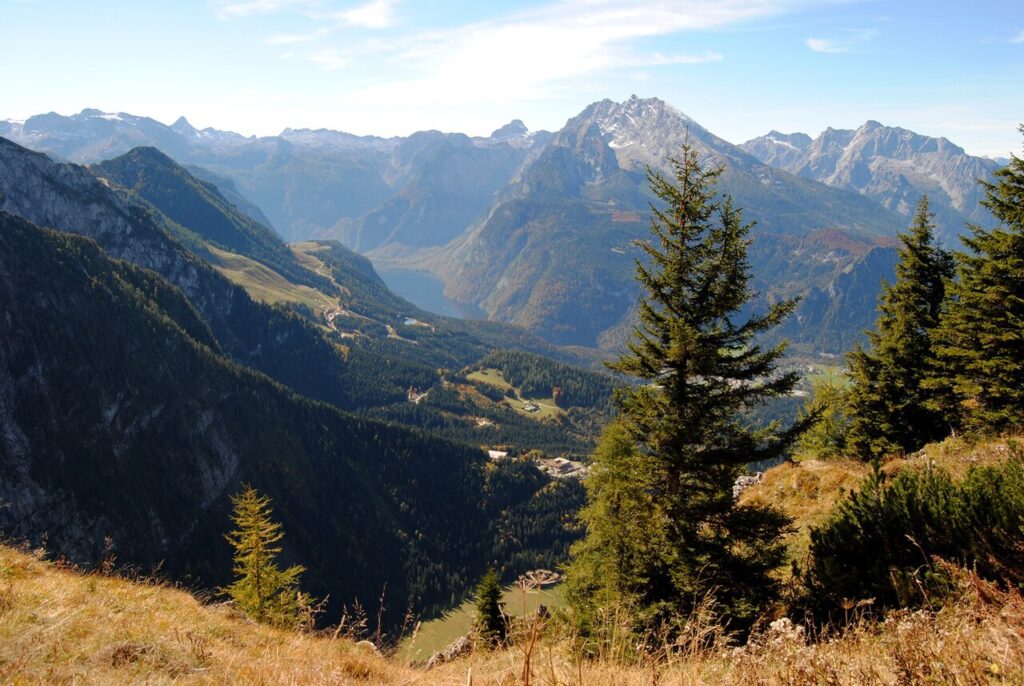
Most visitors to the Bavarian Alps head straight for Garmisch-Partenkirchen or the castles near Füssen. Smart travelers know that the Berchtesgaden region, pressed into Germany’s southeastern corner where Bavaria meets Austria, delivers equally spectacular scenery with a fraction of the tourist traffic. This is where limestone peaks rise straight from emerald valleys, where hiking trails lead to crystal-clear alpine lakes, and where traditional mountain culture still thrives in villages that have welcomed travelers for centuries.
The Berchtesgaden Alps aren’t just beautiful—they’re accessible. You can stand at Germany’s second-highest peak, cruise across an impossibly green lake, and sleep in a 900-year-old market town, all within a long weekend. Here’s how to experience this corner of Bavaria the right way.
Berchtesgaden Town: Your Alpine Base
The town of Berchtesgaden itself makes an ideal headquarters. This isn’t some modern ski resort but a historic market town that’s been hosting salt traders and mountain travelers since the Middle Ages. The Schlossplatz at the town center is anchored by the former Augustinian monastery, now a museum showcasing the region’s royal connections—Berchtesgaden served as a summer residence for Bavarian crown princes.
Stay near the town center and you’ll find family-run guesthouses where breakfast includes fresh Bergkäse (mountain cheese) from local dairies and homemade jams. The pedestrian zone along Marktplatz comes alive in the evenings as locals and visitors gather at traditional Gasthöfe for Bavarian classics and beer from the nearby Hofbräuhaus Berchtesgaden brewery.
Don’t miss the Salzbergwerk, the historic salt mine that brought wealth to this region for 500 years. Tours take you deep into the mountain on miners’ slides, across an underground salt lake by boat, and through chambers where you’ll learn why “white gold” made Berchtesgaden prosperous. It’s touristy, yes, but genuinely fascinating and fun for all ages.
Watzmann and the High Country
The Watzmann massif dominates the Berchtesgaden landscape—a jagged wall of limestone rising to 2,713 meters. The peak itself is for serious mountaineers only, but the trails around its base offer spectacular hiking for anyone with decent fitness and proper boots.
The classic walk is the Watzmann Ostwand trail from Schönau am Königssee, which takes you through alpine meadows to viewpoints facing the mountain’s legendary east face, one of the highest rock walls in the Alps. Plan four to five hours round-trip, and start early—afternoon clouds often obscure the peaks.
For a less demanding but equally rewarding experience, take the cable car from Berchtesgaden up to the Jennerbahn summit station at 1,800 meters. The panoramic terrace delivers 360-degree views across the Berchtesgaden Alps and into Austria. Several easy trails lead from the top station, including a gentle two-hour loop that’s perfect for families.
September and early October are magical here. Summer crowds thin out, the weather often stays stable and clear, and the alpine meadows turn golden. Hikers have the trails largely to themselves, and guesthouse rates drop by 20 to 30 percent.
Beyond Königssee: The Hintersee and Ramsau
Everyone knows about Königssee, but the smaller Hintersee near Ramsau offers equally stunning scenery without the boat queues and tour buses. This glacial lake sits in a natural amphitheater of peaks, its waters reflecting the surrounding mountains in shades of turquoise and deep blue.
The easy three-kilometer trail around Hintersee takes about an hour and passes through forest and meadow with constant lake views. In autumn, the mixed forest explodes in color—a rarity in the Alps, where conifers usually dominate.
The nearby village of Ramsau deserves an afternoon of your time. The parish church of St. Sebastian, with its distinctive onion dome, stands photogenically against the backdrop of the Reiter Alpe massif. Cross the arched stone bridge over the Ramsauer Ache for the classic postcard shot that appears on every Bavarian tourism brochure—and for good reason.
Ramsau is also famous for its traditional woodcarvers. Several workshops welcome visitors, and you’ll find everything from religious figures to whimsical animal carvings. Prices are fair, quality is high, and you’ll be supporting craftspeople keeping centuries-old skills alive.
Practical Details for Your Visit
Berchtesgaden is three hours by train from Munich, with a change in Freilassing. If you’re driving, the A8 autobahn from Munich brings you to Bad Reichenhall, then it’s 20 minutes south on the B20. Parking in Berchtesgaden town costs around €8 per day.
The Gästekarte (guest card) from your accommodation gives you free local bus service throughout the region, including to Königssee, Hintersee, and the Jennerbahn. This alone can save €20 or more per day in transportation costs.
Three days gives you enough time to see the main sights without rushing. Five days lets you really explore the hiking trails and venture into quieter valleys like the Klausbachtal or up to the Gotzenalm plateau.
Traditional Bavarian food in Berchtesgaden means hearty mountain fare: Kasnocken (cheese dumplings), Schweinsbraten (roast pork), and Dampfnudel (steamed sweet dumplings) with vanilla sauce. Pair anything with a Helles from Hofbräuhaus Berchtesgaden or a Radler if you’re planning an afternoon hike.
The Berchtesgaden Alps deliver the alpine experience you’re imagining—dramatic peaks, pristine nature, and authentic Bavarian culture—without requiring advance reservations months ahead or battling crowds at every viewpoint. That combination is increasingly rare in the Alps, which makes this corner of Bavaria worth protecting on your calendar.
Want more stories like this about Germany’s hidden corners and classic destinations? Subscribe to the Love Germany newsletter and get one short travel story in your inbox every day—the kind of insider tips and honest recommendations that help you travel smarter.
Tours & experiences in Germany


Powered by Viator. Some links are affiliate links — we may earn a small commission at no extra cost to you.