
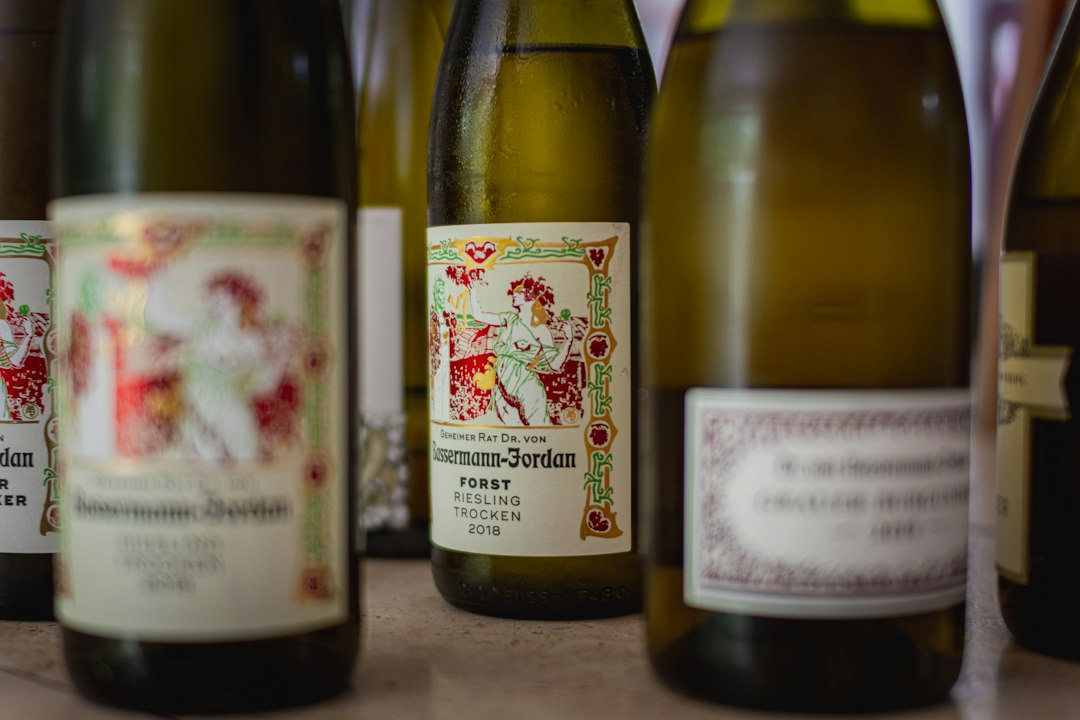
A great German Riesling can taste bone-dry and sweet at the same time, because its searing acidity hides the sugar the way lemon juice hides the sugar in lemonade. That tension is why the grape is prized from the slate slopes of the Mosel — and why a bottle labelled Kabinett tells you how ripe the grapes were, not how sweet the wine will taste. This is Guide № 007 in The Love Germany Guide series.
Get the Full Collectible Guide (Free PDF)
German Riesling & Wine Culture — in a beautifully designed, printable booklet. The Love Germany Guide № 007.
Why Germany and Riesling Belong Together
Riesling is a cool-climate grape that ripens slowly and late, which is exactly what Germany’s northern river valleys provide. The best vineyards sit on steep, south-facing slopes above rivers like the Mosel, Rhine, Nahe and Main, where the water reflects sunlight back onto the vines and the hillside drains cold air away. Slate, limestone and volcanic soils store the day’s heat and release it overnight, helping the grapes reach ripeness in a latitude that would otherwise be marginal for wine.
The earliest widely cited written record of Riesling dates to 1435, a count’s account book that lists purchases of Riesling vine cuttings. Riesling is Germany’s most widely planted grape (Destatis 2025), and the national trade body, the Deutsches Weininstitut, promotes thirteen official growing regions, with the Mosel and Rheingau the names most associated with the grape abroad.
Reading the Label: Prädikat, Trocken and Oechsle
German wine law grades Prädikat wines by the natural ripeness of the grapes at harvest (their must weight, which growers measure in degrees Oechsle). The Prädikat ladder runs, in rising ripeness, from Kabinett to Spätlese (late harvest), Auslese (select harvest), Beerenauslese and Trockenbeerenauslese (individually selected, often botrytis-affected berries), plus Eiswein, pressed from grapes frozen on the vine. Crucially, these words describe grape ripeness, not finished sweetness.
To know how dry the wine actually is, look for a second word. Trocken means dry, halbtrocken off-dry. A Kabinett Trocken is light and crisp; a Kabinett with no dryness term is usually a touch sweet and low in alcohol. The top dry bottlings from the growers’ association are labelled Grosses Gewächs (Great Growth), a vineyard classification run by the VDP.
The Great Riesling Regions
The Mosel produces featherweight, low-alcohol wines of piercing clarity from slate soils, grown on steep slopes where machines can barely be used, so much of the work is done by hand. The Rheingau, a stretch where the Rhine runs east–west and the vines face due south, leans toward fuller, more structured dry Riesling. The Nahe, Pfalz and Rheinhessen round out the grape’s heartland, each with its own balance of power and delicacy.
Several estates double as places you can visit. Schloss Johannisberg in the Rheingau and the former Cistercian monastery Kloster Eberbach are two well-known estates you can visit.
How Germans Actually Drink It
Riesling is an everyday wine in Germany, not a special-occasion rarity. It is poured in wine bars, at festival stalls and in the rustic Straußwirtschaft or Besenwirtschaft — seasonal taverns where growers pour their own wine and serve simple food, which state law lets a grower run for a limited time each year. In autumn, partly fermented grape must is sold as Federweisser.
At table, dry Riesling is a flexible partner for pork, trout, white asparagus (Spargel) in spring and spiced Asian dishes, while an Auslese or Beerenauslese handles fruit desserts and blue cheese. Serve it cool, not ice-cold, so the aromatics are not muted.
Wine Travel and When to Go
Autumn is harvest and festival season across the wine regions, when villages hold weekend Weinfeste with local growers pouring by the glass. Summer brings open-air events such as the Rheingau Musik Festival, which stages concerts inside wineries and the Kloster Eberbach cloisters. For the trade and the seriously curious, ProWein in Düsseldorf each spring is an international wine trade fair. Marked walking and cycling routes thread the vineyards, and most estates ask you to book tastings ahead rather than simply dropping in.
Myths Worth Retiring
Myth: German Riesling is always sweet. Many German Rieslings today are made in a dry (trocken) style, and the label tells you which.
Myth: Liebfraumilch is real Riesling. Liebfraumilch is a sweet (lieblich) blend; the wine regulation requires only at least 70% of its grapes to come from Riesling, Silvaner, Müller-Thurgau or Kerner combined, so it is not a Riesling wine.
Myth: Riesling doesn’t age. Because of its high acidity, fine Riesling can age for many years; taking on notes often described as petrol or kerosene — a sign of maturity, not a fault.
Frequently Asked Questions
Is German Riesling high in alcohol?
Usually the opposite. Classic Mosel Kabinett is often noticeably lower in alcohol than most white wines, because some of the grape sugar is left as sweetness rather than fermented out. Check the alcohol figure on the label.
What does the petrol smell mean?
A faint petrol or kerosene aroma is linked to a compound called TDN, thought to form from grape carotenoid precursors as Riesling ages. In moderation it is considered a hallmark of mature Riesling, not a defect.
Can I visit the vineyards and taste at the source?
Yes. Many estates run tastings and tours, and the growing regions are laced with vineyard trails. Book visits in advance, and in autumn look for the seasonal grower taverns and local wine festivals where you can taste widely for very little.
More The Love Germany Guides
The Love Germany Guide is a numbered series — one tightly focused subject at a time, each with its own downloadable collectible edition. Guide № 001 is The Pretzel (Brezel), Guide № 002 is Oktoberfest, Guide № 003 is The Beer Stein, Guide № 004 is German Beer & the Purity Law (Reinheitsgebot), Guide № 005 is German Beer Garden Etiquette, Guide № 006 is German Slang & Denglisch, This is Guide № 007. More editions are on the way.
🇩🇪 Join Love Germany
Every week, get hidden stories, local secrets, and travel inspiration from people who live and love it.
Tours & experiences in Germany


Powered by Viator. Some links are affiliate links — we may earn a small commission at no extra cost to you.