
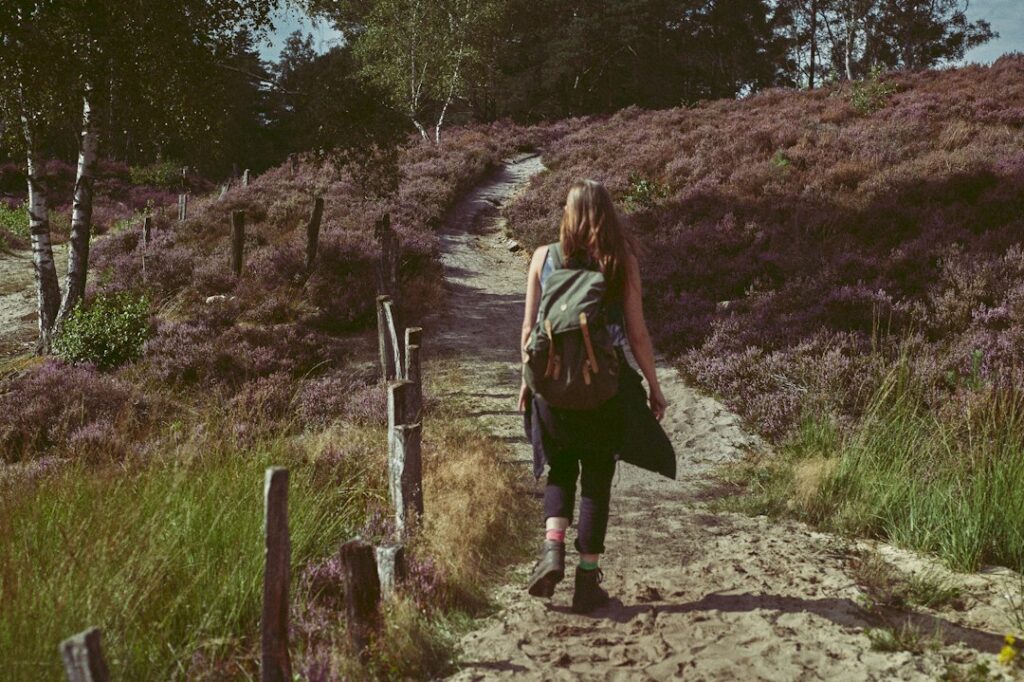
The Lüneburger Heide stretches across Lower Saxony like a living relic of pre-industrial Europe. This vast heathland — covering nearly 7,400 square kilometers between Hamburg and Hannover — is one of the few places in Germany where you can walk for hours through landscapes that would have been familiar to travelers two centuries ago. Come in late August or early September, and the moorlands turn a deep purple as millions of heather plants bloom simultaneously.
Unlike Germany’s mountain parks or river valleys, the Heide rewards those who slow down. This is walking country, where the subtle beauty reveals itself gradually: ancient juniper groves, flocks of moorland sheep with their distinctive black faces, and heath trails that meander through landscapes painted in shades of violet, green, and gold.
The Heart of the Heath: Wilseder Berg and Surrounding Villages
The protected core of the region is the Naturpark Lüneburger Heide, centered on Wilseder Berg — at 169 meters, the highest point in the heath and one of the few places in northern Germany untouched by modern development. No cars are allowed in this central zone. Park in the villages of Niederhaverbeck, Oberhaverbeck, or Undeloh and walk or take a horse-drawn carriage into the heart of the moorland.
From Undeloh, it’s a 5-kilometer walk to Wilseder Berg through classic heathland. The path crosses rolling hills covered in heather and bracken, passing weathered farmhouses with thatched roofs that reach nearly to the ground. At the summit, a simple stone marker and panoramic views reward the gentle climb — on clear days, you can see Hamburg’s church spires to the north.
The tiny hamlet of Wilsede itself, population around 40, sits just below the summit. There are no paved roads, no streetlights, and the few buildings include a traditional heathland inn, the Gasthaus Wilseder Berg, where you can try Heidschnuckenbraten — roasted moorland lamb with a distinctive gamey flavor that comes from the sheep grazing on heather and juniper.
Walking the Heathland Trails
The Heide offers dozens of marked hiking trails, from easy loops to multi-day routes. The Heidschnuckenweg, a 223-kilometer trail from Hamburg-Fischbek to Celle, crosses the best of the region and is marked with a sheep symbol. Most walkers tackle shorter sections as day hikes.
A perfect introduction is the 13-kilometer loop from Undeloh to Wilseder Berg and back via the Totengrund — the “Valley of the Dead,” a dramatic heath valley surrounded by juniper-studded slopes. Despite the ominous name (likely a reference to ancient burial mounds), it’s one of the most beautiful spots in the park, especially during the August heather bloom when the valley floor turns solid purple.
For an easier walk, the 7-kilometer Schäferhof loop from Neuenkirchen passes working sheep farms and offers close-up views of the Heidschnucken flocks that have grazed these lands for centuries. The route is mostly flat and suitable for families.
Beyond the Bloom: When to Visit
Late August through mid-September is peak season, when the heather blooms and the landscape transforms. The exact timing varies by a week or two depending on weather, but the second week of September is usually reliable. Weekends during this period draw crowds — arrive early or visit on weekdays for a quieter experience.
But the Heide has charms in every season. Spring brings wildflowers and newborn lambs. Autumn mist settles into the valleys, creating atmospheric morning walks. Even winter has its appeal, when frost outlines every heather branch and the landscape takes on a stark, minimalist beauty.
Summer outside the bloom period (June to early August) offers warm weather, long days, and far fewer visitors, though the heather will be green rather than purple.
Getting There and Practical Tips
The gateway town of Lüneburg, 50 kilometers south of Hamburg, makes an excellent base. This handsome brick-built city owes its wealth to medieval salt mining and is worth exploring for its Gothic churches and slanted half-timbered houses (the ground is still settling from centuries of mining below). From Lüneburg, local buses run to trailhead villages like Undeloh and Niederhaverbeck, though service is limited — check schedules in advance or rent a bike.
By car, the A7 autobahn runs along the heath’s eastern edge. Park in designated lots at the edge of the car-free zone — parking is limited during peak bloom season, so arrive before 10 a.m. or after 3 p.m. to secure a spot.
Bring layers even in summer. The heath is exposed to wind, and weather can change quickly. Comfortable walking shoes are essential — trails are mostly sandy paths and can be muddy after rain. Water and snacks are smart to carry, as there are few services once you leave the villages.
For overnight stays, consider the traditional heathland villages of Egestorf or Bispingen, which offer small hotels and guesthouses. Camping is available at several sites around the park’s edges.
The Lüneburger Heide proves that Germany’s natural beauty extends far beyond its famous Alps and forests. Here, in the quiet moorlands of Lower Saxony, you’ll find a landscape shaped by centuries of human stewardship and a slower pace that invites genuine connection with the land.
Want more stories like this delivered to your inbox? Subscribe to the Love Germany newsletter and get one short story about Germany’s hidden corners, traditions, and landscapes every day.
Tours & experiences in Germany


Powered by Viator. Some links are affiliate links — we may earn a small commission at no extra cost to you.