Perched on a plateau overlooking the Tauber River valley, Rothenburg ob der Tauber looks exactly as a medieval German town should. With its perfectly preserved half-timbered houses, encircling stone walls, and cobblestone streets untouched by time, this Bavarian gem transports visitors straight into a storybook. As the crown jewel of the Romantic Road, Rothenburg has captivated travelers for generations—and for good reason. Unlike many European towns that were heavily rebuilt after World War II, Rothenburg’s historic core survived remarkably intact, offering an authentic glimpse into medieval Germany.
Walking through Rothenburg’s ancient gates feels like stepping through a portal to the 14th century. The town’s remarkable preservation isn’t accidental; local citizens have meticulously maintained their architectural heritage for centuries, creating what many consider the quintessential German medieval experience. Whether you’re a history enthusiast, a photography lover, or simply someone who appreciates timeless beauty, Rothenburg delivers an unforgettable journey into Germany’s storied past.
What Makes Rothenburg Special
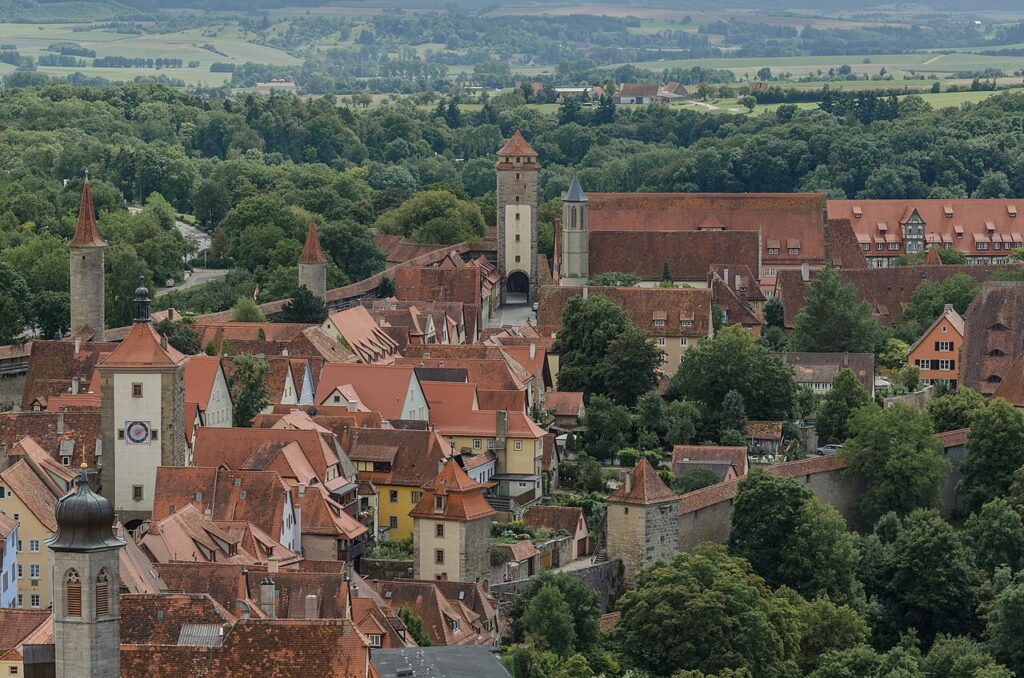
Rothenburg ob der Tauber’s magic lies in its extraordinary completeness. The 2.5-kilometer medieval wall that encircles the old town remains almost entirely intact, complete with walkable sections, towers, and gates. As you stroll along the covered parapet walk, you’ll enjoy panoramic views over red-tiled rooftops and into the surrounding Franconian countryside—perspectives that have changed little in 600 years.
The Marktplatz (Market Square) forms the heart of the town, dominated by the impressive Renaissance-style Town Hall. Climb the 220 steps of the Town Hall Tower for breathtaking views that justify every step. Nearby, the Medieval Crime and Justice Museum houses a fascinating collection of legal instruments, torture devices, and shame masks that reveal the harsh realities of medieval justice.
Rothenburg also holds a special place in German Christmas traditions. The German Christmas Museum, open year-round, displays centuries of holiday decorations and explains the origins of beloved customs like the Advent calendar and Christmas tree ornaments. The famous Käthe Wohlfahrt Christmas Village store occupies multiple buildings and remains a pilgrimage site for Christmas enthusiasts from around the world.
Must-See Sights and Experiences
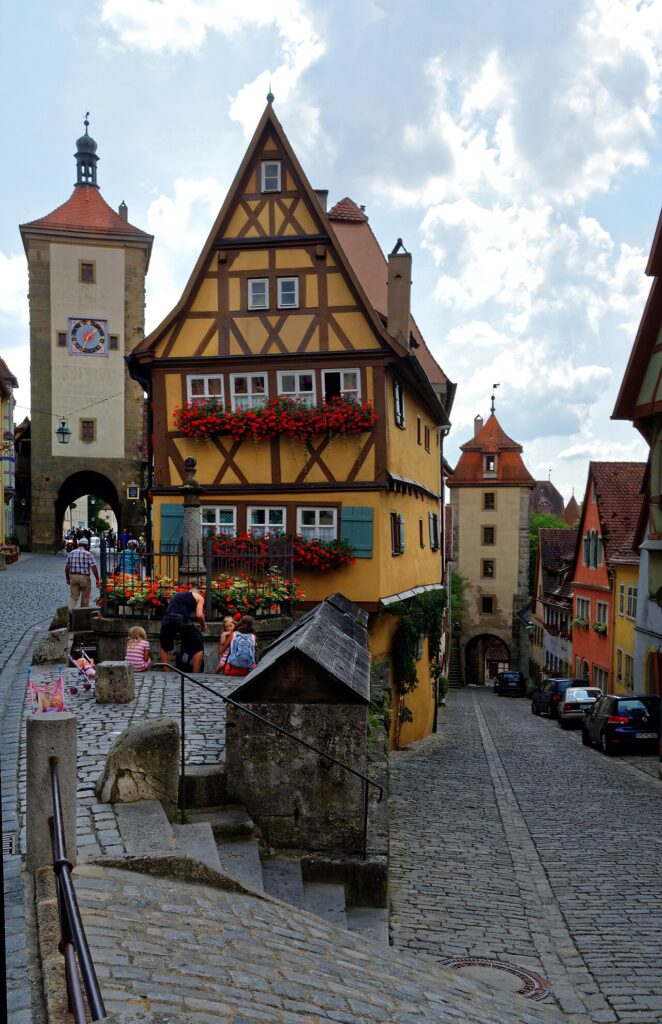
Start your visit at the Plönlein, Rothenburg’s most photographed corner, where two streets fork around a half-timbered house with the Siebers Tower rising behind it—this postcard-perfect scene epitomizes medieval German architecture. From here, explore the town walls via the covered walkway, accessing it at several gates including the imposing Rödertor gate tower.
The St. Jakob’s Church deserves significant time. Inside this Gothic masterpiece, you’ll find the Holy Blood Altarpiece by master woodcarver Tilman Riemenschneider, considered one of the finest examples of late medieval German sculpture. The intricate detail of the Last Supper scene carved in limewood is simply breathtaking.
Don’t miss the opportunity to join the Night Watchman’s Tour, offered in English every evening. This entertaining costumed guide leads groups through the darkened streets, sharing stories, songs, and historical anecdotes that bring Rothenburg’s medieval past vividly to life. It’s both educational and thoroughly enjoyable.
For a sweet treat, sample the town’s signature pastry, Schneeballen (snowballs)—strips of dough formed into balls, deep-fried, and covered with powdered sugar, chocolate, or other toppings. While some consider them touristy, they’re a genuine local tradition worth trying at least once.
Planning Your Visit
Rothenburg is located in northern Bavaria, about 60 kilometers west of Nuremberg. The easiest way to reach it by public transportation is to take a train to Steinach, then transfer to the regional line directly to Rothenburg (journey time from Munich: approximately 2.5-3 hours; from Frankfurt: 2.5 hours). If you’re driving along the Romantic Road, Rothenburg makes an ideal base for exploring the region.
The best time to visit depends on what experience you’re seeking. Late spring (May-June) and early fall (September-October) offer pleasant weather and fewer crowds than summer’s peak season. However, Rothenburg truly shines during the Christmas season, when the Reiterlesmarkt (Christmas market) transforms the town into a winter wonderland. The atmospheric medieval setting makes it one of Germany’s most magical Christmas markets, though expect significant crowds.
For a more peaceful experience, stay overnight in Rothenburg rather than visiting as a day-tripper. Tour buses dominate the town between 10 AM and 5 PM, but early mornings and evenings offer serene moments when you can wander the empty streets and appreciate the town’s beauty in relative solitude. Dawn walks along the town walls, with mist rising from the Tauber valley below, provide unforgettable photographic opportunities.
Insider Tips
Purchase a combination ticket if you plan to visit multiple museums—it offers significant savings. Book accommodations well in advance, especially for Christmas market dates and summer weekends, as the town’s limited lodging fills quickly.
While the main streets can feel crowded and commercialized, venture into the quieter residential lanes in the eastern part of the old town near the Klingenbastei for a more authentic atmosphere. The Burggarten (Castle Garden) on the western edge offers beautiful views and a peaceful escape from the busier areas.
Consider extending your visit to explore the Tauber Valley below the town—a scenic walk down to the Doppelbrücke (Double Bridge) and back up through the valley provides exercise and spectacular views of Rothenburg from below, perspectives most visitors never see.
Rothenburg ob der Tauber isn’t just a museum piece frozen in time; it’s a living town that has mastered the balance between preservation and tourism. Whether you spend a few hours or a few days here, you’ll leave with the sense that you’ve experienced something truly special—a genuine connection to medieval Germany that few places can match.