
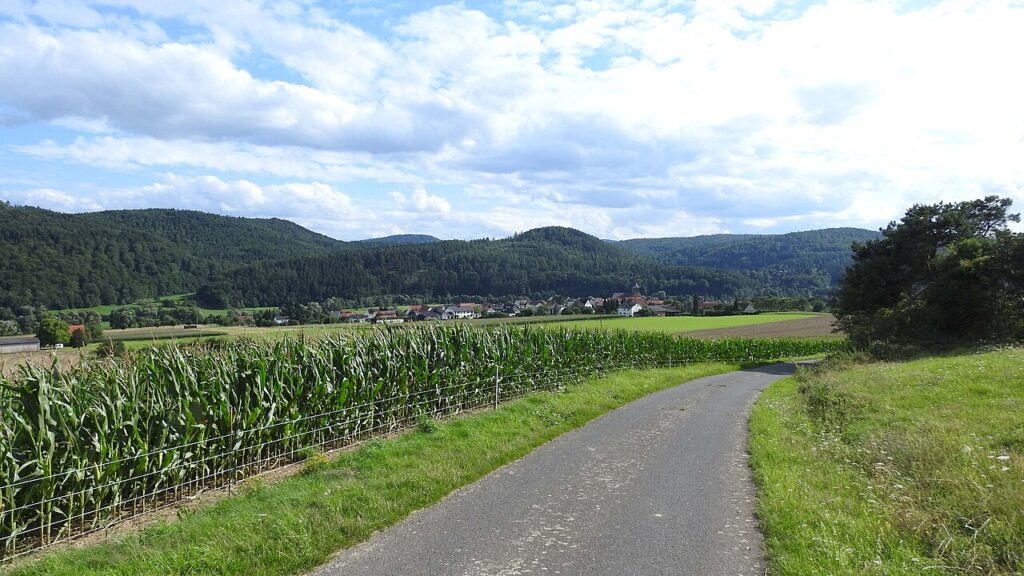
The Mosel Radweg ranks among Europe’s finest river cycling routes, and for good reason. This 240-kilometer trail follows the Moselle River from Trier to Koblenz, winding through a landscape of vertiginous vineyards, half-timbered wine villages, and Romanesque churches that have watched over these banks for a thousand years.
Unlike the Alps or the North Sea coast, the Mosel offers something gentler: nearly flat terrain, a current of cool air rising from the water, and the promise of a wine tavern around every bend. You’ll pass more Riesling vines than cars, and the route never strays far from the river itself.
The Route: Trier to Koblenz
Most cyclists ride downstream, starting in Trier and finishing where the Moselle meets the Rhine at Deutsches Eck in Koblenz. The route is well-marked with green signs bearing a bicycle symbol, and the path alternates between dedicated bike lanes and quiet village streets.
The terrain is genuinely flat—total elevation gain over the entire route is less than 500 meters. That makes it accessible for families, casual riders, and anyone more interested in wine than watts. You’ll ride on paved paths that hug the riverbank, crossing to the opposite shore every ten or fifteen kilometers via bridges or small car ferries that accommodate bicycles.
Plan for three to five days, depending on how often you stop to taste wine or explore towns. Most riders average 50 to 80 kilometers per day, which leaves plenty of time for lunch in Bernkastel-Kues or a castle detour above Cochem.
Towns Worth Stopping For
Bernkastel-Kues sits roughly halfway and makes an ideal overnight. Its Marktplatz is one of Germany’s most photogenic—crooked timber houses lean toward a Renaissance fountain, and narrow lanes climb toward the ruins of Landshut Castle. The town is also the heart of Mosel Riesling country, so every second door opens into a tasting room.
Traben-Trarbach, a few kilometers downstream, surprises with its Art Nouveau villas—a legacy of its turn-of-the-century wine boom. Cross the bridge to explore both sides of the river, and don’t miss the Jugendstil portal of the old Brückentor.
Cochem anchors the lower Mosel. Its Reichsburg castle dominates the skyline, and the Altstadt offers everything from weinstuben to gelato. If you have energy left, ride or hike up to the castle for views over one of the river’s tightest loops.
Beilstein, just downriver, earns its nickname as the “Sleeping Beauty of the Mosel.” It’s tiny—barely more than a single cobbled lane—but its charm is outsized. Metternich Castle towers above, and the village square feels like a movie set.
Practical Details
The cycling season runs from April through October, with May and September offering the best combination of weather and quiet. July and August see the most traffic, both on the path and in the wine villages.
Rent bikes in Trier or Koblenz—many shops offer one-way rentals and will transport your luggage to your next hotel for a small fee. E-bikes are popular and practical if you plan any detours up into the vineyards. Standard touring bikes work perfectly for the main route.
Accommodation is plentiful. Nearly every wine village has a family-run guesthouse or pension, many with their own vineyards. Book ahead in summer, especially on weekends. Wild camping isn’t permitted, but official campgrounds line the river at regular intervals.
Bring a lock, a repair kit, and a water bottle. Grocery stores are sparse between towns, but bakeries open early and wine taverns serve hearty lunches. Don’t rely on credit cards in the smallest villages—carry some cash.
Beyond the Bike Path
The Mosel Radweg connects easily to other routes. In Koblenz, you can continue north on the Rhine Cycle Route toward Cologne or Bonn, or turn south toward Mainz and the Rheingau. From Trier, a short ride west brings you to Luxembourg, or you can head south into France and the Alsace wine region.
For a shorter trip, consider riding just the middle section between Bernkastel-Kues and Cochem—about 50 kilometers of the river’s most dramatic bends. Regional trains run along the valley, so it’s easy to skip sections or return to your starting point.
The Mosel isn’t dramatic in the Alpine sense. There are no glaciers or mountain passes. But its beauty is quieter and, for many riders, more rewarding: the rhythm of pedaling beside green water, the smell of slate warming in the sun, and the knowledge that a glass of cool Riesling is never more than a few kilometers away.
Want more stories about Germany’s rivers, trails, and back roads? Subscribe to the Love Germany newsletter and get one short story in your inbox every day—no fluff, just the Germany you came to discover.
Tours & experiences in Germany


Powered by Viator. Some links are affiliate links — we may earn a small commission at no extra cost to you.