
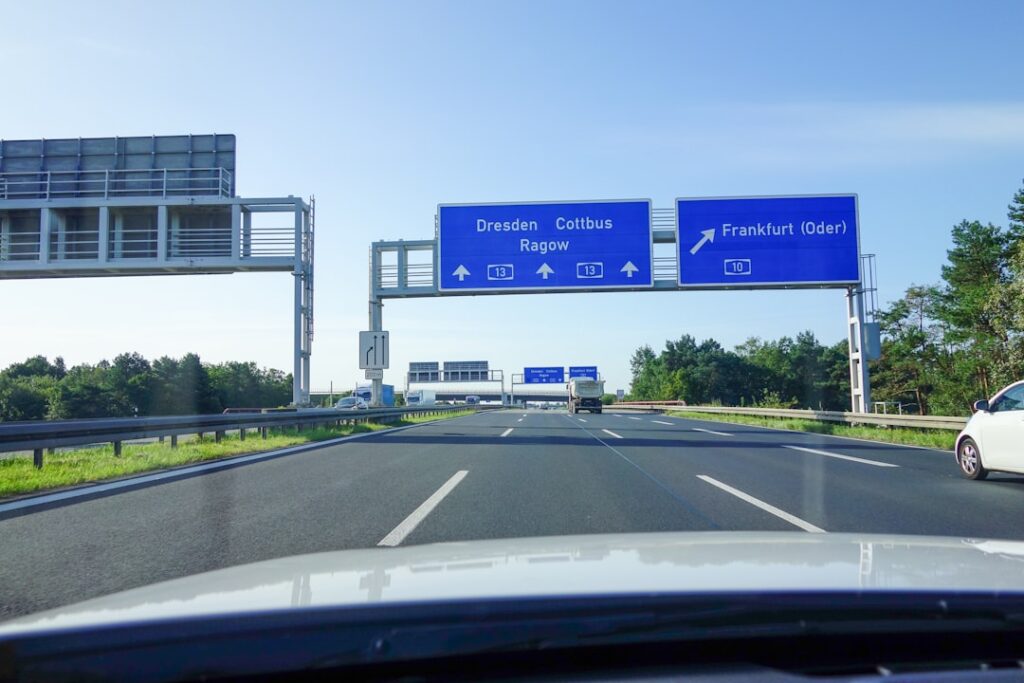
The Autobahn is one of Germany’s most iconic features, famous worldwide for its stretches without speed limits. But there’s much more to this highway system than fast cars and unlimited velocity. Whether you’re renting a car to explore the Romantic Road or driving from Munich to Hamburg, understanding how the Autobahn works will make your journey safer, smoother, and more enjoyable.
The Speed Limit Reality
Let’s address the elephant in the fast lane first: not all of the Autobahn is speed-limit-free. In fact, about 30 percent of the network has permanent speed restrictions, usually around urban areas, construction zones, or accident-prone curves. You’ll see these posted clearly on blue signs.
Where there’s no posted limit, the advisory speed is 130 kilometers per hour (about 80 mph). This isn’t legally binding, but if you’re involved in an accident while driving faster, you may share liability even if you weren’t at fault. Many German drivers stick close to this speed, especially in moderate traffic or bad weather.
Temporary electronic signs display changing limits based on conditions — fog, rain, heavy traffic, or roadwork. These are mandatory and enforced by camera. Fines start around €20 for minor infractions and climb steeply. Drive 20 km/h over the limit and you’re looking at €70 and a point on your record.
Lane Discipline and the Rechtsfahrgebot
German drivers take lane discipline seriously. The Rechtsfahrgebot — the requirement to drive on the right — is law. The left lane is for passing only. Once you’ve passed, move back right. Lingering in the left lane, even if you’re going fast, is both illegal and irritating to locals.
On three-lane stretches, the middle lane is for steady cruising and passing slower trucks. The far right is for trucks, RVs, and anyone moving under 100 km/h. If someone approaches rapidly behind you in the left lane — often signaled by a quick flash of the high beams — move over promptly. It’s not aggression, just a polite nudge in German highway culture.
Undertaking (passing on the right) is illegal except in heavy, slow-moving traffic. Don’t do it.
No Tolls, But Mind the Environmental Zones
Germany does not charge tolls for passenger cars on the Autobahn, unlike neighboring France, Austria, or Switzerland. This makes cross-country road trips refreshingly affordable. Fuel is your main cost — diesel is cheaper than gasoline, and many rental cars run on it.
However, if you’re driving into city centers, watch for Umweltzonen (environmental zones). You’ll need a green emissions sticker (Umweltplakette) displayed on your windshield. Rental cars usually have one, but check. You can buy them at TÜV stations, some gas stations, or online for around €6. Driving without one in a restricted zone can result in an €80 fine.
Rest Stops and Raststätten Culture
Germany’s Autobahn rest stops, called Raststätten, are a world apart from typical highway service areas. Larger ones have full-service restaurants, bakeries, grocery sections, and even playgrounds. Smaller Rastplätze are parking areas with picnic tables and toilets but no facilities.
Toilets at most Raststätten cost €0.70 to €1, but you’ll receive a voucher for the same amount to use in the shop or café — essentially a forced pit stop purchase, but it keeps facilities clean. Brands like Sanifair run many of these rest stops.
If you’re driving long distances, use these stops strategically. They’re spaced every 40 to 60 kilometers. The food is decent — you’ll find Wiener schnitzel, currywurst, fresh pretzels, and proper coffee, not just vending machine fare. Some even have regional specialties depending on where you are.
What to Watch For
Trucks are restricted to the right lane and cannot drive on Sundays or public holidays (with rare exceptions). This makes Sunday an excellent day for a road trip — lighter traffic, open lanes, and a more relaxed pace.
In winter, some mountain stretches require winter tires. Rental agencies typically equip cars from October through April, but confirm when booking. Driving without proper tires in snowy conditions can void your insurance.
Watch for the diamond-shaped yellow sign marking the start of a priority road (Vorfahrtsstraße). You have right of way until the sign is crossed out. At intersections without signals or signs, traffic from the right has priority — a rule that catches foreign drivers off guard in small towns.
Construction zones are frequent, especially in summer. Follow the temporary signs closely. Speed cameras are common in these areas, often disguised or mobile.
Planning Your Route
Navigation apps like Google Maps and Waze work well in Germany, but consider downloading the ADAC app (Germany’s automobile club). It provides real-time traffic updates, construction alerts, and rest stop locations.
For scenic routes, don’t just stick to the Autobahn. Federal highways (Bundesstraßen), marked with yellow signs and numbers like B9 or B500, often run parallel to the Autobahn through villages, forests, and wine country. The Schwarzwald-Hochstraße (B500) through the Black Forest and the Deutsche Alpenstraße through Bavaria are worth the slower pace.
If you’re new to high-speed driving, start on a quieter stretch — say, between Freiburg and Basel or around Brandenburg — before tackling the busy A8 between Munich and Stuttgart.
The Autobahn is more than a highway. It’s a glimpse into German efficiency, engineering, and unspoken rules of the road. Drive it once with respect and attention, and you’ll understand why it’s a point of national pride.
Want more insider stories from Germany, one short read each day? Subscribe to the Love Germany newsletter and get the country’s hidden corners, local flavors, and travel tips delivered to your inbox.
Tours & experiences in Germany


Powered by Viator. Some links are affiliate links — we may earn a small commission at no extra cost to you.