
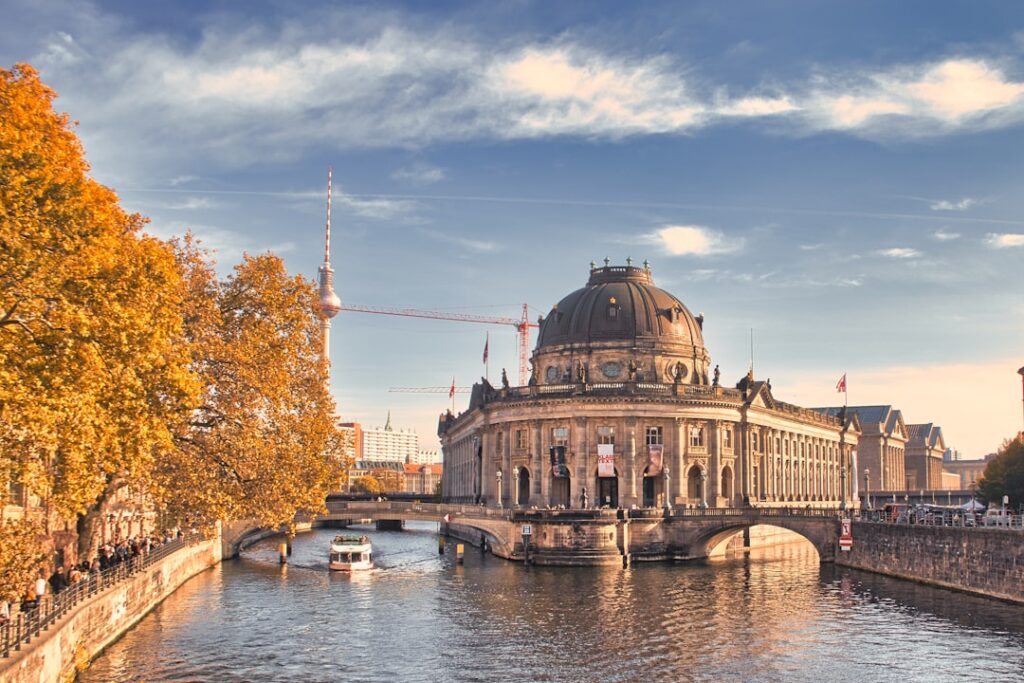
In the heart of Berlin, where the Spree River splits around a small island, sits one of the world’s most extraordinary concentrations of cultural treasures. Museum Island, or Museumsinsel, is home to five world-renowned museums that together form a UNESCO World Heritage Site. This remarkable ensemble of institutions houses artifacts spanning 6,000 years of human history, from ancient civilizations to European masterpieces, making it an essential destination for anyone visiting Germany’s capital.
What makes Museum Island truly special isn’t just the quality of individual collections, but the visionary concept behind it. Conceived in the 19th century as a “sanctuary of art and science,” this architectural and cultural complex represents the Enlightenment ideal that knowledge and beauty should be accessible to all. Today, it stands as both a testament to Prussia’s cultural ambitions and one of the finest museum complexes anywhere in the world.
The Five Museums: A Journey Through Civilizations
Each museum on the island offers a distinct experience. The Pergamon Museum, currently undergoing extensive renovations with sections reopening in phases, remains the most visited museum in Germany. Its monumental architecture, including the reconstructed Pergamon Altar, the Market Gate of Miletus, and the stunning Ishtar Gate of Babylon with its brilliant blue glazed bricks, creates an immersive journey through ancient worlds. Note that the famous Pergamon Altar hall is closed until 2027, but other sections including the Collection of Classical Antiquities and the Museum of the Ancient Near East continue to astound visitors.
The Neues Museum (New Museum) showcases Egyptian and prehistoric collections, with the crown jewel being the 3,400-year-old bust of Queen Nefertiti, one of the most recognizable artifacts from ancient Egypt. The museum’s architecture itself tells a story—meticulously restored by David Chipperfield after World War II destruction, it seamlessly blends original 19th-century elements with modern design.
The Alte Nationalgalerie (Old National Gallery), resembling a Roman temple perched atop a grand staircase, houses 19th-century art including works by Caspar David Friedrich, Claude Monet, and Auguste Renoir. The Bode Museum, with its distinctive domed neo-Baroque architecture at the island’s northern tip, features Byzantine art, medieval sculptures, and one of the world’s largest coin collections. Finally, the Altes Museum (Old Museum), the oldest building on the island, displays Greek and Roman antiquities in a stunning neoclassical rotunda inspired by Rome’s Pantheon.
Planning Your Visit: Tickets, Timing, and Strategy
Museum Island requires strategic planning to make the most of your visit. A Museum Island day pass (Bereichskarte Museumsinsel) grants access to all five museums and represents excellent value if you plan to visit multiple institutions. Individual museum tickets are available, but the combined ticket saves both money and time. Purchase tickets online in advance to avoid queues, especially during peak summer months and school holidays.
Allow at least a full day to explore the island properly, though true enthusiasts could easily spend two or three days here. If time is limited, prioritize the Neues Museum for Egyptian treasures and the Pergamon Museum’s available sections. Arrive when museums open at 10 a.m. to beat the crowds, particularly at the Pergamon and Neues Museum. Thursday evenings offer extended hours until 8 p.m. at most museums, with notably fewer visitors.
The best time to visit Berlin’s Museum Island is during spring (April-May) or fall (September-October) when weather is pleasant and tourist numbers are manageable. Winter visits can be magical with fewer crowds, though be prepared for early darkness. Summer offers the longest hours and outdoor concerts in the surrounding areas, but also the biggest crowds.
Getting There and Insider Tips
Museum Island enjoys excellent public transportation connections. The S-Bahn stations Hackescher Markt and Friedrichstraße are both within a five-minute walk, as is the U-Bahn station Friedrichstraße. Buses M1, M4, M5, and M6 all stop nearby. The island sits in Berlin’s historic center, easily combined with visits to the Berlin Cathedral, Unter den Linden boulevard, and the trendy Hackesche Höfe courtyards.
Here are essential insider tips for enhancing your Museum Island experience: Download the museum apps before arriving for detailed guides and audio tours. The James Simon Gallery, opened in 2019, serves as the modern entrance building with excellent facilities, a café, and museum shop—it’s the perfect starting point. Free cloakrooms are available; use them, as bags larger than hand luggage aren’t permitted in exhibition rooms.
For a quieter experience, visit on weekday mornings or Thursday evenings. Guided tours in English are available and highly recommended for first-time visitors—they provide context that brings the artifacts to life. Consider combining your museum visits with a stroll across Museum Island’s beautiful bridges or relaxing in the Lustgarten park facing the Berlin Cathedral.
Photography is generally permitted for personal use without flash, but special exhibitions may have restrictions. Several excellent cafés dot the island, but for better value and atmosphere, cross the Spree to the charming cafés in the Nikolaiviertel district just south of the island.
Museum Island represents more than just an impressive collection of artifacts—it’s a concentrated dose of human achievement, artistic expression, and historical wonder. Whether you’re marveling at Nefertiti’s timeless beauty, standing beneath the towering Ishtar Gate, or contemplating Romantic-era paintings, you’re experiencing treasures that have shaped our understanding of civilization itself. For anyone who loves culture, history, or art, Museum Island isn’t just a must-see attraction; it’s a pilgrimage to one of humanity’s greatest repositories of cultural memory.
Tours & experiences in Germany


Powered by Viator. Some links are affiliate links — we may earn a small commission at no extra cost to you.