
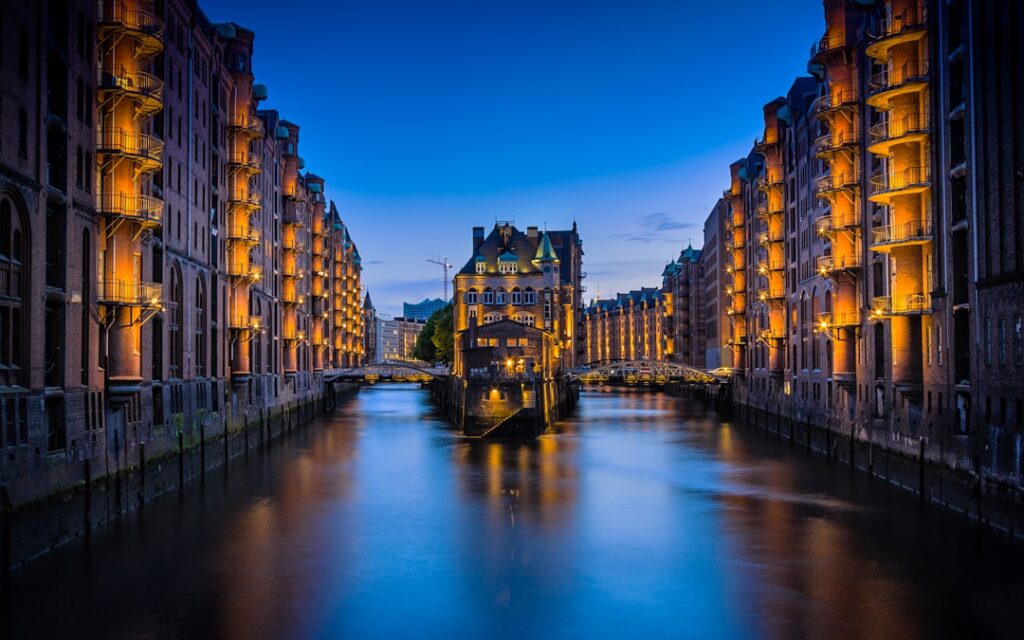
Rising from the waters of Hamburg’s harbor like a red-brick Venice, the Speicherstadt stands as one of Europe’s most distinctive architectural ensembles. This vast warehouse district, built between 1883 and 1927, represents the world’s largest unified warehouse complex and earned UNESCO World Heritage status in 2015. With its neo-Gothic facades reflected in narrow canals, the Speicherstadt offers visitors a unique glimpse into Hamburg’s maritime trading heritage while serving as a vibrant cultural quarter that seamlessly blends history with modern attractions.
The name Speicherstadt translates to “City of Warehouses,” and walking through its maze of streets and canals immediately reveals why. Seven-story brick buildings rise majestically from the water, their distinctive gables and turrets creating a skyline unlike any other. These structures were built on thousands of oak timber piles driven deep into the marshy ground, an engineering feat that has preserved them for over a century. Originally constructed to store exotic goods like coffee, tea, spices, and the famous Oriental carpets, many warehouses now house museums, restaurants, and creative offices while maintaining their historic character.
What Makes Speicherstadt Special
Beyond its architectural grandeur, the Speicherstadt captivates visitors with its atmospheric charm. The fifteen warehouse blocks are connected by six bridges spanning the Wandrahmsfleet and Brooksfleet canals, creating countless photogenic corners where water, brick, and sky converge. The district remains a working area where traditional goods like coffee and tea are still stored, filling certain streets with aromatic scents that transport you back to Hamburg’s golden age as a trading powerhouse.
The attention to detail in the buildings themselves rewards close examination. Notice the elaborate winches protruding from upper floors, once used to hoist goods directly from ships below. The facades feature intricate brickwork patterns, ornate gables, and decorative elements that elevate these utilitarian structures to works of art. At night, carefully designed lighting transforms the Speicherstadt into a romantic wonderland, with golden illumination highlighting the architecture’s finest details and creating stunning reflections in the dark water.
Must-See Attractions and Activities
The Miniatur Wunderland, located within the Speicherstadt, stands as the district’s most popular attraction and the world’s largest model railway exhibition. This extraordinary installation features meticulously crafted miniature landscapes representing regions from the Alps to Las Vegas, complete with tiny airports, ships, and over 1,000 trains. Budget at least two to three hours for your visit, and book tickets online in advance to avoid lengthy queues.
For a deeper understanding of the area’s history, visit the Speicherstadt Museum in Block L. This atmospheric museum recreates the working conditions of warehouse laborers and displays historical goods, tools, and photographs. Nearby, the Deutsches Zollmuseum (German Customs Museum) offers fascinating insights into the world of customs enforcement, smuggling, and international trade.
Coffee enthusiasts shouldn’t miss the Speicherstadtmuseum Kaffeerösterei, a working coffee roastery where you can watch traditional roasting methods and sample freshly brewed varieties. The district also houses the Dungeon Hamburg, an interactive attraction that brings the city’s darker history to life through theatrical performances, though this is better suited for older children and adults.
Take time to simply wander the walkways along the canals, particularly Auf dem Sande and St. Annenufer, where you can watch boats navigate the narrow waterways and discover hidden courtyards. A fleet cruise through the canals provides a unique water-level perspective of the warehouses and is particularly magical during evening illumination hours.
Getting There and Practical Information
The Speicherstadt is easily accessible from central Hamburg. The U3 subway line stops at Baumwall station, placing you at the district’s western edge. Alternatively, the Meßberg U1 station provides access from the east. From Hamburg’s main train station (Hauptbahnhof), it’s just a fifteen-minute walk southward through the city center.
The best time to visit depends on your priorities. Late spring through early autumn (May to September) offers the most pleasant weather for outdoor exploration, though these months also bring larger crowds. The Speicherstadt reveals different charms across seasons—summer brings lively canal-side cafés, while winter’s shorter days allow earlier appreciation of the atmospheric evening lighting. Visit on weekday mornings for the quietest experience, especially if you plan to tour Miniatur Wunderland.
The district is freely accessible at all hours, though individual museums maintain their own schedules. Most attractions open around 10:00 AM and close between 5:00 PM and 6:00 PM. The evening illumination, which lasts from dusk until midnight, transforms the Speicherstadt into an entirely different experience—plan to visit at least once after dark during your Hamburg stay.
Insider Tips for Your Visit
For the finest photographs, position yourself on the Hohe Brücke (High Bridge) during blue hour—the period just after sunset when the sky’s deep blue contrasts beautifully with the golden building lights. The view looking east toward the Wasserschloss (Water Castle) is particularly stunning.
Combine your Speicherstadt visit with the adjacent HafenCity, Europe’s largest urban development project, where ultramodern architecture creates striking contrasts with the historic warehouses. The futuristic Elbphilharmonie concert hall sits just minutes away and offers free access to its public viewing plaza.
For an authentic taste of harbor life, enjoy lunch at Fleetschlösschen, a traditional restaurant occupying a historic building on Brooktorkai. Local specialties include Labskaus (a traditional sailor’s dish) and fresh fish from Hamburg’s morning markets.
Remember that the Speicherstadt sits in Hamburg’s former free port zone. While customs controls have ended, you’re entering an area where commerce and tourism coexist—be respectful of working spaces and private property. The cobblestone streets and bridges can be slippery when wet, so wear appropriate footwear, especially during Hamburg’s frequent rainy spells.
Tours & experiences in Germany


Powered by Viator. Some links are affiliate links — we may earn a small commission at no extra cost to you.