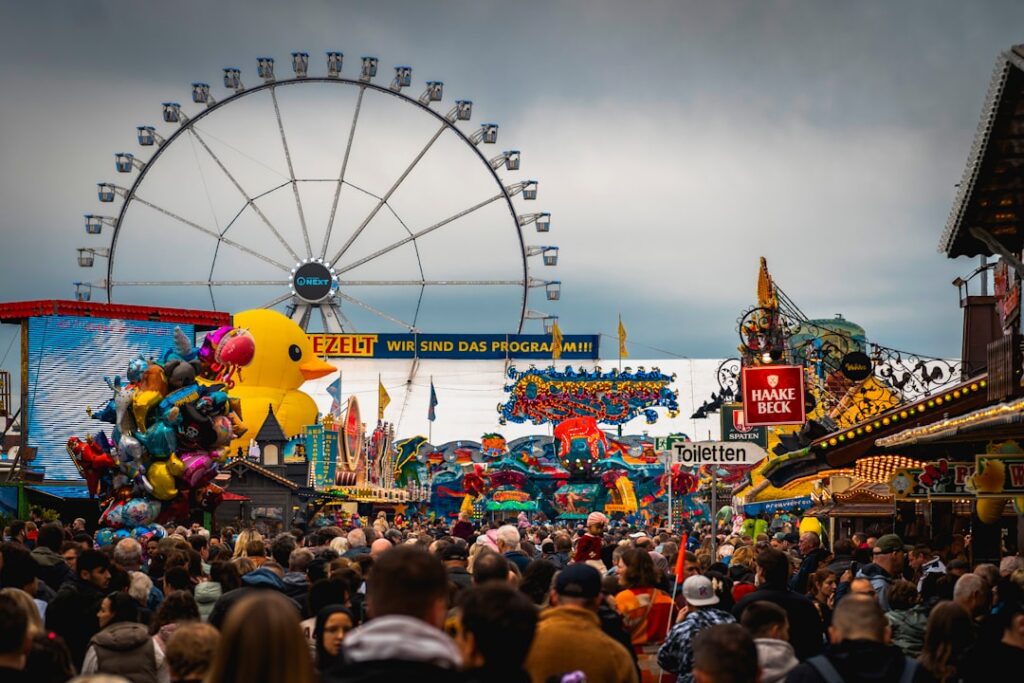
Every autumn, Munich transforms into the epicenter of global celebration as Oktoberfest takes over the Theresienwiese fairgrounds. What began in 1810 as a royal wedding celebration has evolved into the world’s largest folk festival, drawing over six million visitors annually from every corner of the globe. This 16-18 day extravaganza is far more than just a beer festival—it’s an immersive cultural experience showcasing Bavarian traditions, culinary specialties, and legendary German gemütlichkeit (conviviality) at their finest.
Despite its name, Oktoberfest actually begins in mid-September and runs until the first Sunday in October, a scheduling quirk designed to take advantage of warmer late-summer weather. The festival offers an unparalleled opportunity to experience authentic Bavarian culture while rubbing shoulders with locals and international visitors united in celebration.
The Grand Beer Tents: Heart of the Festival
The true soul of Oktoberfest resides within its 14 large and 20 small beer tents, each operated by traditional Munich breweries. Only six breweries are permitted to serve at Oktoberfest—Augustiner, Hacker-Pschorr, Hofbräu, Löwenbräu, Paulaner, and Spaten—and they brew special Oktoberfest Märzen beers specifically for the occasion. These amber lagers, stronger and maltier than regular beer, are served exclusively in one-liter glass steins called Maß.
Each tent has its own distinct character and clientele. The Schottenhamel tent, where the Lord Mayor taps the first keg at noon on opening day with the cry “O’zapft is!” (It’s tapped!), attracts a younger crowd. The Augustiner-Bräu tent, still serving beer from traditional wooden barrels, appeals to purists seeking authenticity. The Hofbräu tent is famous for its international atmosphere, while Käfer’s Wies’n-Schänke offers a more upscale experience with rooftop seating and celebrity sightings.
Reservations are essential for weekend and evening visits, typically released in March or April. However, unreserved standing room and outdoor beer garden sections operate on a first-come, first-served basis—arrive early in the morning for the best chance of securing a spot without a reservation.
Beyond the Beer: Food, Rides, and Bavarian Traditions
Oktoberfest is a feast for all senses, not just the palate. Traditional Bavarian cuisine reaches its zenith here, with specialties including Hendl (roast chicken), Schweinshaxe (roasted pork knuckle), Steckerlfisch (grilled fish on a stick), oversized pretzels, Käsespätzle (cheese noodles), and Reiberdatschi (potato pancakes). Dessert lovers shouldn’t miss gebrannte Mandeln (roasted almonds) and heart-shaped Lebkuchen gingerbread cookies.
The festival grounds feature a massive amusement park with roller coasters, Ferris wheels, fun houses, and carnival games that rivals any major theme park. The 1930s-era Teufelsrad (Devil’s Wheel) and the towering Olympia Looping roller coaster are perennial favorites. For families, the first Tuesday of the festival is Family Day, offering reduced prices on rides.
Traditional elements add cultural depth beyond the revelry. Brass bands perform Bavarian folk music and contemporary hits, with tent-goers swaying arm-in-arm atop wooden benches. The Grand Entry of the Oktoberfest Landlords and Breweries parade on opening morning features magnificently decorated horse-drawn beer wagons, while the Traditional Costume and Riflemen’s Parade on the first Sunday showcases thousands of participants in authentic Tracht (traditional Bavarian dress) from across Germany and neighboring countries.
Planning Your Visit: Tips for the Ultimate Experience
Getting to Theresienwiese is straightforward—take the U4 or U5 subway to Theresienwiese station, or the U3 or U6 to Goetheplatz or Poccistraße. The festival grounds are also within walking distance from Munich’s main train station.
Timing is crucial. Weekends are overwhelmingly crowded; weekdays, especially Monday through Thursday, offer a more manageable experience. Mornings and early afternoons are significantly less packed than evenings. The first week tends to be slightly quieter than the final days, when Italians traditionally arrive in huge numbers.
Wearing traditional Bavarian clothing—Lederhosen for men, Dirndl for women—is not required but highly encouraged and adds to the festive atmosphere. Numerous shops throughout Munich sell or rent authentic attire. Locals can spot tourist knock-offs immediately, so invest in quality pieces if you want to blend in.
Budget accordingly: each Maß costs €12-14, and full meals run €10-20. Cash is king in most tents, though some now accept cards. Most importantly, pace yourself—Oktoberfest beer is stronger than regular lager, and drinking responsibly ensures you’ll remember (and survive) the experience.
Munich hotels book up months in advance, so reserve accommodation early. Consider staying in nearby towns like Freising or Dachau with easy train connections, or explore Airbnb options in residential neighborhoods away from the city center for better rates.
Whether you’re raising your first Maß or returning for the tenth time, Oktoberfest delivers an unforgettable immersion into Bavarian culture where strangers become friends, centuries-old traditions thrive, and the simple joy of celebration transcends all boundaries. Prost!
Tours & experiences in Germany


Powered by Viator. Some links are affiliate links — we may earn a small commission at no extra cost to you.