
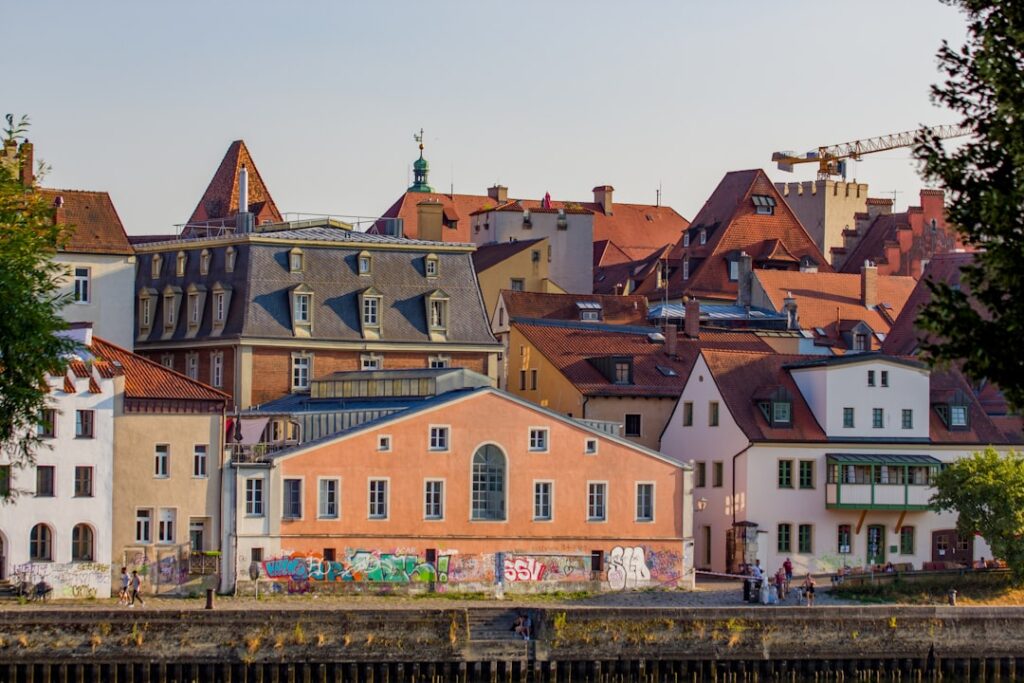
Rising from an island in the Trave River just inland from the Baltic Sea, Lübeck stands as one of northern Germany’s most captivating destinations. This UNESCO World Heritage city served as the capital of the powerful Hanseatic League for centuries, and its remarkably preserved medieval core transports visitors back to an era when merchant princes built fortunes trading salt, herring, and grain across northern Europe. Beyond its red-brick Gothic architecture and storied past, Lübeck offers authentic cultural experiences, from world-famous marzipan to Thomas Mann’s literary legacy.
A Medieval Masterpiece Frozen in Time
Lübeck’s Altstadt (Old Town) occupies an oval-shaped island encircled by waterways, creating a compact treasure trove of Gothic architecture. The journey begins at the Holstentor, the city’s iconic twin-towered gate that has graced countless postcards and currency notes. Built in 1464, this imposing brick structure now houses a museum chronicling Lübeck’s Hanseatic glory days, complete with maritime artifacts and medieval trading goods.
Walking through the gate, you’ll encounter a skyline dominated by seven church spires—earning Lübeck its nickname “the city of seven towers.” The Marienkirche (St. Mary’s Church) stands as the crown jewel, a towering brick Gothic cathedral that influenced church architecture throughout the Baltic region. Inside, the shattered bells that fell during the 1942 bombing remain on the floor as a powerful memorial. The church’s astronomical clock from 1561 still performs its mechanical midday show, delighting visitors with its parade of figures.
The Rathaus (Town Hall) showcases Lübeck’s medieval wealth with its distinctive black-glazed bricks and ornate façade. Dating from 1230, it ranks among Germany’s oldest and most beautiful town halls, with additions spanning several architectural periods. Guided tours reveal opulent council chambers where Hanseatic merchants once made decisions affecting trade across northern Europe.
Sweet Traditions and Literary Legends
No visit to Lübeck is complete without indulging in its most famous export: marzipan. The city has crafted this almond confection since at least 1530, and Café Niederegger opposite the Rathaus remains the undisputed temple of marzipan excellence. Their second-floor museum traces the history of this sweet treat, while the café serves marzipan in every imaginable form—from traditional loaves to elaborate sculptures. Try the Lübeck specialty: marzipan potatoes dusted with cocoa powder.
Literature enthusiasts should make a pilgrimage to the Buddenbrookhaus, the former family home of Nobel Prize-winning author Thomas Mann. This museum explores Mann’s life and his masterwork Buddenbrooks, which immortalized Lübeck’s merchant culture. The neighboring Günter Grass-Haus celebrates another Nobel laureate with connections to the city, offering rotating exhibitions of literature and visual arts.
For a glimpse into medieval hospital care, visit the Heiligen-Geist-Hospital, a remarkably preserved 13th-century institution with a stunning chapel and tiny individual cabins where the poor and elderly once lived. During the Christmas season, it hosts one of Germany’s most atmospheric craft markets.
Getting There and When to Visit
Lübeck is easily accessible from Hamburg, just 65 kilometers to the south. Direct trains depart Hamburg’s main station every 30 minutes, reaching Lübeck in approximately 45 minutes. The city also has excellent connections to Kiel, Rostock, and other northern German cities. From Lübeck’s train station, it’s a pleasant 10-minute walk across the Puppenbrücke to the Old Town island.
If you’re driving, Lübeck sits directly on the A1 autobahn connecting Hamburg with the Scandinavian ferry ports. Several parking garages ring the Old Town, with the Altstadt-Garage offering the most convenient access to major attractions.
The best time to visit depends on your priorities. May through September offers the warmest weather and longest days, perfect for exploring the waterfront promenades and beer gardens along the Trave. The Travemünde Beach, Lübeck’s Baltic seaside district just 20 minutes away by bus, becomes particularly appealing during summer months.
However, Lübeck truly enchants during the Christmas season. Multiple Christmas markets fill the Old Town from late November through December, including romantic settings inside the Heiligen-Geist-Hospital and around the Marienkirche. The Historic Christmas Market specializes in traditional crafts and medieval demonstrations.
Insider Tips for Your Visit
Purchase a Lübeck Card for unlimited public transportation and discounts at museums, attractions, and select restaurants. The 72-hour version offers particularly good value if you’re planning to visit multiple museums and take the bus to Travemünde.
Don’t miss the Salzspeicher (salt storage houses) along the Trave River—a row of distinctive Renaissance buildings that once stored the precious commodity that made Lübeck wealthy. They’re especially photogenic at sunset when the red brick glows warmly.
For an authentic local meal, head to Schiffergesellschaft, a historic sailors’ guild hall serving traditional northern German cuisine since 1535. The interior, filled with model ships and maritime memorabilia, remains virtually unchanged from centuries past. Order the Labskaus or fresh Baltic fish.
Take advantage of Lübeck’s compact size by exploring the quieter Gänge and Höfe—narrow alleyways and hidden courtyards that once housed artisans and workers. The most famous, Füchtingshof, dates from 1639 and offers a peaceful escape from the main tourist thoroughfares.
Finally, consider timing your visit for the Schleswig-Holstein Music Festival in summer, when concerts fill churches, courtyards, and concert halls throughout the region, with Lübeck serving as a major hub.
Tours & experiences in Germany


Powered by Viator. Some links are affiliate links — we may earn a small commission at no extra cost to you.