
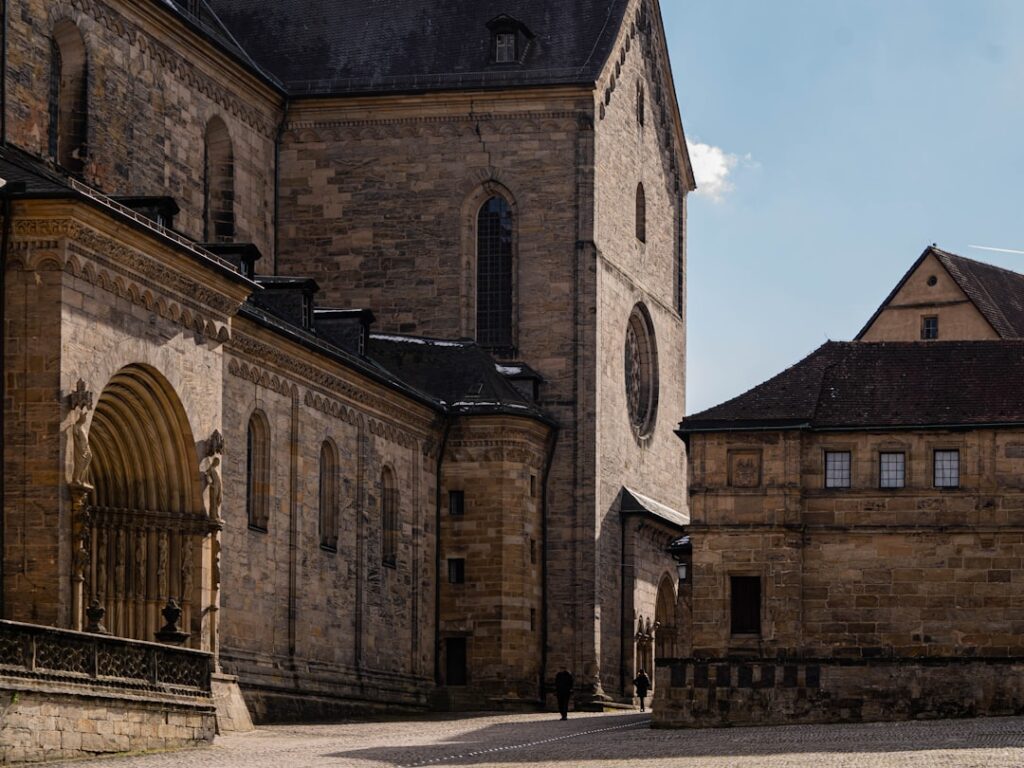
In the sun-drenched hills of southern Italy and Sicily, an extraordinary chapter of medieval history unfolded that would bind Norman ambition to German imperial power. While The Normans Who Changed the World tells the story of Viking settlers who became French nobles and then conquered England, their Mediterranean adventure created an even more unlikely connection—one that would place a German dynasty on the throne of Sicily.
The Norman Kingdom of Sicily, established by Roger II in 1130, became one of medieval Europe’s most sophisticated states. But when Roger’s grandson William II died without heirs in 1189, the crown passed through his aunt Constance to her husband—none other than Henry VI, son of the Holy Roman Emperor Frederick Barbarossa and himself a German king from the House of Hohenstaufen. Henry had married Constance in 1186.
A German Emperor in Palermo
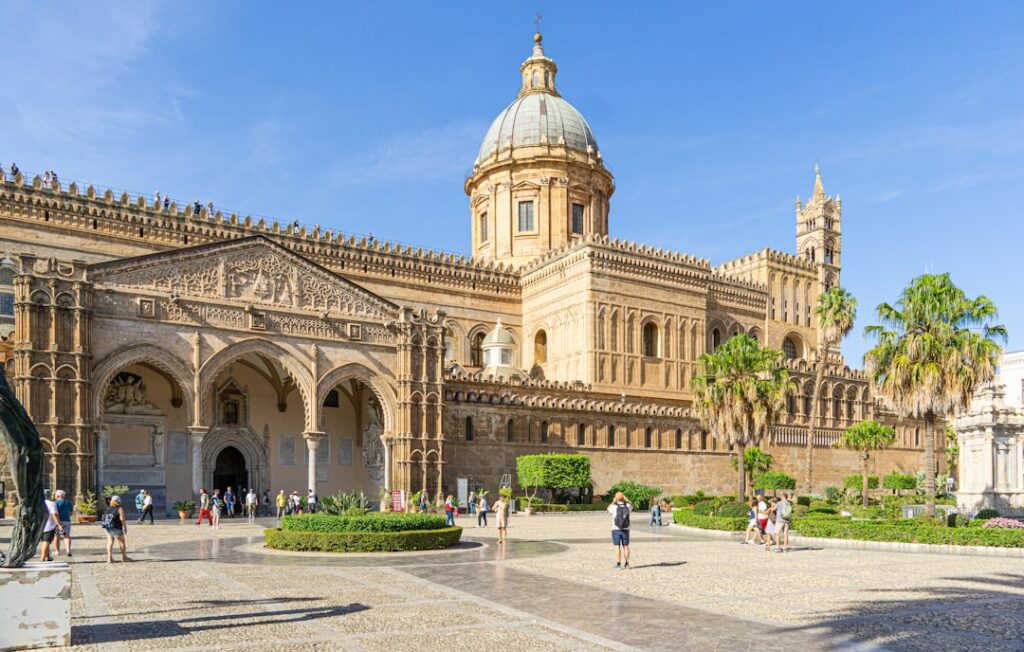
Henry VI’s conquest of Sicily in 1194 merged the Norman kingdom with the German Empire, creating a power bloc that encircled the Papal States and dominated Mediterranean politics. The German emperor was crowned in Palermo’s cathedral, where Norman kings had once been anointed, and suddenly German nobles found themselves governing olive groves and Arab-influenced cities far from their Rhineland castles.
But the true embodiment of this German-Norman fusion was Henry’s son, Frederick II, born in 1194 in the Italian town of Jesi. Orphaned young and raised in Palermo, Frederick grew up speaking German, Italian, French, Latin, Greek, and Arabic—a walking testament to his multicultural inheritance. He would become Holy Roman Emperor in 1220, ruling from his beloved Sicily rather than Germany.
The Wonder of the World
Frederick II, called Stupor Mundi—the Wonder of the World—transformed his Norman-German kingdom into medieval Europe’s most advanced state. He established a centralized bureaucracy that prefigured the modern state, and maintained a court in Palermo that rivaled Baghdad for its learning and sophistication.
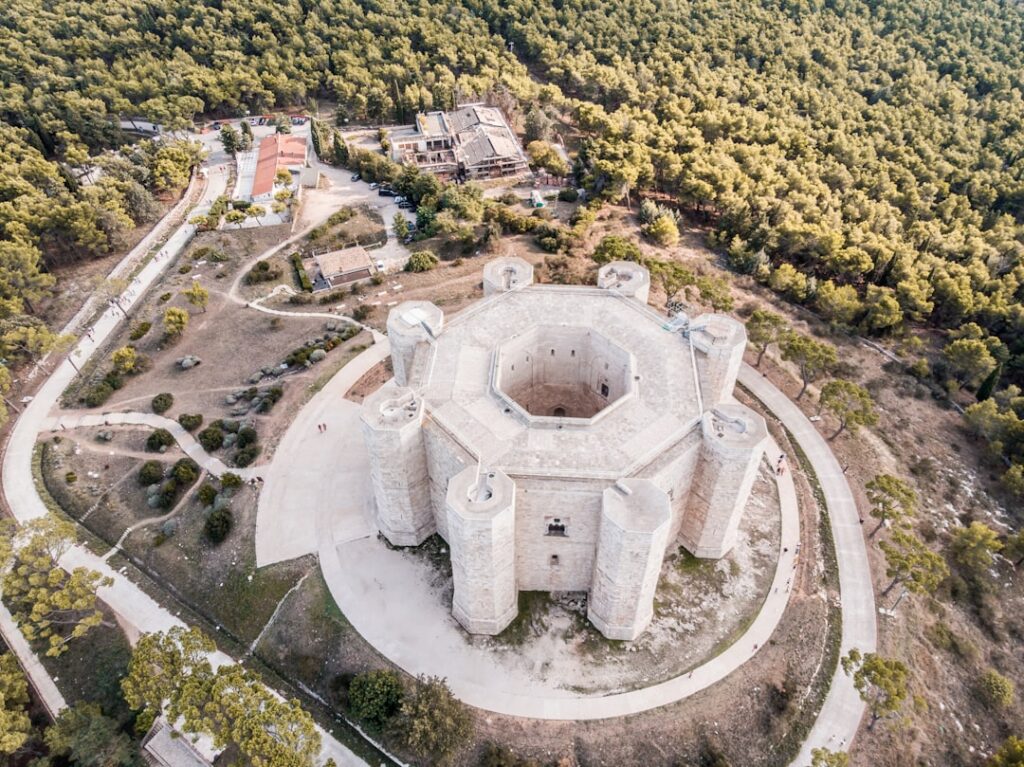
His Castel del Monte in Apulia, built around 1240, stands as a remarkable synthesis of Norman military architecture, German imperial ambition, and Islamic mathematical precision. This octagonal fortress-palace, now a UNESCO World Heritage site, embodied Frederick’s unique cultural position—a German emperor ruling a Norman kingdom with Byzantine and Arab influences.
Frederick spent most of his reign in his southern domains, visiting Germany only occasionally to assert his authority. German princes and knights settled in Sicily, bringing their language and customs to Norman towns. The cathedral of Palermo holds the tombs of both Norman kings and German emperors, a stone testament to this dynastic merger.
The End of an Era
The German-Norman kingdom came to an end in the 1260s when Charles of Anjou defeated Frederick’s son Manfred, marking the close of Hohenstaufen rule in Sicily.
Yet the legacy endures. In German cathedrals like Bamberg and Speyer, you can find references to the Sicilian connection. In Sicily, German architectural and administrative influences remain visible in Norman-era structures. The fusion of Norman ambition, German imperial power, and Mediterranean culture created something unique in European history—a kingdom that belonged fully to neither north nor south, but drew its strength from both.
Today, visitors to Sicily can trace this connection from Palermo’s Palazzo dei Normanni, where both Norman kings and German emperors held court, to Castel del Monte in the Apulian countryside—monuments to a time when the heirs of French Vikings and German emperors ruled together over one of medieval Europe’s most remarkable kingdoms.
Tours & experiences in Germany


Powered by Viator. Some links are affiliate links — we may earn a small commission at no extra cost to you.