
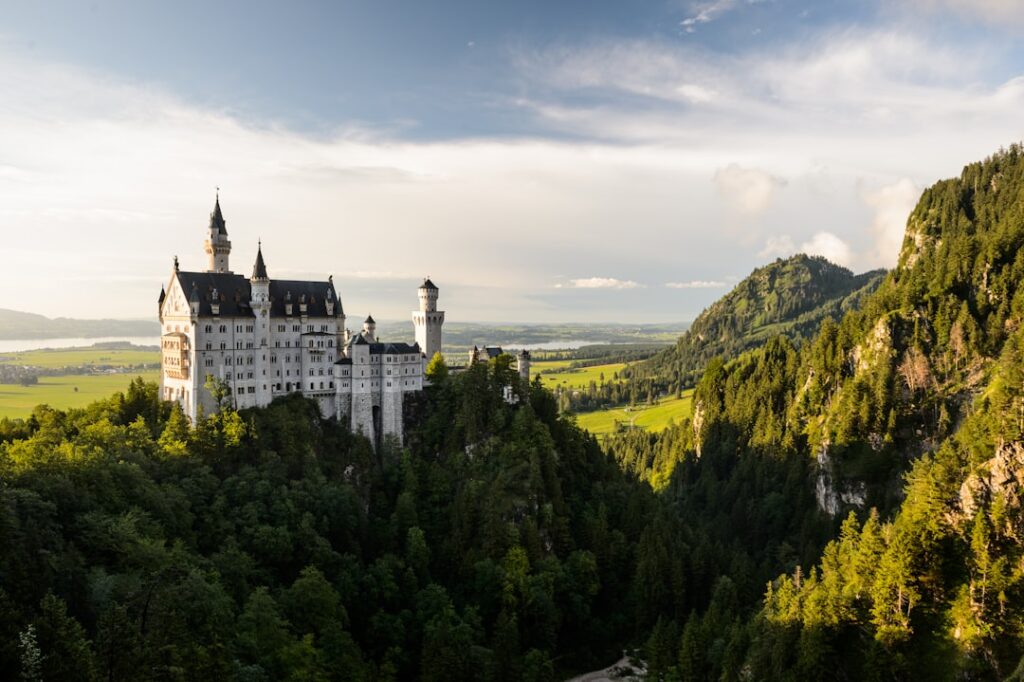
The Allgäu doesn’t shout for attention the way Garmisch or Berchtesgaden do, but this southwestern corner of Bavaria holds its own quietly confident charm. Stretching from the Bodensee foothills to the dramatic limestone peaks near Füssen, it’s a region where dairy farming shapes the landscape as much as the Alps themselves—rolling green pastures dotted with farmsteads, cheese cellars aging Bergkäse, and trails that climb into genuine high country.
If you want Bavaria with fewer tour buses and more cowbells, the Allgäu delivers.
Oberstdorf and the High Alps
Germany’s southernmost village, Oberstdorf sits in a bowl surrounded by 2,000-meter peaks. It’s a serious hiking and skiing base, but the town itself stays refreshingly grounded—bakeries selling Käsespätzle, mountain guides offering via ferrata tours, and the Nebelhornbahn cable car whisking you to 2,224 meters for panoramic views across four countries.
The Breitachklamm gorge just outside town is one of the deepest in the Alps, with walkways bolted to sheer rock walls above the thundering water. Go early in the day to avoid crowds, and bring a rain jacket—the spray is real.
For a quieter experience, head to the Stillachtal, a peaceful side valley with traditional Alpe huts serving fresh buttermilk and Käsebrot. The valley road ends at Einödsbach, where serious hikers strike out for the Rappenseehütte or continue over the Heilbronner Weg into Austria.
Füssen and the Royal Castles
Füssen anchors the northern Allgäu and serves as the gateway to Neuschwanstein and Hohenschwangau, but the town deserves more than a parking-lot pit stop. The Altstadt is a pastel-painted cluster of late Gothic and Baroque buildings, with the Hohes Schloss looming above—one of Bavaria’s best-preserved medieval castles, filled with trompe-l’oeil frescoes and wooden ceilings.
The Lechfall, a series of small waterfalls just south of town, offers an easy walk with views of the turquoise Lech River cutting through limestone gorges. Cross the Maxsteg footbridge for the classic photo angle.
If you’re visiting Neuschwanstein, book tickets online weeks in advance. The castle sees over a million visitors a year, and walk-up tickets sell out by mid-morning in summer. For a less crowded royal experience, visit Hohenschwangau first thing in the morning or explore the network of forest trails around the Alpsee and Schwansee lakes.
Cheese, Cows, and Traditional Dairies
The Allgäu produces more cheese than any other region in Germany, and the landscape reflects it. Between May and September, cattle graze the high Alpine pastures—Alpe in the local dialect—and cheesemakers work in small mountain huts using methods unchanged for centuries.
In Sonthofen, the Allgäuer Bergkäse Route connects several working dairies where you can watch the cheesemaking process and buy wheels of aged Bergkäse, creamy Weichkäse, or tangy Sauerkäse. The Sennerei Lehern in Hopferau is particularly welcoming to visitors, with a small museum and tasting room.
Many traditional farmsteads offer Brotzeit—a simple platter of bread, butter, cheese, and cold cuts—on their sun terraces. It’s unpretentious, filling, and about as Allgäu as it gets. Pair it with a glass of Radler or fresh buttermilk.
Lindau and the Bodensee Edge
On the shores of Lake Constance, Lindau feels more Mediterranean than Alpine. The island Altstadt is connected to the mainland by bridge and train causeway, with a harbor guarded by Bavaria’s only lighthouse and a stone lion looking out over the lake.
Stroll the Maximilianstraße for frescoed guild houses and cafés spilling onto cobblestones, then walk the harbor promenade as the Alps rise across the water in Switzerland and Austria. Lindau makes an excellent base for exploring the Bodensee by boat or bike—the lake circuit is one of Germany’s most popular long-distance cycling routes.
In late summer, the Lindauer Hafenfest brings live music, fireworks, and enough grilled fish to feed half of Bavaria. It’s crowded, yes, but the atmosphere on a warm August evening is worth the crush.
Planning Your Visit
The Allgäu is easy to reach by train from Munich (around two hours to Oberstdorf or Füssen) or by car via the A7 and A96. Regional trains and buses connect the major towns, though having a car gives you flexibility to explore remote valleys and mountain roads.
Summer is ideal for hiking, with trails ranging from gentle valley walks to challenging Alpine ascents. Late September brings the Viehscheid, the ceremonial cattle drive down from the mountain pastures—colorful, loud, and deeply traditional. Winter transforms the region into a quieter skiing and cross-country hub, with far fewer international tourists than you’ll find farther east.
Book accommodation early if you’re visiting during school holidays or around Neuschwanstein. Smaller towns like Oberstaufen, Immenstadt, and Bad Hindelang offer excellent value and a more local feel than the castle-town hotels.
Want more stories from Bavaria’s hidden corners and Alpine backroads? Subscribe to the Love Germany newsletter—one short story a day, straight to your inbox.
Tours & experiences in Germany


Powered by Viator. Some links are affiliate links — we may earn a small commission at no extra cost to you.