
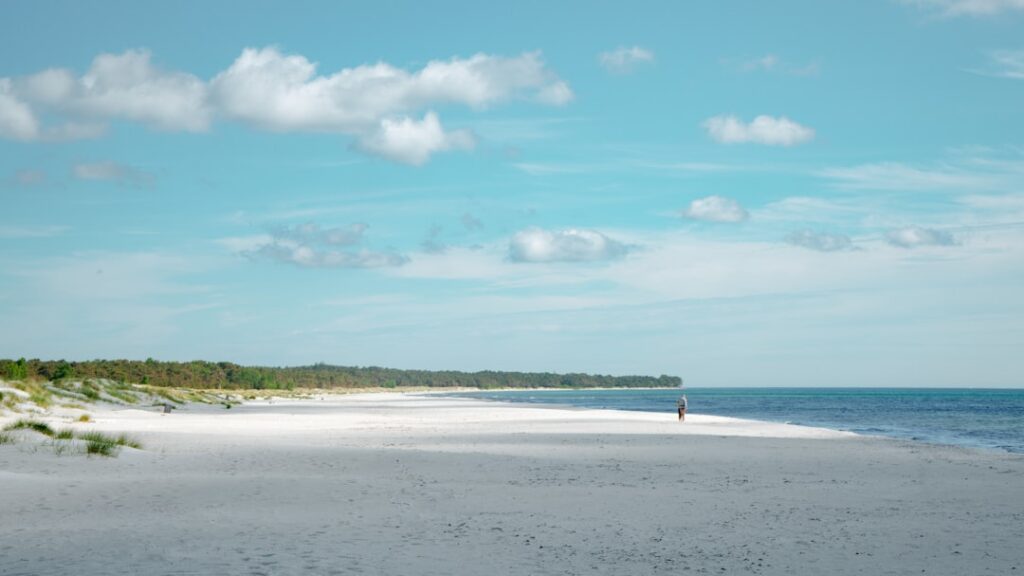
Rügen rises from the Baltic Sea off Germany’s northeastern coast like a natural monument to coastal drama. This is Germany’s largest island, a place where white chalk cliffs plunge into turquoise water, grand resort architecture lines sandy beaches, and beech forests meet the shore. It’s a landscape that inspired Romantic painter Caspar David Friedrich, and it still draws travelers looking for Baltic beauty without leaving Germany.
The island sits connected to the mainland by the Rügen Causeway, making it accessible by car or train from Stralsund. Once you cross over, you enter a different rhythm—one measured by lighthouse beacons, the clatter of historic narrow-gauge trains, and the slow procession of sailboats across Prorer Wiek bay.
The Königsstuhl and Jasmund National Park
The Königsstuhl—the King’s Chair—is Rügen’s most famous natural landmark, a massive chalk cliff rising 118 meters above the Baltic. It’s part of Jasmund National Park, Germany’s smallest national park but one of its most striking. The chalk formations here glow brilliant white against the dark green of ancient beech forests, a UNESCO World Heritage landscape that feels almost Scandinavian in character.
You reach the Königsstuhl via a network of forest trails from the village of Hagen or Sassnitz. The Hochuferweg trail hugs the cliff edge for eleven kilometers, offering dramatic overlooks and occasional glimpses down to the narrow beach below. Go early in the morning or late afternoon to avoid crowds and catch the best light on the cliffs.
The visitor center at Königsstuhl offers context on the geology and ecology, but the real experience is standing at the viewing platform, wind in your face, watching the Baltic stretch to the horizon. Bring sturdy shoes—the trails can be steep and muddy, especially after rain.
Binz and the Seaside Resort Architecture
Binz is Rügen’s most elegant resort town, a testament to the island’s golden age as a vacation destination for Berlin’s well-heeled society. The Strandpromenade stretches along a magnificent beach, backed by rows of Bäderarchitektur—ornate resort villas painted in pastels, with elaborate balconies, turrets, and white wooden trim that looks like architectural lacework.
These buildings date mostly from the late 19th and early 20th centuries, and many have been meticulously restored. Walking the promenade at sunset, with the historic Seebrücke pier jutting into the Baltic, feels like stepping into a more refined era of seaside leisure.
The beach itself runs for miles, fine white sand giving way to shallow, relatively calm water. Germans rent Strandkörbe—those distinctive hooded wicker beach chairs—by the day, creating little private retreats from wind and sun. Even if you’re not a beach person, the promenade makes for a perfect evening stroll, with cafés and fish restaurants offering Baltic herring, smoked eel, and local beer.
The Rasender Roland and Cape Arkona
The Rasender Roland—Racing Roland—is Rügen’s historic narrow-gauge steam railway, running between Putbus and Göhren since 1895. The little trains chug through forests and farmland at a leisurely 30 kilometers per hour, stopping at seaside villages along the way. It’s tourist transport that actually feels authentic, still used by islanders going about daily business.
At the island’s northern tip sits Cape Arkona, a windswept headland with two lighthouses, a Slavic fortress site, and sweeping views across to Denmark on clear days. The older lighthouse, built in 1827 by Karl Friedrich Schinkel, is a graceful brick tower you can climb for panoramic views. The newer one, from 1905, is still operational.
The cape gets crowded in summer, but visit in spring or autumn and you’ll have the coastal paths largely to yourself. The village of Vitt, tucked in a small valley below the cape, is a cluster of thatched-roof fishermen’s cottages that feels frozen in time. Stop at the tiny chapel and the fish smokehouse for some of the freshest smoked mackerel you’ll find anywhere.
Practical Details for Visiting Rügen
Rügen is easiest to explore by car, though the island is well-served by buses and the Rasender Roland connects the main resort towns. The train from Berlin to Binz takes about four hours, changing in Stralsund. Summer is peak season—book accommodation well ahead if visiting between June and August. May and September offer better weather than you might expect and far fewer crowds.
The island has accommodation for every budget, from campgrounds and family pensions to grand resort hotels in Binz and Sellin. Sassnitz makes a good base if you want proximity to Jasmund National Park without the resort-town atmosphere.
Local specialties include fresh Baltic fish—try the Fischbrötchen (fish sandwiches) from beachside stands—and Sanddorn, sea buckthorn berries that grow wild along the coast and appear in everything from juice to liqueur to ice cream. The tart, orange berries are packed with vitamin C and taste like a cross between citrus and passion fruit.
Rügen rewards slow exploration. This isn’t a place to rush through on a day trip—give yourself at least two or three days to discover both the dramatic natural landscapes and the quieter pleasures of Baltic island life.
Want more insider stories from Germany’s hidden corners and coastal retreats? Subscribe to the Love Germany newsletter and get one short story a day, delivered to your inbox each morning.
Tours & experiences in Germany


Powered by Viator. Some links are affiliate links — we may earn a small commission at no extra cost to you.