
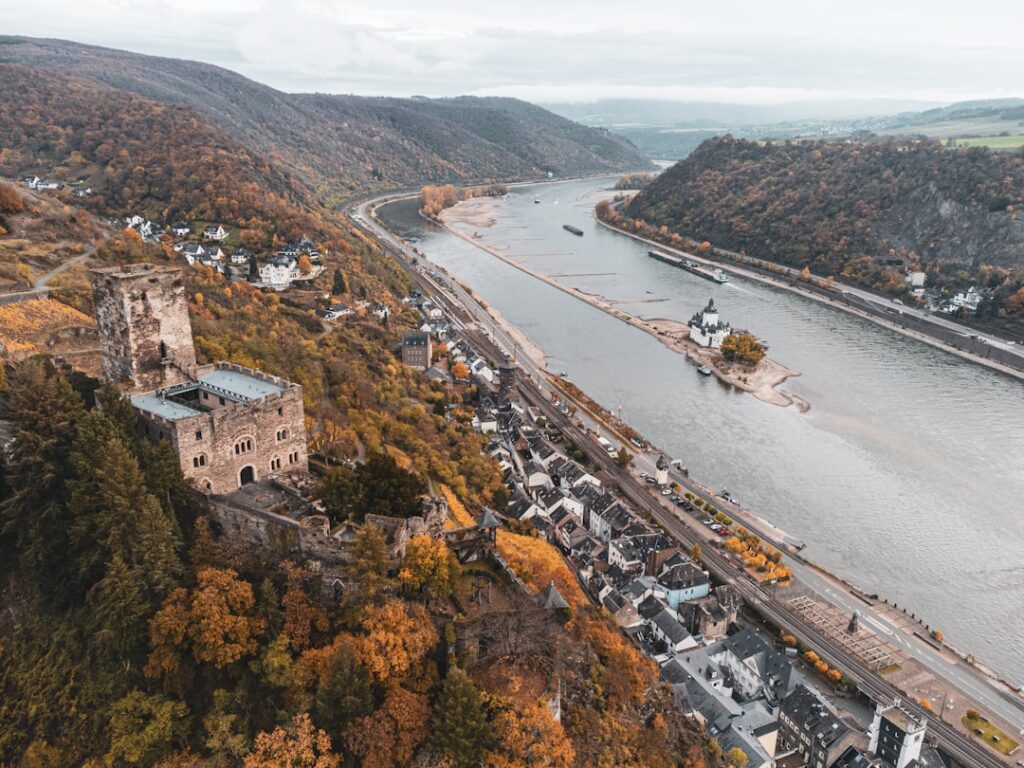
The Middle Rhine Valley, stretching 65 kilometers between Koblenz and Bingen, is Germany’s most storied river landscape—a place where nearly every bend reveals another castle, every hillside another vineyard, and every village another story. This UNESCO World Heritage Site has inspired poets, composers, and travelers for centuries, and nowhere is its magic more concentrated than around the legendary Lorelei rock, where the river narrows and the tales grow tallest.
Cruising through this dramatic gorge, you’ll pass more than 40 castles and fortresses perched on clifftops, their medieval silhouettes seeming to guard the river as they have for nearly a millennium. The steep vineyard terraces produce some of Germany’s finest Riesling wines, while half-timbered villages offer authentic Rhine hospitality. But it’s the 132-meter-high Lorelei rock that captures the imagination most powerfully—according to legend, a beautiful maiden once sat atop this slate cliff, singing so enchantingly that sailors lost their focus and crashed on the rocks below.
What Makes the Rhine Valley Special
The Middle Rhine Valley represents one of Europe’s most important historical trade routes, and its cultural significance earned it UNESCO World Heritage status in 2002. The concentration of castles here is unmatched anywhere in the world—most built between the 12th and 14th centuries by robber barons who extracted tolls from passing river traffic. Today, these fortresses range from romantic ruins to fully restored hotels where you can sleep in medieval chambers.
The Lorelei rock itself sits at the narrowest point of the Middle Rhine, where the river is just 113 meters wide and up to 25 meters deep. The strong currents and rocky shoals made this stretch treacherous for navigation, giving rise to the siren legend immortalized by Heinrich Heine’s 1824 poem. At the top of the rock, you’ll find a viewing platform offering breathtaking panoramas up and down the river valley—one of Germany’s most photographed vistas.
The valley’s steep slopes create a microclimate perfect for viticulture. The slate soil retains heat and reflects sunlight back onto the vines, producing distinctive mineral-flavored Rieslings that wine enthusiasts travel from around the world to taste. Many family-run wineries offer tastings and tours, providing intimate glimpses into winemaking traditions passed down through generations.
Experiencing the Rhine: Cruises and Castles
The best way to experience the Rhine Valley is from the water. Multiple cruise companies operate between Koblenz and Bingen, with the KD Line being the most established. The full journey takes about five hours one way, though you can board or disembark at any of the villages along the route. Most travelers choose the two-hour stretch between St. Goar and Bacharach, which includes the Lorelei and the highest concentration of castles.
As you cruise, you’ll pass Burg Rheinfels near St. Goar, once the mightiest fortress on the Rhine and now an expansive ruin you can explore. The twin castles known as “The Hostile Brothers”—Sterrenberg and Liebenstein—sit close together on the right bank, separated by a defensive wall. Burg Katz (Cat Castle) and Burg Maus (Mouse Castle) face each other across the valley in a feudal rivalry frozen in stone. Near Bacharach, Burg Stahleck now operates as a youth hostel with stunning views.
For those who prefer land-based exploration, the Rhine Cycle Route follows both banks of the river, offering an active way to experience the valley. Alternatively, trains run along both sides—the left bank route between Koblenz and Mainz is particularly scenic and allows you to hop between villages.
Planning Your Visit
The Rhine Valley shines brightest from late spring through early autumn. May and June offer ideal weather before peak summer crowds, while September brings the grape harvest and wine festivals throughout the region. The Rhein in Flammen (Rhine in Flames) illuminated boat parades take place on five weekends between May and September, with fireworks displays launched from the castles—the event at St. Goar in mid-September is the largest and most spectacular.
Winter has its own quiet charm, with Christmas markets in most villages, but cruise schedules are limited and some castle sites close. Autumn foliage in October creates stunning color contrasts against the river and stone fortresses.
Base yourself in either Bacharach or St. Goar for the most authentic experience. Both are charming medieval towns with half-timbered houses, wine taverns, and easy access to castles and hiking trails. Boppard offers more amenities and a lovely riverside promenade. For day-trippers, Koblenz at the northern end provides the best starting point, with its impressive Deutsches Eck (German Corner) where the Moselle meets the Rhine.
Insider Tips
Purchase a cruise ticket that allows you to break your journey—you can hop off at villages that catch your eye, explore, then catch a later boat. The Rheinland-Pfalz-Ticket is an excellent value day pass covering regional trains along both banks, allowing a group of up to five people unlimited travel.
For the best Lorelei view without crowds, visit the viewing platform early morning or late afternoon. The short hike from St. Goarshausen takes about 20 minutes, or you can drive to the parking area just below the summit. The open-air stage occasionally hosts concerts during summer—checking the schedule can add a special dimension to your visit.
Most visitors cruise past the vineyards without stopping, but booking a wine tasting at a family winery offers authentic encounters you’ll remember long after the castle photos fade. Many vintners speak English and love sharing their craft. The village of Bacharach is particularly known for accessible, welcoming wine estates.
Finally, consider staying overnight in one of the castle hotels—Burg Reichenstein and Schloss Rheinfels both offer atmospheric accommodations where you can watch the river traffic pass as lords and ladies once did, making the Rhine Valley’s medieval past feel remarkably present.
Tours & experiences in Germany


Powered by Viator. Some links are affiliate links — we may earn a small commission at no extra cost to you.