
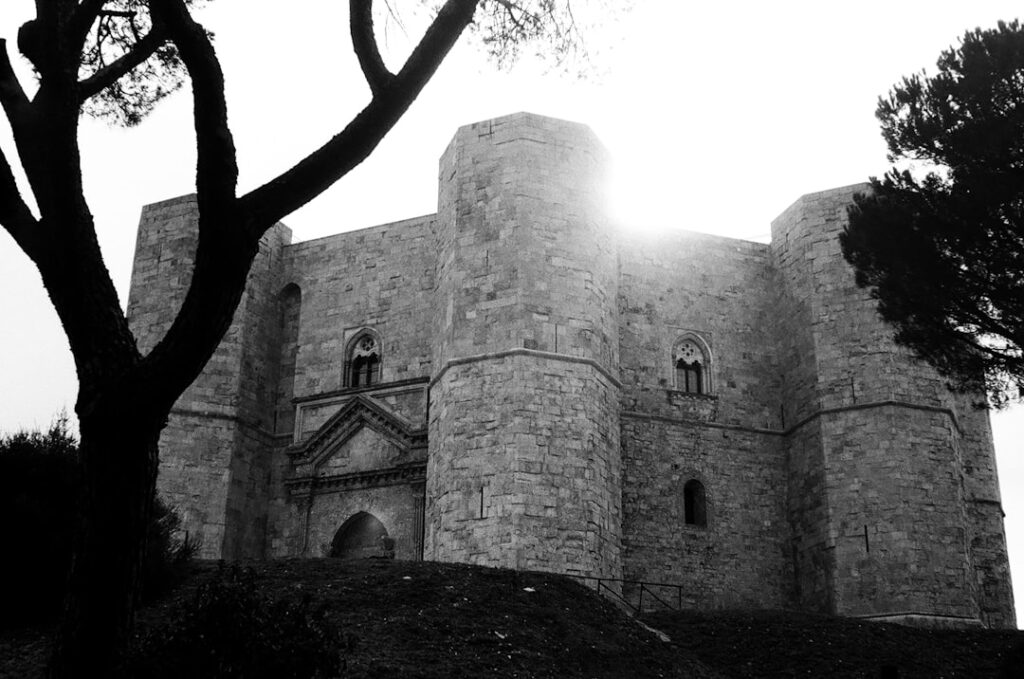
In the sun-drenched region of Puglia, the architectural legacy of Holy Roman Emperor Frederick II remains one of southern Italy’s most fascinating historical chapters. The story centers on the 13th century, when Frederick II — of the German Hohenstaufen dynasty — ruled southern Italy and transformed Puglia into an important center of his Mediterranean empire.
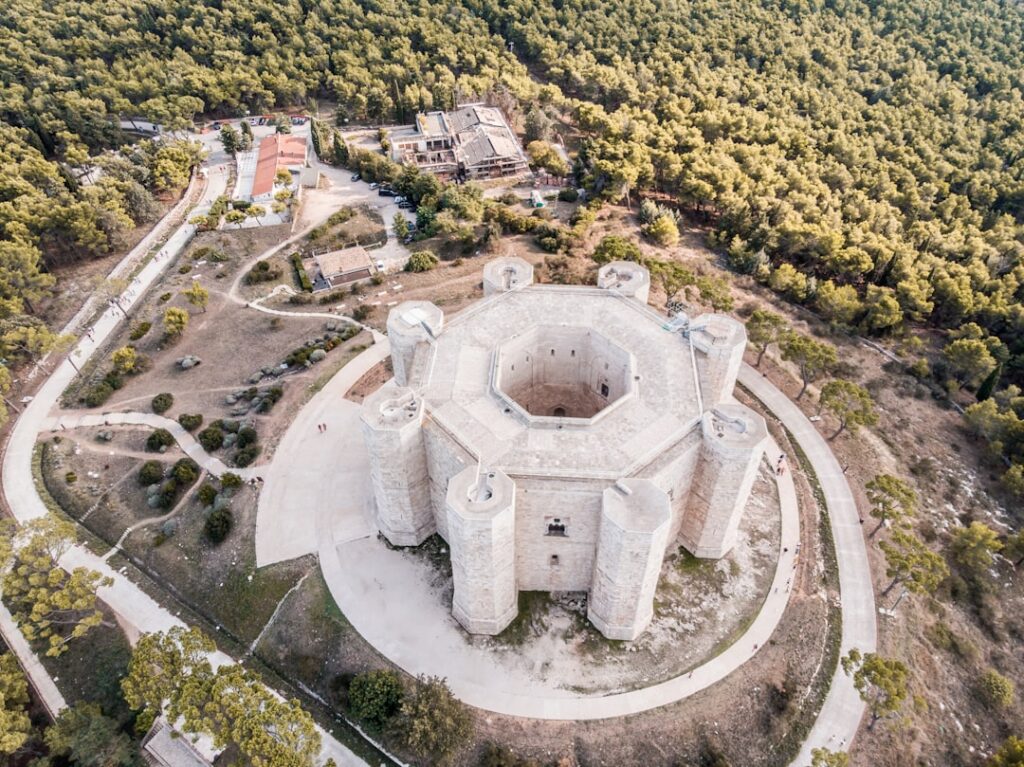
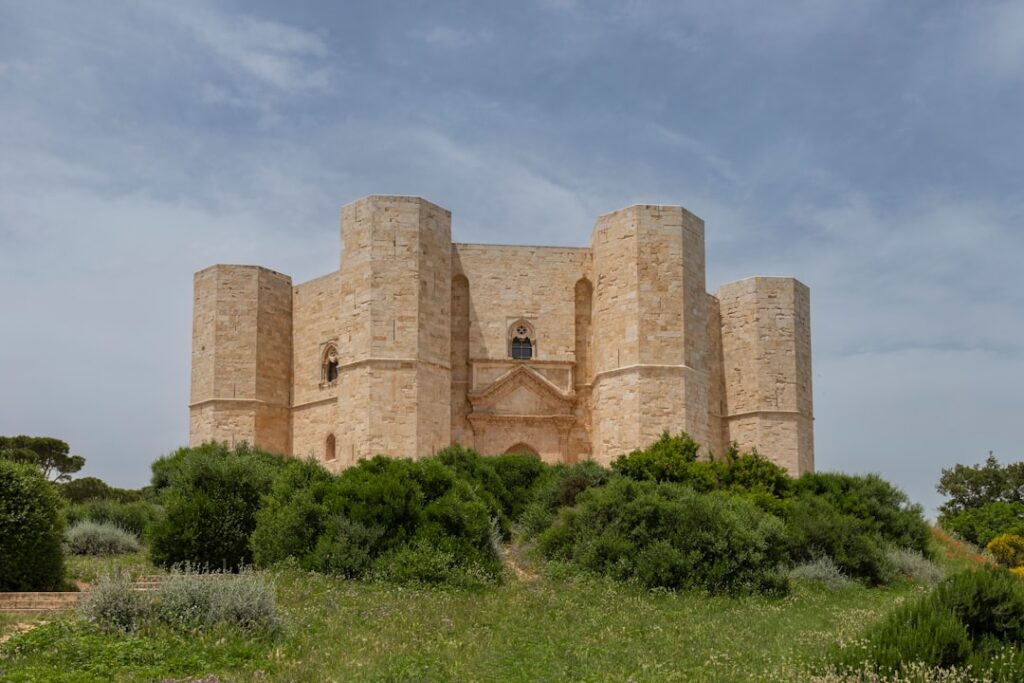
Frederick II, crowned King of Germany in 1212 and Holy Roman Emperor in 1220, maintained particularly strong ties to Puglia throughout his reign. He built the enigmatic Castel del Monte near Andria, a UNESCO World Heritage site that exemplifies his fusion of imperial ambition with Islamic mathematical precision and classical Roman design. The octagonal fortress, completed around 1240, became a symbol of his vision for a cosmopolitan empire.
The Hohenstaufen Administration
Frederick’s court in Puglia became a center of learning and administration. He established his administrative headquarters in Foggia and built numerous castles and fortifications throughout the region, including structures in Brindisi, Bari, Trani, and Lucera. These buildings reflected a synthesis of Norman, Islamic, and classical influences rather than specifically German architectural traditions.
The emperor’s legal reforms, codified in the Constitutions of Melfi (1231), established a centralized administrative system that governed Puglia and the Kingdom of Sicily. This sophisticated bureaucracy drew officials from across his empire, creating a cosmopolitan court culture.
Architectural Heritage
Today, Frederick II’s architectural legacy attracts historians and tourists to Puglia in significant numbers. The region’s tourist boards actively market the Frederick II trail, which connects castles and fortifications built during his reign. Castel del Monte remains the most visited of these sites, drawing international visitors seeking to understand this unique chapter of medieval history.
For those interested in tracing your family in Puglia, the medieval period offers rich archival resources. Parish records and civic archives in cities like Brindisi and Barletta contain genealogical information dating back centuries, though researchers should consult local archives for guidance on accessing these historical documents.
Modern Tourism
The historical significance of Frederick II’s reign has contributed to Puglia’s appeal as a heritage tourism destination. Direct flights connect Bari and Brindisi to major European cities including Munich, Frankfurt, and Berlin throughout the tourist season, bringing visitors interested in the region’s medieval castles, Romanesque cathedrals, and coastal beauty.
For travelers interested in medieval history, Puglia offers exceptional architectural sites from the Hohenstaufen period, when a German imperial dynasty ruled from southern Italian palaces and left an enduring mark on the region’s landscape.
Tours & experiences in Germany


Powered by Viator. Some links are affiliate links — we may earn a small commission at no extra cost to you.