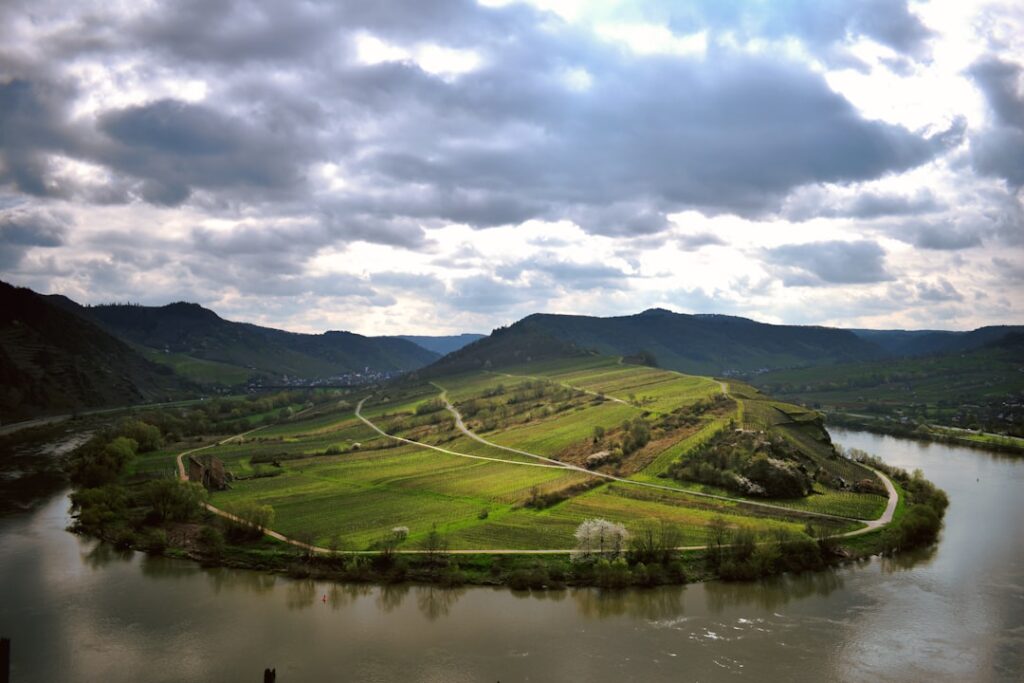
The Moselle River winds through one of Germany’s most beautiful wine regions, and nowhere does it celebrate its liquid gold more enthusiastically than during the summer and autumn festival season. Between May and November, nearly every village along the river hosts at least one Winzerfest (wine festival), transforming cobblestoned squares into open-air tasting rooms where local winemakers pour Riesling, Elbling, and Müller-Thurgau alongside grilled sausages and live brass bands.
These aren’t tourist productions. They’re genuine community celebrations where vintners uncork their best bottles, families claim tables for entire afternoons, and visitors quickly discover that the Moselle’s warmth extends far beyond its south-facing slopes.
The Wine Festival Circuit
Bernkastel-Kues kicks off its Weinfest der Mittelmosel in early September, the largest wine festival on the middle Moselle. More than 100,000 visitors descend on this medieval town over four days, but the event never loses its village character. Winemakers from Bernkastel, Graach, Wehlen, and Zeltingen pour at wooden stands arranged around the Marktplatz, each booth representing a single family estate. You’ll taste wines you can’t find anywhere else—reserve Rieslings, experimental skin-contact whites, and decades-old vintages pulled from private cellars for the occasion.
Arrive early on Friday afternoon to claim a spot at one of the communal tables, order a Probierteller (tasting platter) of local cheeses and smoked trout, and settle in. The festival runs late, with fireworks over the Moselle on Saturday night that reflect in the river like liquid fire.
Traben-Trarbach, the Art Nouveau gem downstream, holds its Mosel-Weinfest in late July. Smaller and more intimate than Bernkastel’s bash, this festival winds through the town’s Jugendstil villas and along the riverfront promenade. The highlight is the boat parade on Saturday evening, when illuminated vessels drift past the ruins of Grevenburg Castle while bands play on floating stages.
Moselle in Flames
The Mosel in Flammen series transforms five towns into pyrotechnic spectacles between May and September. The most dramatic is the Cochemer Weinfest und Feuerwerk in late August. During the day, it’s a traditional wine festival centered on Cochem’s Marktplatz, with two dozen vintners pouring beneath the town’s fairy-tale castle. After dark, passenger boats depart from Cochem heading upstream toward Beilstein, engines cut, drifting with the current as fireworks erupt from both riverbanks and the castle ramparts.
Book your spot on the boats at least two months ahead—locals reserve their tickets the day they go on sale. If the boats are full, claim a spot on the pedestrian bridge or along the riverside path near Kloster Ebernach. The show lasts forty minutes, perfectly choreographed to classical and pop music broadcast on local radio.
The other Mosel in Flammen events follow the same pattern—daylight wine festival, evening boat parade, coordinated fireworks—in Winningen (late June), Piesport (early July), Oberwesel (mid-September, technically on the Rhine but part of the same series), and Zell (late September). Each town adds its own twist: Zell incorporates its Black Cat legend into the festivities, while Winningen’s steep terraced vineyards create a dramatic amphitheater effect.
Hidden Gems and Harvest Festivals
Skip the crowds entirely in villages like Ürzig, where the Ürziger Weinfest in early September draws maybe a thousand people to taste wines from the famous Würzgarten vineyard. The red volcanic slate that defines this steep slope produces Rieslings with a distinctive spicy minerality, and local winemakers love explaining the terroir to anyone who asks. The festival centers on a single street, with maybe eight or nine family estates pouring. It feels less like an event and more like being invited to a very large neighborhood party.
In October, the festival calendar shifts to harvest celebrations. Bernkastel holds its Federweißenfest, dedicated to Federweißer—the cloudy, still-fermenting grape must that’s only available for a few weeks each autumn. Pair it with Zwiebelkuchen (onion tart) or fresh Flammkuchen, and you’ve experienced the Moselle’s truest seasonal pleasure.
Trittenheim, Piesport, and Lieser also host smaller harvest festivals in late October, often coinciding with the final grape pickings. These are working celebrations where you might see winemakers arrive directly from the vineyards, dirt still on their boots, to pour the previous year’s vintage while this year’s grapes ferment in tanks behind them.
Planning Your Visit
The Moselle festival season runs May through early November, but August and September offer the densest concentration of events and the best weather. Most festivals run Thursday through Monday, with Saturday being the busiest day. Arrive on Friday afternoon or Sunday for smaller crowds and better conversations with winemakers.
The Moselle Valley is accessible by regional trains from Koblenz (northern end) and Trier (southern end), with stations in Cochem, Traben-Trarbach, Bernkastel-Kues, and most major wine villages. During festivals, many winemakers offer free wine shuttle buses between neighboring villages—look for signs or ask at the tourist information booth.
Book accommodation well ahead for major festivals like Bernkastel’s September event or any Mosel in Flammen date. Consider staying in a smaller village like Zeltingen, Graach, or Enkirch and taking the train or a taxi to the festival town. Many Weingüter (wine estates) offer guest rooms year-round, often with breakfast and a complimentary tasting.
Most importantly, pace yourself. These festivals are marathons, not sprints, and the Moselle’s winemakers appreciate visitors who take time with each glass rather than racing through tastings. Buy a commemorative wine glass at the first booth you visit—you’ll use it all weekend, and it makes a better souvenir than anything in the gift shops.
Want more stories from Germany’s wine country, hidden festivals, and local traditions? Subscribe to the Love Germany newsletter and get one short story delivered to your inbox each day—the Germany beyond the guidebooks, one village at a time.
Tours & experiences in Germany


Powered by Viator. Some links are affiliate links — we may earn a small commission at no extra cost to you.