

When the Nazi regime forced the Bauhaus school to close in 1933, its diaspora of artists, architects and designers scattered across the globe. Many found refuge in the United States, bringing with them a revolutionary design philosophy that would profoundly influence American art, architecture and visual culture.
The Bauhaus Arrives in America
The most influential figure in this cultural transfer was Josef Albers, a Bauhaus master who arrived in North Carolina in 1933 before eventually settling in Connecticut. His rigorous approach to colour theory and geometric abstraction influenced generations of American artists. Walter Gropius, the Bauhaus founder, arrived at Harvard in 1937 and became chairman of the architecture department in 1938, while Ludwig Mies van der Rohe took over the architecture school at the Illinois Institute of Technology in Chicago in 1938.
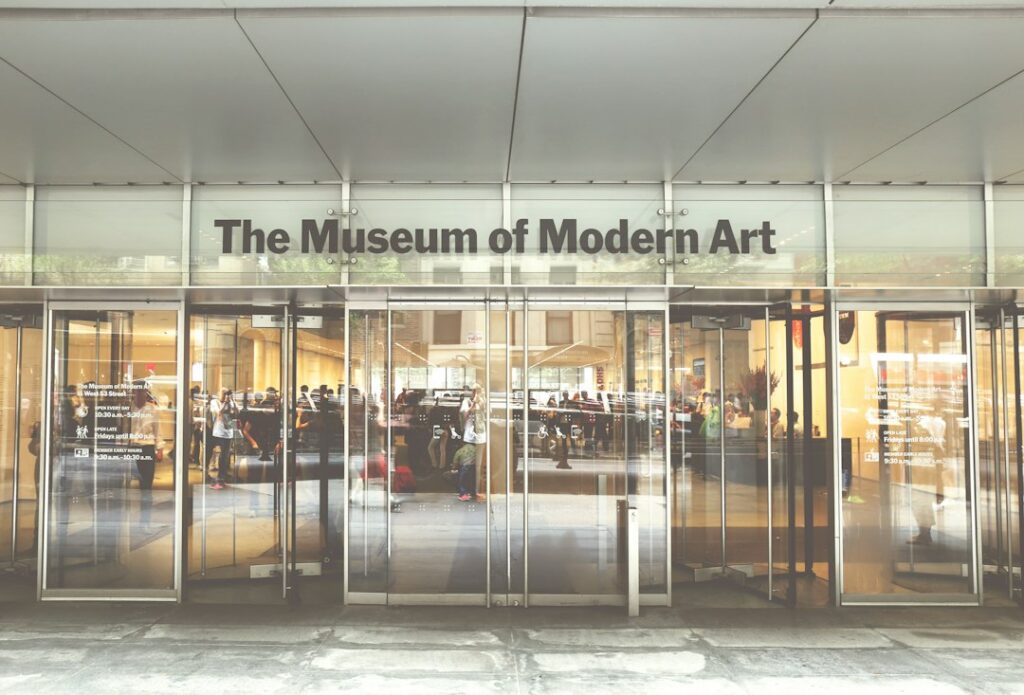
In New York, the Bauhaus philosophy found fertile ground. László Moholy-Nagy’s experimental photography and typography, Herbert Bayer’s graphic design innovations, and Marcel Breuer’s furniture designs all became part of the visual language of American modernism through exhibitions at the Museum of Modern Art and commercial applications in advertising and industrial design.
Introducing the Bauhaus to New York
Alfred H. Barr Jr., founding director of MoMA, was deeply influenced by his travels through Germany in the 1920s and his encounters with Bauhaus ideas. His 1938 exhibition “Bauhaus 1919-1928” introduced American audiences to the school’s comprehensive vision of art, craft and design as an integrated whole.
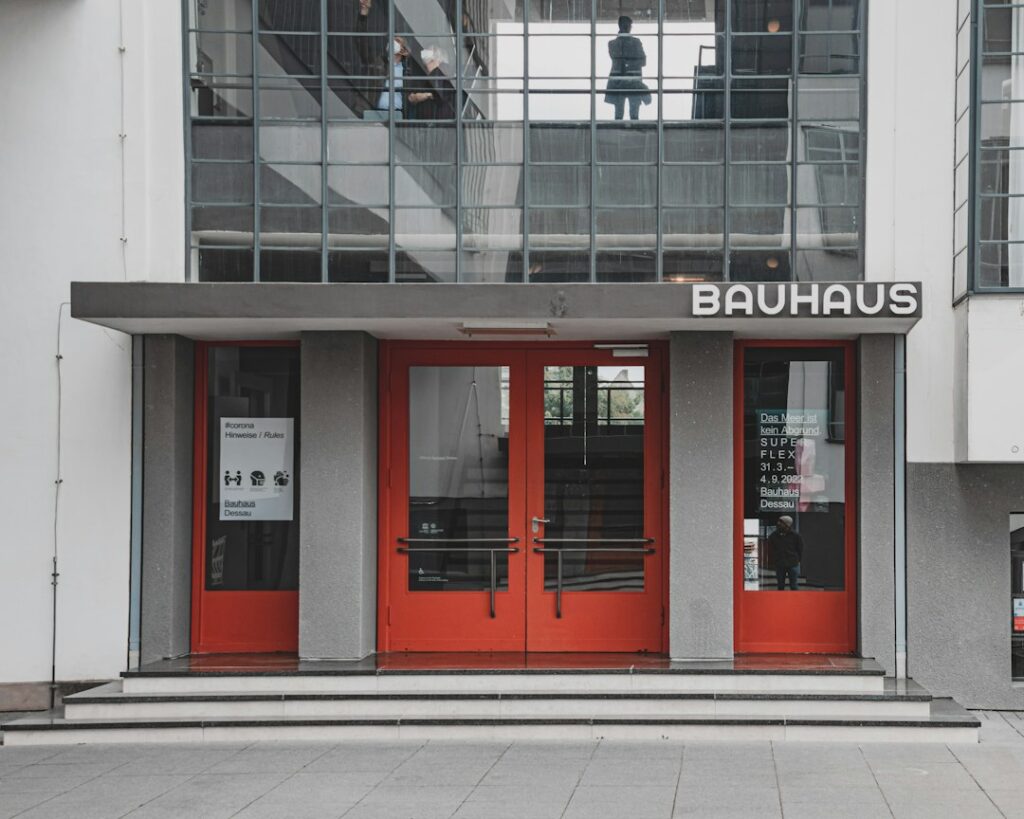
The exhibition and the presence of Bauhaus émigrés in America helped establish modernist principles in New York’s cultural landscape. The emphasis on functional design, geometric abstraction, and the integration of art and technology became influential in American architecture, design education, and museum practice.
A Lasting Influence
The legacy of German modernism can be seen throughout New York today. From museum collections to architecture schools, the ideas that Bauhaus masters brought with them continue to shape American visual culture. Neighbourhoods like Chelsea New York City, which became a major gallery district in the 1990s, feature the kind of converted industrial spaces and contemporary art that reflect broader modernist principles of spatial design and exhibition practice.
For visitors exploring New York’s art scene, understanding this German connection adds historical depth. The modernist aesthetic that pervades American design culture has roots in the Weimar and Dessau schools of the 1920s, carried to America by refugees who transformed exile into creative renewal.
Tours & experiences in Germany


Powered by Viator. Some links are affiliate links — we may earn a small commission at no extra cost to you.