
Stand in a Bavarian inn near the Austrian border and the menu blurs lines drawn by diplomats. Palatschinken appear beside Pfannkuchen. Knödel come in a dozen varieties. The beer might be Bavarian, but the Schnitzel technique—and the debate over whether it needs lemon—comes straight from Vienna’s playbook.
Southern Bavaria and Austria aren’t just neighbors. For centuries, they were family, bound by the House of Wittelsbach, shared Alpine passes, and kitchens that never cared much for borders. Today, that culinary kinship lives on in the dishes, techniques, and traditions that make Bavaria’s southeast corner feel as much Austrian as German.
The Shared Table: What Crossed the Border
The most visible overlap is the Schnitzel. While Vienna claims the breaded veal cutlet as its own, you’ll find near-identical versions throughout Bavaria, especially in towns like Rosenheim, Berchtesgaden, and Passau. The Bavarian version sometimes uses pork instead of veal, but the pounding, breading, and frying in clarified butter follow the same script.
Then there’s Kaiserschmarrn, the shredded pancake dusted with powdered sugar and served with plum compote. It’s named for Emperor Franz Joseph I of Austria, but you’ll find it on menus across the Bavarian Alps, particularly in mountain huts and traditional Gasthäuser. The dish is filling, slightly sweet, and perfect after a day of hiking or skiing.
Knödel—dumplings made from bread, potatoes, or liver—are another shared staple. In Bavaria, Semmelknödel (bread dumplings) accompany roast pork and gravy. In Austria, nearly identical versions appear with goulash or as Marillenknödel, stuffed with apricots and rolled in buttered breadcrumbs. The technique is the same; only the filling changes.
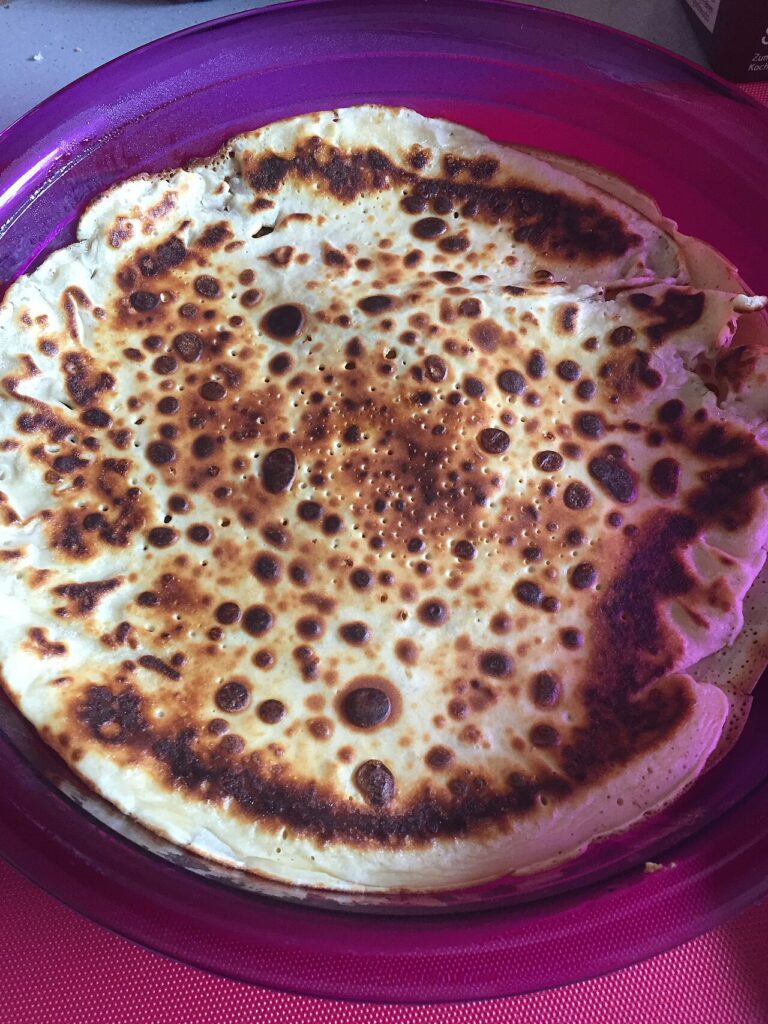
Even Palatschinken—thin crepes filled with jam, Nutella, or curd cheese—show up in Bavarian cafés, though Germans are more likely to call them Pfannkuchen or Eierkuchen. The Austrian name persists in border towns, a linguistic souvenir of shared kitchens.
Where to Taste the Crossover
The best place to experience this culinary overlap is in the triangle formed by Passau, Berchtesgaden, and Garmisch-Partenkirchen. These towns sit close enough to Austria that menus reflect both traditions without fuss.
In Passau, where the Danube, Inn, and Ilz rivers meet, try the Gasthof Wilder Mann or any inn along the Innstadt waterfront. You’ll find Tafelspitz (boiled beef), Erdäpfelsuppe (potato soup), and pastries that wouldn’t be out of place in Linz or Salzburg, just 90 minutes away.
Down in Berchtesgaden, the Alpine inns serve hearty Brotzeit platters with Speck (smoked ham), Bergkäse (mountain cheese), and house-baked bread. Many also offer Kaiserschmarrn and Apfelstrudel, both Austrian classics that have been Bavarian fixtures for generations. The Gasthof Neuhaus and Bräustüberl Berchtesgaden are reliable stops.
In Garmisch-Partenkirchen, closer to the Alps and the Zugspitze, mountain huts like the Kreuzeckhaus and Knorrhütte serve Kaiserschmarrn, Gulaschsuppe, and Germknödel—a sweet yeast dumpling filled with plum jam and topped with melted butter and poppy seeds. It’s Austrian through and through, but you’ll find it on nearly every Bavarian Alpine menu.
The Dialect and the Dish
Language mirrors the food. In southern Bavaria, especially in rural areas and small towns, the local dialect—Austro-Bavarian—sounds closer to Austrian German than to the speech heard in Munich or Nuremberg. Words like “Erdäpfel” (potatoes), “Paradeiser” (tomatoes), and “Obers” (cream) are Austrian terms that Bavarians along the border use without a second thought.
This isn’t just quaint—it reflects how people on both sides of the border have moved, married, traded, and cooked together for centuries. The Inn River didn’t divide kitchens; it connected them. Recipes traveled with brides, innkeepers, and seasonal workers. What was Austrian one generation became Bavarian the next, and vice versa.
Practical Tips for Tasting the Border
If you’re exploring this culinary crossover, plan to spend time in smaller towns rather than Munich. Rent a car or use the regional trains that connect Passau, Rosenheim, Traunstein, and Berchtesgaden. The Meridian and Bayern-Ticket make day trips affordable and easy.
Visit during the cooler months—October through March—when hearty dishes like Knödel, goulash, and Kaiserschmarrn are at their best. Many inns also serve seasonal game, another Austrian-Bavarian tradition.
Don’t skip the bakeries. Look for Topfengolatsche (a curd-filled pastry), Buchteln (sweet rolls), and Mohnstrudel (poppy seed strudel). These are Austrian classics, but you’ll find them in every Bavarian Konditorei south of Munich.
And if you’re near the border, cross it. A day trip to Salzburg, Innsbruck, or Linz will show you the other half of the same story—and make the Bavarian menus even more familiar when you return.
Want more stories about Germany’s food, culture, and hidden corners? Subscribe to the Love Germany newsletter—one short story a day, straight to your inbox.
Tours & experiences in Germany


Powered by Viator. Some links are affiliate links — we may earn a small commission at no extra cost to you.