
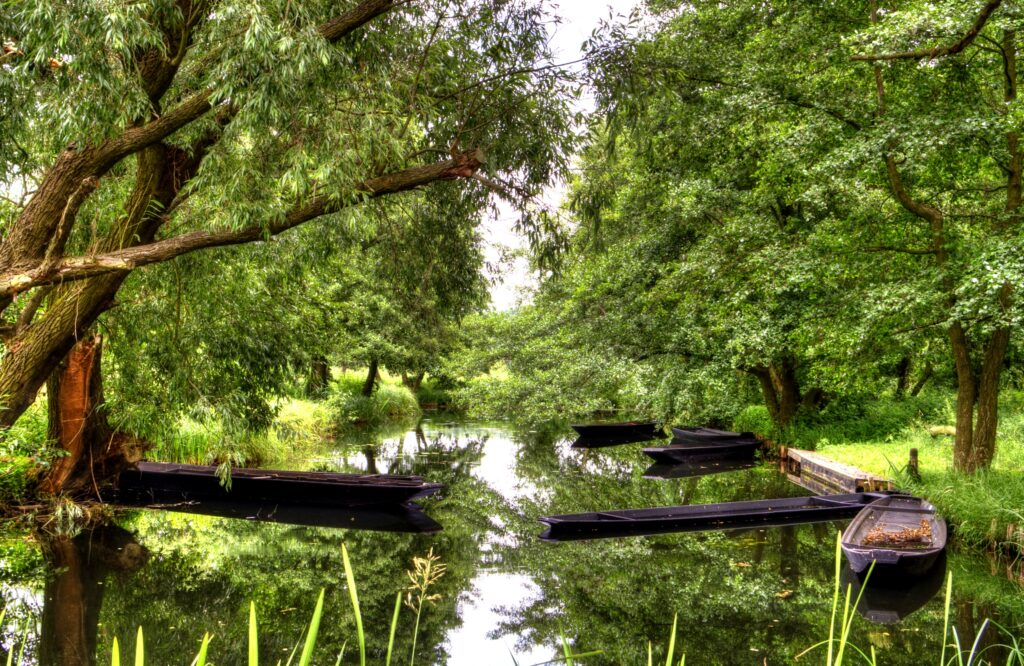
The Spreewald doesn’t look like anywhere else in Germany. An hour southeast of Berlin, the Spree River splits into more than 200 miles of narrow canals threading through alder forests, meadows, and vegetable gardens. For centuries, boats were the only way to get around—mail carriers still paddle to some farmhouses—and today you can explore this UNESCO biosphere reserve the same way residents always have: from the water.
The Canal Network and How to Paddle It
The best way to see the Spreewald is by kayak or traditional wooden punt. Lübbenau and Lübben are the two main gateway towns, both with rental outfitters along the harbor. In Lübbenau, head to the Großer Hafen (Great Harbor), where you can rent a kayak for around €15–20 per day or join a guided punt tour if you’d rather let someone else do the navigating.
The canals are marked with numbered posts—pick up a waterproof map at the rental station. The Wotschofska tour (about 8 kilometers, 3–4 hours) is the most popular paddle route, looping through forest channels so narrow that branches meet overhead. You’ll pass thatched-roof farmhouses, wooden footbridges, and the occasional heron. Pack a picnic—there are designated landing spots with benches along the way.
Spring through early fall is ideal. Mid-May brings blooming water lilies; September offers golden foliage and fewer crowds. Avoid weekends in July and August unless you enjoy company—the Spreewald gets busy.
Sorbian Culture and the Pickle Legacy
The Spreewald is home to Germany’s Sorbian minority, a Slavic people who’ve lived here for over a thousand years. You’ll see bilingual signs in German and Sorbian (Wendish), and in villages like Lehde, traditional wooden houses have been preserved as open-air museums.
But the region’s most famous export isn’t cultural—it’s pickles. Spreewald gherkins earned Protected Geographical Indication status from the EU, and nearly every farm stand sells jars of them along with horseradish, pumpkin seed oil, and smoked trout. Stop at the Gurkenmuseum (Pickle Museum) in Lehde if you want the full story, or just buy a jar of the garlic-dill variety at any of the canal-side stands. They’re crunchy, tangy, and nothing like supermarket pickles.
Burg and Lehde: The Quieter Villages
Lübbenau draws the tour buses, but the village of Burg (Spreewald), about 15 minutes east, offers a slower pace. Its harbor is smaller, the rental lines shorter, and the Bismarckturm observation tower on the edge of town gives you a bird’s-eye view of the canal maze below. Climb the 120 steps for a perspective you won’t get from water level.
Lehde, technically a district of Lübbenau, is car-free and accessible only by foot, bike, or boat. Walk the raised wooden pathways between farmhouses, visit the open-air museum, and stop at one of the garden restaurants for Quarkkeulchen—fried potato-and-quark pancakes served with applesauce or sour cream. They’re a Spreewald specialty and worth the paddle.
Practical Tips for Your Visit
The Spreewald is an easy day trip from Berlin. Regional trains run hourly from Berlin Hauptbahnhof to Lübbenau (about 75 minutes) and Lübben (90 minutes). If you’re driving, there’s ample parking near both harbors, though it fills up on summer weekends.
Bring sun protection—there’s little shade on open stretches—and insect repellent in June and July. Wear shoes that can get wet; boardwalks can be slippery. If you’re paddling, waterproof bags for phones and snacks are a good idea.
For an overnight stay, consider a traditional Spreewald farmhouse guesthouse in Burg or Lehde. Many offer breakfast with house-smoked fish and, yes, pickles.
The Spreewald won’t overwhelm you with grand monuments or bustling plazas. What it offers is quieter: the rhythm of paddle strokes, the scent of wet wood and wild garlic, and a landscape that hasn’t rushed into the 21st century. It’s Brandenburg at its most elemental—and most worth your time.
Want more hidden corners of Germany delivered to your inbox? Subscribe to the Love Germany newsletter—one short story a day, straight from the backroads.
Tours & experiences in Germany


Powered by Viator. Some links are affiliate links — we may earn a small commission at no extra cost to you.