
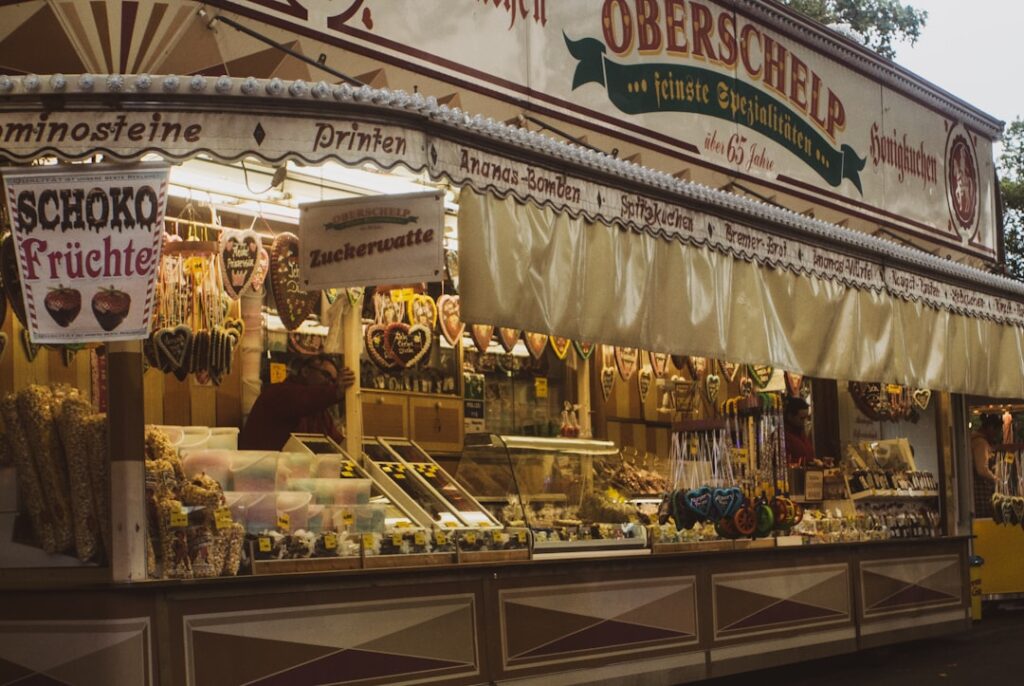
Walk through any German bakery between New Year’s and Ash Wednesday, and you’ll find the display cases overflowing with golden, sugar-dusted rounds of fried dough. These aren’t just any pastries—they’re Schmalzgebäck, the catch-all term for fried treats that have marked the pre-Lenten season in Germany for centuries.
What you call them depends entirely on where you are. In Berlin, they’re Berliner. In Bavaria, they’re Krapfen. In the Rhineland, ask for Berliner Ballen. In Hesse, you might hear Kräppel. Same pastry, dozens of names, and a tradition that brings Germans together every Carnival season.
The Carnival Connection
These pastries aren’t just a winter treat—they’re deeply tied to Fasching, Karneval, and Fastnacht, the raucous celebrations before Lent begins. Historically, households used up their butter, eggs, and lard before the fasting period, and what better way than to fry up rich, indulgent pastries?
The peak consumption happens on Rosenmontag (Rose Monday) and Faschingsdienstag (Shrove Tuesday), when bakeries in Cologne, Mainz, Munich, and Düsseldorf can barely keep up with demand. In Munich alone, bakeries produce more than two million Krapfen during Carnival week.
The classic version is a yeast dough ball, deep-fried until golden, then filled with jam—usually apricot or plum—and dusted with powdered sugar. The trademark white ring around the middle shows where the dough expanded during frying. A perfect Krapfen is pillowy soft inside, with just enough chew on the outside, and a generous dollop of jam that doesn’t leak until you bite in.
Regional Variations Worth Seeking Out
While the jam-filled round is standard across Germany, regional bakeries put their own spin on the formula. In the Rhineland, particularly around Cologne and Aachen, you’ll find unfilled Mutzen—irregularly shaped fried dough pieces rolled in sugar, crispy rather than soft. They’re sold by the bag and disappear fast at Carnival parades.
Saxony and Thuringia specialize in Pfannkuchen, which despite the name (literally “pan cakes”) are identical to Berliner elsewhere. Dresden bakeries often fill theirs with rose hip jam, a regional twist you won’t find in Bavaria.
In Swabia, head to Stuttgart or Tübingen for Fasnetsküchle—thin, rectangular fried pastries dusted with powdered sugar, lighter and crispier than their round cousins. They’re meant to be eaten immediately, still warm from the fryer, often sold at outdoor market stalls during the Fasnet celebrations.
Bavaria’s Ausgezogene (“pulled out”) are large, thin discs of fried dough with a thicker middle and paper-thin edges. Traditional beer gardens in Munich and along Lake Starnberg serve them year-round, sometimes with savory toppings instead of sugar.
The Mustard Prank
No discussion of German Carnival pastries is complete without mentioning the time-honored tradition of the Senf-Berliner—a perfectly innocent-looking pastry filled with mustard instead of jam. It’s a Carnival prank, usually slipped into a batch of normal ones and offered to unsuspecting friends or colleagues.
The tradition is so widespread that some bakeries actually sell mustard-filled versions during Carnival week, clearly marked to avoid genuine disaster. The trick is identifying the prank pastry before you bite—nearly impossible, which is precisely the point.
Where to Find the Best
In Berlin, the traditional bakery Balzac at Prenzlauer Berg makes exemplary Berliner with a light, airy dough and just the right sugar-to-filling ratio. During Carnival season, lines form early.
Munich’s Café Frischhut, open since 1973, specializes in Schmalzgebäck year-round. Their Auszogne are legendary—served warm throughout the day, with locals stopping by for a mid-morning or afternoon treat alongside coffee.
For the Rhineland experience, visit Cologne during the week before Ash Wednesday. The Alter Markt fills with stands selling fresh Mutzen and Berliner Ballen, and every bakery window displays towering pyramids of the season’s best.
Würzburg and other Franconian towns celebrate with Küchle—smaller, denser fried pastries often made with quark in the dough for extra richness. The best come from small village bakeries in the countryside around Rothenburg and Bad Mergentheim, where recipes haven’t changed in generations.
Timing Your Visit
While you can find basic Berliner in German bakeries most of the year, the full range of regional specialties appears only during Carnival season, roughly from early January through Ash Wednesday. The absolute peak is the week before Lent begins, particularly the Thursday before (Weiberfastnacht in the Rhineland) through Shrove Tuesday.
If you’re visiting Germany during this window, don’t skip the bakeries. A warm Krapfen fresh from the fryer, sugar still melting on your fingers, jam just the right temperature—it’s one of those simple, perfect food experiences that no guidebook can quite capture.
Love these insider glimpses of German food culture? Subscribe to the Love Germany newsletter for one short story a day, straight to your inbox—real Germany, beyond the guidebooks.
Tours & experiences in Germany


Powered by Viator. Some links are affiliate links — we may earn a small commission at no extra cost to you.