
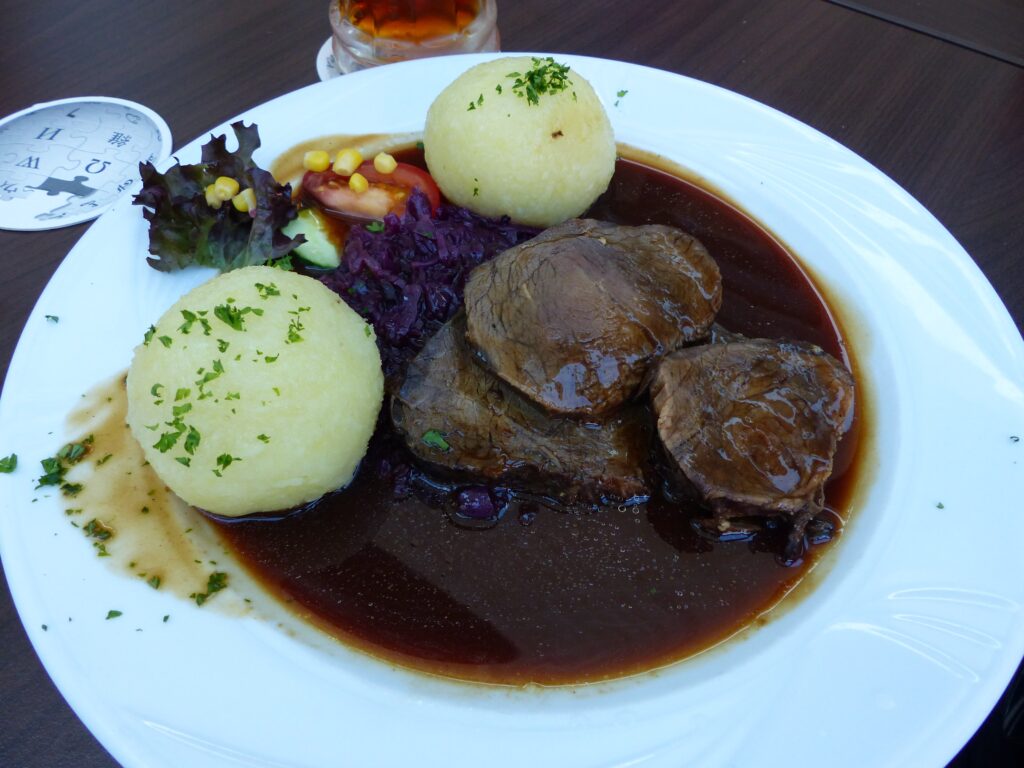
Sauerbraten is the pot roast that requires patience. The beef marinates for days in a mixture of wine or vinegar, vegetables, and spices before it ever sees heat. The result is meat so tender it practically falls apart on your fork, bathed in a dark, glossy gravy that balances sweet and sour in a way that feels both foreign and familiar to anyone raised on American comfort food.
This is Sunday dinner in the Rhineland, a festive meal in Franconia, and a Christmas tradition in many German households. But the dish changes as you travel—what’s sweetened with raisins and gingerbread in Cologne might be sharpened with more vinegar in Saxony. Understanding those regional differences is part of understanding Germany itself.
The Rhineland Version: Sweet, Dark, and Rich
In the Rhineland, particularly around Cologne and Düsseldorf, Sauerbraten reaches its sweetest expression. The marinade leans heavily on red wine vinegar, and the gravy is thickened and sweetened with Printen (spiced gingerbread) or Rübenkraut (beet syrup). Raisins often make an appearance, adding bursts of sweetness against the tangy meat.
The traditional accompaniment here is Kartoffelklöße (potato dumplings) and Rotkohl (red cabbage braised with apples and vinegar). The dumplings soak up the gravy, and the cabbage provides a tart counterpoint to the richness of the beef.
In Cologne, head to Brauhaus Sünner im Walfisch on Salzgasse for a classic Rhineland version served in a wood-paneled dining room that hasn’t changed much since the 1920s. Pair it with a Kölsch, and you’ve captured the city’s culinary soul.
Franconian Sauerbraten: Leaner and Sharper
Travel east to Franconia, and Sauerbraten takes on a leaner, sharper character. Here, the marinade often uses white wine or a mixture of wine and vinegar, and the sweetness is dialed back. The gravy is thinner, closer to a jus than the thick, almost sauce-like versions of the Rhineland.
In Nuremberg and Bamberg, you’ll often find Sauerbraten served with Schäufele (pork shoulder) on the same menu, reflecting the region’s broader meat-and-potato traditions. The dumplings here are often semolina-based rather than pure potato, lighter and less absorbent.
For an authentic Franconian take, try Schlenkerla in Bamberg, where the focus is on straightforward, unfussy cooking that lets the quality of the meat speak for itself.
Saxon Variations and the Art of the Marinade
In Saxony, particularly around Dresden and Leipzig, Sauerbraten leans into the sour side of the equation. The marinade might include more vinegar, and the sweetening agents are used sparingly, if at all. Some versions add grated pumpernickel bread to the gravy for body and a subtle earthiness.
The meat itself is sometimes cut from different parts of the cow—rump roast is common in the west, but in Saxony, you might encounter versions made from bottom round or even horse meat, though the latter has become increasingly rare.
The marinade typically takes three to five days, though some traditional recipes call for a full week. The longer the soak, the more pronounced the tang and the more tender the final result. Juniper berries, cloves, bay leaves, and black peppercorns are standard, but some cooks add mustard seeds or allspice for complexity.
Where to Eat It and How to Make It
Beyond the restaurants already mentioned, look for Sauerbraten on menus at traditional Gasthäuser and hotel restaurants throughout western and central Germany. In Munich, Augustiner-Bräu serves a solid version, though it’s not as regionally iconic as in the Rhineland. In Berlin, many of the old-school German restaurants in Mitte and Prenzlauer Berg offer it, though it’s often a nod to tradition rather than a local specialty.
If you’re cooking it at home, start with a good cut of beef—top round or rump roast works well. The marinade should cover the meat completely, and you’ll want to turn it daily. After marinating, pat the meat dry, brown it thoroughly in a heavy pot, then braise it low and slow in the strained marinade until it’s fork-tender. Strain the braising liquid, reduce it, and adjust the sweet-sour balance to your taste with sugar, honey, or additional vinegar.
Serve it with dumplings or Spätzle, red cabbage, and a glass of Spätburgunder (Pinot Noir) from the Ahr Valley. The wine’s earthy red fruit complements the dish without overwhelming it.
Sauerbraten isn’t fast food, and it’s not meant to be. It’s a dish that rewards planning, patience, and attention to regional detail. But when it’s done right, it’s one of the most satisfying meals Germany has to offer—proof that sometimes the best things are worth the wait.
Want more stories like this delivered to your inbox? Subscribe to the Love Germany newsletter and get one short story a day about the Germany beyond the guidebooks.
Tours & experiences in Germany


Powered by Viator. Some links are affiliate links — we may earn a small commission at no extra cost to you.