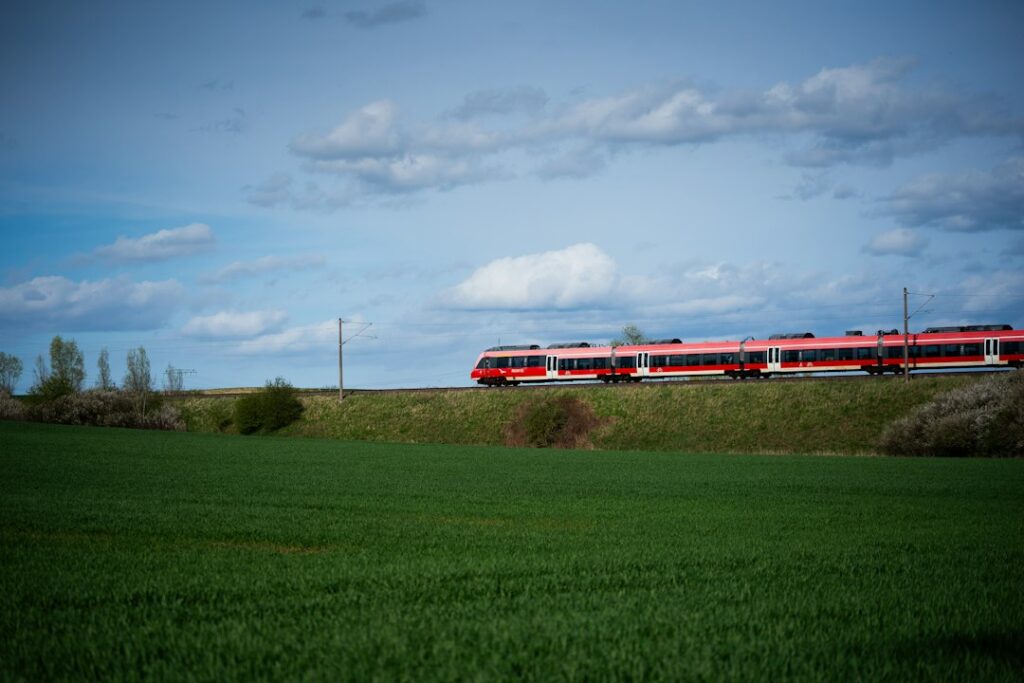
Germany’s high-speed ICE trains get the headlines, but the country’s regional rail network is what truly unlocks its castles, wine villages, Alpine trailheads, and market towns. The Regionalbahn (RB), Regional-Express (RE), and S-Bahn systems form a dense web connecting nearly every corner of the country—and understanding how to use them transforms your trip from a greatest-hits tour into an intimate exploration.
Here’s how to master Germany’s regional trains, from ticket strategies to platform etiquette.
Understanding the Regional Rail Hierarchy
Germany’s regional trains fall into three main categories. The S-Bahn (Stadtschnellbahn) serves metropolitan areas and their suburbs, stopping frequently—think of Munich’s S1 to the airport or Berlin’s ring system. The Regionalbahn (RB) is the local workhorse, stopping at nearly every station on rural and secondary routes. The Regional-Express (RE) skips smaller stops and moves faster between mid-sized cities.
All three are slower than intercity trains, but they’re also cheaper, more frequent on local routes, and don’t require advance reservations. A Regionalbahn from Koblenz to Cochem along the Moselle, for example, runs hourly, costs under €15, and stops at every wine village along the way—perfect for spontaneous castle visits or vineyard detours.
One key detail: regional trains are operated by Deutsche Bahn and several smaller companies (like Länderbahn in Bavaria or Metronom in Lower Saxony), but your ticket is usually valid across all of them within the state or region.
Tickets That Actually Make Sense
The best-kept secret of German regional rail is the Länder-Ticket, a day pass valid on all regional trains, S-Bahn, and most local buses and trams within a single federal state. The price starts around €25 for one person and increases modestly for groups up to five—making it unbeatable for day trips or multi-stop itineraries.
A Bayern-Ticket, for instance, covers unlimited travel across Bavaria from 9 a.m. on weekdays (midnight on weekends) until 3 a.m. the next day. You can ride from Munich to Füssen for Neuschwanstein, then backtrack to Garmisch-Partenkirchen for the Zugspitze cable car, all on one €27 ticket. Families and small groups travel for a fraction of what separate tickets would cost.
Most Länder-Tickets are available from DB ticket machines, online, or via the DB Navigator app. Choose the date, add passengers, and you’re set—no need to validate separately. For cross-state trips, look into the Quer-durchs-Land-Ticket, valid nationwide on regional trains for about €44 (solo) or €52 (for up to five people).
Navigation, Platforms, and Transfers
German regional trains are punctual, but connections can be tight—especially in smaller stations where a single missed train means an hour’s wait. The DB Navigator app is essential: it shows real-time delays, platform changes, and alternative routes. Always check your connection 10 minutes before departure.
Platform signage is straightforward. Look for the Gleis (track) number on departure boards, then follow signs to the correct platform. Trains display their route and final destination on digital boards along each car—double-check before boarding, especially at larger hubs like Cologne or Frankfurt, where multiple trains use the same platform minutes apart.
If you’re traveling with luggage or bikes, board cars marked with a bicycle symbol or luggage rack icon. Bicycles require a separate day ticket (usually €5–6), and space is limited—arrive early on summer weekends.
Insider Tips for Smooth Travel
Regional trains don’t have assigned seating, so grab a window seat early if you’re riding scenic routes like the Rhine Valley (Mainz to Koblenz) or the Bodensee-Oberschwaben line around Lake Constance. First class exists but is rarely worth the surcharge on short trips—second class is comfortable and rarely crowded outside rush hour.
Many smaller stations are unstaffed. Ticket machines accept cash and cards, but bring small bills just in case. If the machine is broken, board the train and inform the conductor immediately—they’ll sell you a ticket without penalty.
For day trips combining trains and local transport, consider city-specific day passes like Berlin’s AB or ABC zones, which include S-Bahn and U-Bahn. Munich’s entire public transport network is integrated into the Bayern-Ticket, so you can hop off the train, catch a tram to Marienplatz, then ride back out to Starnberg—all covered.
Where Regional Trains Shine
Regional rail is ideal for exploring the Rhine and Moselle valleys, where trains hug riverbanks and stop at medieval towns every few kilometers. The RB26 from Koblenz to Trier is a wine lover’s dream. In Bavaria, the RB from Munich to Prien am Chiemsee connects you to King Ludwig’s island palace, Herrenchiemsee.
In northern Germany, regional trains access the Baltic coast resorts—Stralsund, Wismar, Warnemünde—and the North Sea islands like Sylt. The Black Forest is laced with RE and RB lines, making car-free exploration of Freiburg, Triberg, and Titisee entirely feasible.
Even the approach matters. A regional train slows down enough to see half-timbered villages, vineyards, and castle ruins you’d miss on the Autobahn or an ICE train.
Germany’s regional trains aren’t just budget transport—they’re the key to the country’s smaller wonders. Subscribe to the Love Germany newsletter for one short story a day about where the trains can take you.
Tours & experiences in Germany


Powered by Viator. Some links are affiliate links — we may earn a small commission at no extra cost to you.