
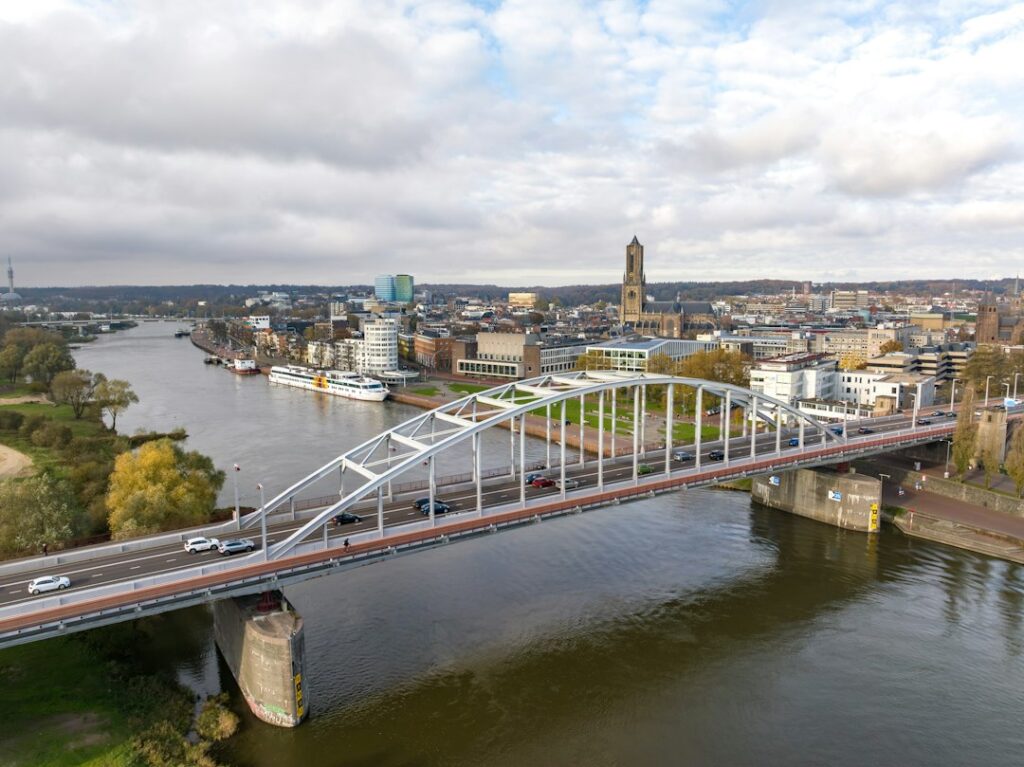
In September 1944, the Dutch city of Arnhem became the site of one of World War II’s most ambitious and tragic operations. Operation Market Garden, the Allied plan to capture key bridges across the Netherlands and advance into Germany, would forever link Arnhem with German military history in ways that still resonate today.
The battle at Arnhem Bridge, immortalized in the film A Bridge Too Far, saw British airborne forces attempt to hold the crossing against fierce German resistance. The operation lasted from September 17-26, 1944, with paratroopers holding the northern end of the bridge for several days in desperate conditions while German forces, including units hastily assembled from across the western front, fought to prevent the Allies from establishing a route into the industrial Ruhr region of Germany.
The German Defenders
The German forces at Arnhem included the 9th and 10th SS Panzer Divisions, which had been refitting near the city after earlier battles in Normandy. Their unexpected presence turned what Allied planners hoped would be a swift operation into a brutal urban battle. German commanders, including Field Marshal Walter Model who was residing at Hotel Tafelberg in Oosterbeek, coordinated the defense that ultimately forced the British withdrawal.
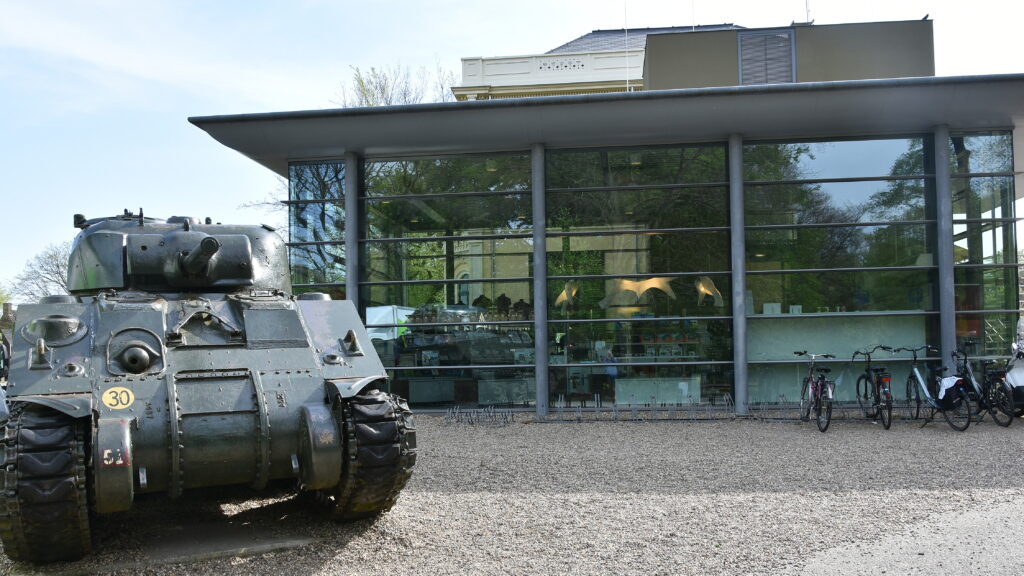
Today, visitors exploring an Arnhem Day Trip from Amsterdam can visit the Airborne Museum Hartenstein in Oosterbeek, housed in the former headquarters of British forces during the battle. The museum presents both Allied and German perspectives on the operation, including artifacts, uniforms, and personal accounts from soldiers on both sides.
Remembrance Across Borders
The German military cemetery at Ysselsteyn, about 50 kilometers from Arnhem, holds the graves of nearly 32,000 German soldiers who died in the Netherlands during World War II. It is the only German war cemetery in the Netherlands and serves as a sobering reminder of the conflict’s toll on all sides.
The annual commemoration at Arnhem Bridge each September draws veterans, relatives, and officials from Britain, Poland, Germany, and the Netherlands. German representatives participate in the ceremonies, acknowledging the shared history and the importance of reconciliation. The bridge itself, renamed John Frost Bridge after the British commander who defended it, stands as a physical link between the two nations’ wartime experiences.
From Battlefield to Partnership
In the decades since 1944, Arnhem and German cities have developed strong partnerships focused on peace and understanding. Educational exchanges bring German and Dutch students together to study the battle’s history and its lessons for contemporary Europe. The Gelderland region, where Arnhem is located, maintains active cultural and economic ties with neighboring German regions in North Rhine-Westphalia and Lower Saxony.
The landscape around Arnhem still bears subtle traces of the battle—preserved foxholes, memorial markers, and the famous bridge itself. For German visitors, the sites offer an opportunity to understand how their nation’s history intersected with Dutch experience during one of the war’s pivotal moments. The story of Arnhem is not just about military strategy or tactical failure; it’s about how two neighboring nations confronted a shared trauma and chose, ultimately, to build a shared future instead.
Tours & experiences in Germany


Powered by Viator. Some links are affiliate links — we may earn a small commission at no extra cost to you.