
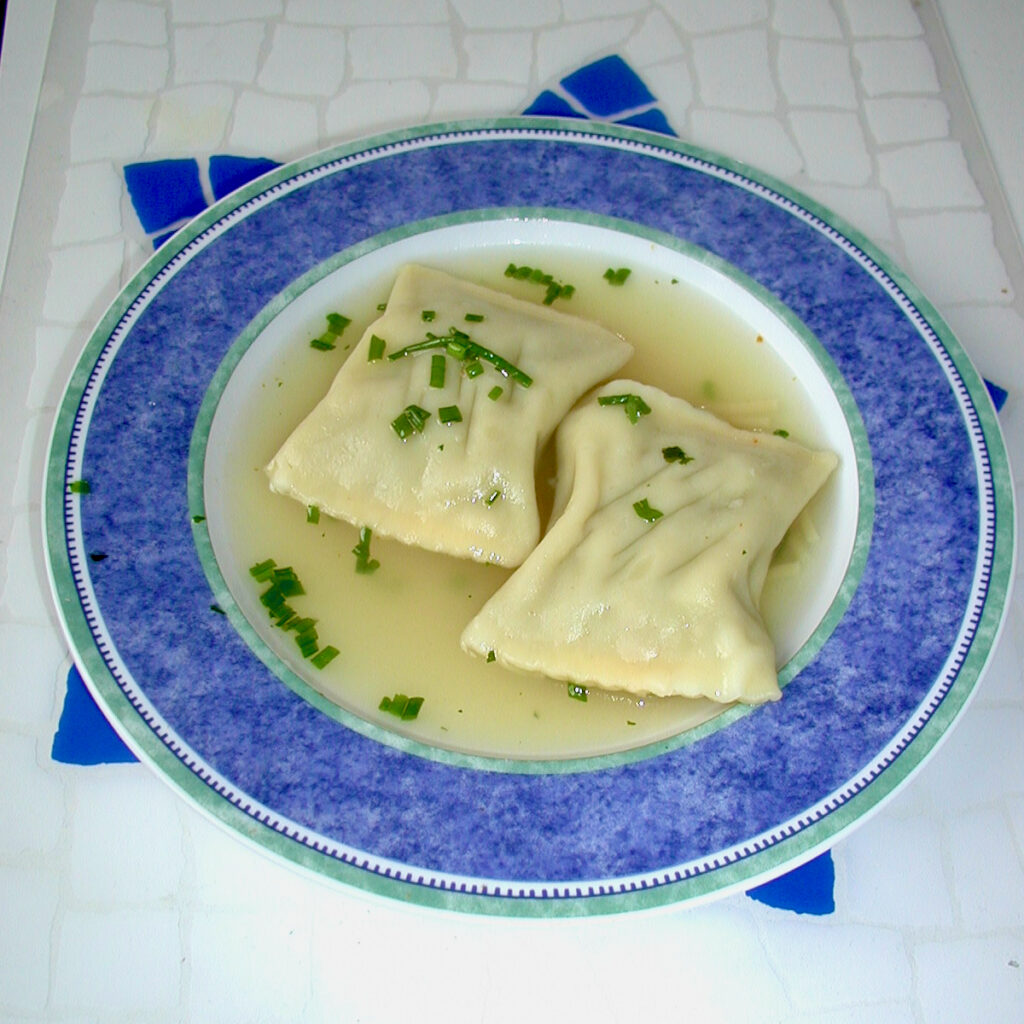
If Germany has a ravioli, it’s the Maultasche—a palm-sized pasta pocket from Swabia that’s part comfort food, part culinary legend. Stuffed with minced meat, spinach, onions, and breadcrumbs, these plump parcels earned the nickname Herrgottsbscheißerle—roughly, “little cheats on God”—because Cistercian monks at Maulbronn Abbey supposedly hid meat inside pasta during Lent, reasoning that if God couldn’t see it, it didn’t count.
Whether the story holds water or not, Maultaschen have been a Swabian staple for centuries, and in 2009 they earned protected geographical status from the EU. You’ll find them across Baden-Württemberg, from Stuttgart to Tübingen, served in broth, pan-fried in butter, or sliced cold in a salad. Here’s how to track down the real thing.
What Makes a Proper Maultasche
A traditional Maultasche is about the size of your hand, sealed at the edges with a fork crimp, and filled with a mixture that varies by kitchen but always includes pork or veal, spinach, onions, parsley, nutmeg, and soaked bread or breadcrumbs. Some cooks add marjoram or smoked meat; others keep it simple. The pasta dough is thin but sturdy enough to hold the filling through boiling.
You’ll see them served three main ways: in der Brühe (floating in a clear beef broth), geröstet (sliced and pan-fried with onions and eggs), or geschmälzt (whole, tossed in browned butter with onions). Each method has its devotees, and most Swabian restaurants offer all three.
The flavor is earthy and satisfying—less delicate than Italian ravioli, more rustic and filling. Think Sunday dinner, not fine dining, though plenty of Stuttgart chefs have elevated Maultaschen to something closer to art.
Where to Eat Maultaschen in Swabia
Stuttgart is ground zero. Head to Weinstube Fröhlich in the Mitte district for pan-fried Maultaschen with potato salad, or Zur Kiste near the Markthalle for the broth version alongside a glass of Trollinger. Both are no-frills neighborhood spots where locals eat lunch on Tuesdays and Sundays alike.
In Tübingen, try Gasthaus Forelle on the Neckar riverfront—their Maultaschen come with a side of local history and a view of the Stocherkahn punts gliding past. In Esslingen, Weinstube Einhorn serves them in a half-timbered dining room that hasn’t changed much since the 1600s.
If you’re near Maulbronn Abbey itself—a UNESCO World Heritage site and the alleged birthplace of the dish—the monastery’s café serves a respectable version, though purists will tell you to save your appetite for Stuttgart. The abbey itself, with its Romanesque and Gothic architecture, is worth the trip regardless.
Making Maultaschen at Home
If you’re staying in a vacation rental or want to bring the recipe home, fresh Maultaschen are sold at every supermarket in Baden-Württemberg, from Edeka to Rewe. Look for the Bürger brand, which has been making them since 1931, or seek out a local butcher who makes them in-house.
Cooking is simple: drop them into simmering salted water for about ten minutes until they float, then serve in broth or drain and fry. For the pan-fried version, slice the cooked Maultaschen into strips, sauté with onions in butter until crispy at the edges, then scramble in a couple of eggs at the end. Serve with a green salad and a bottle of Swabian Riesling or Trollinger.
Homemade dough takes time—most Swabians will tell you their grandmother’s recipe is the only correct one—but the filling is forgiving. Use what you have: leftover roast, sausage meat, chard instead of spinach. The key is seasoning it well with nutmeg, salt, and pepper, and not overstuffing the pasta.
Maultaschen Beyond Lent
Though the legend ties Maultaschen to Lent and fasting, Swabians eat them year-round. They show up at Christmas dinners, baptism lunches, and weeknight suppers. In spring, some cooks swap the spinach for wild garlic (Bärlauch), giving the filling a pungent, garlicky kick.
You’ll also find vegetarian versions now, stuffed with mushrooms, cheese, or lentils, catering to modern tastes while keeping the same hand-crimped shape and buttery finish. Purists may scoff, but the tradition is alive and adapting.
If you’re planning a trip through Baden-Württemberg, save room for Maultaschen at least once. Order them in broth if you want to taste the filling clearly, pan-fried if you want comfort and crunch. Either way, you’re eating a dish that’s been on Swabian tables for centuries, with a side of monastic mischief and a satisfying heft that no other pasta quite manages.
Want more stories like this from Germany? Subscribe to the Love Germany newsletter and get one short story a day—cities, food, culture, and the corners worth exploring.
Tours & experiences in Germany


Powered by Viator. Some links are affiliate links — we may earn a small commission at no extra cost to you.