
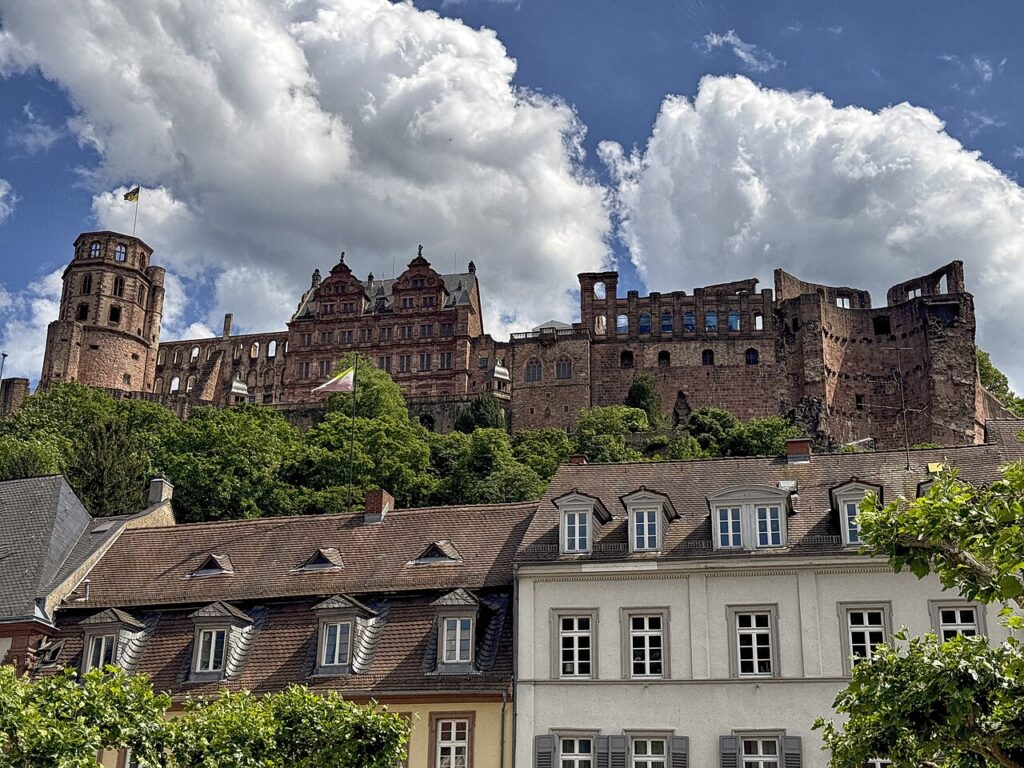
Rising dramatically above the Neckar River valley, Heidelberg Castle stands as one of Germany’s most captivating landmarks. This Renaissance masterpiece, partially destroyed centuries ago, combines romantic ruins with stunning architecture, while the old town below offers cobblestone streets, baroque splendor, and a vibrant university atmosphere that has inspired poets, philosophers, and travelers for generations.
Mark Twain called Heidelberg Castle “the most magnificent ruin,” and it’s easy to understand why. The castle complex sits 260 feet above the city, its red sandstone walls glowing warmly in the sunlight, creating an unforgettable silhouette against the forested hillside. Together with the picturesque Altstadt (old town), Heidelberg represents the Germany many visitors dream about—historic, romantic, and utterly charming.
The Castle: A Testament to Renaissance Glory
Heidelberg Castle’s history spans over 800 years, though what you see today primarily dates from the 16th and 17th centuries. The castle complex showcases exceptional German Renaissance architecture, particularly the Ottheinrich Building with its ornate facade featuring mythological figures and the Friedrich Building with its ancestor gallery.
The castle was partially destroyed by French troops in the 17th century and later struck by lightning, leaving it in picturesque ruins that became a symbol of German Romanticism. Rather than fully restoring it, authorities preserved this romantic state, creating a unique blend of restoration and ruin that captivates millions of visitors annually.
Don’t miss the world’s largest wine barrel, the Heidelberg Tun, which holds 58,000 gallons. Built in 1751, this enormous oak barrel symbolizes the region’s wine-making tradition. The German Pharmacy Museum, housed in the castle, offers a fascinating glimpse into centuries of medical history with original apothecary equipment and herb gardens.
The castle terrace provides spectacular panoramic views across Heidelberg’s old town, the Neckar River, and the surrounding hills. Visit at sunset for truly magical light, when the entire valley glows golden and the old town’s spires create dramatic silhouettes.
Exploring the Old Town Below
The Altstadt spreads along the Neckar’s southern bank, largely pedestrianized and remarkably well-preserved. The Hauptstrasse, one of Europe’s longest pedestrian streets, runs through the heart of the old town for over a mile, lined with baroque buildings, shops, cafes, and restaurants.
Heidelberg University, founded in 1386, is Germany’s oldest university and infuses the city with youthful energy. Visit the Old University building and the Student Prison (Studentenkarzer), where unruly students were once confined. The prison walls are covered with graffiti and drawings left by students between 1778 and 1914—a quirky historical treasure that reveals student life across centuries.
The Church of the Holy Spirit (Heiliggeistkirche) dominates the Marktplatz with its distinctive red sandstone tower. Climb the tower for another excellent viewpoint over the old town’s terracotta rooftops. The Old Bridge (Karl Theodor Bridge), with its distinctive gate towers and baroque statues, is perhaps Heidelberg’s most photographed spot. The bridge monkey statue is said to bring good luck and the promise of returning to Heidelberg if you touch it.
Practical Information and Getting There
Heidelberg lies in southwestern Germany, about 50 miles south of Frankfurt. The city is easily accessible by train, with regular connections from Frankfurt (one hour), Munich (three hours), and other major German cities. Frankfurt Airport offers the nearest international connections.
The castle is reachable by the Bergbahn funicular railway, which departs every few minutes from the Kornmarkt in the old town. You can also hike up via various footpaths in about 15-20 minutes—the steep climb rewards you with excellent views. A combination ticket includes funicular transport, castle entry, and the Pharmacy Museum.
Spring through fall offers the best weather, with April through October being peak season. The castle is particularly beautiful during the Castle Illuminations, held three times yearly (typically June, July, and September), when fireworks recreate the historical fires that destroyed parts of the fortress. The Heidelberg Christmas Market, held in various squares throughout the old town, transforms the city into a winter wonderland from late November through December.
Insider Tips for Your Visit
Arrive early in the morning or late afternoon to avoid cruise ship crowds, especially during summer. The castle opens at 8:00 AM, and early visits offer quieter exploration and better photography light.
Consider purchasing the Heidelberg Card, which includes public transportation, castle admission, funicular rides, and discounts at museums and restaurants. It’s available for one, two, or four days.
For a memorable meal, the old town offers everything from traditional German taverns to international cuisine. Zum Roten Ochsen and Zum Seppl are historic student taverns serving hearty German fare in authentic settings. For lighter options, explore the side streets off Hauptstrasse where locals gather.
The Philosophers’ Walk (Philosophenweg) on the Neckar’s opposite bank provides stunning views of the castle and old town. This hillside path, where university professors once strolled while deep in thought, offers the best photography vantage point and takes about an hour to walk. Access it via the Old Bridge and a steep stairway, or take bus 33 to the top.
If time permits, take a short boat cruise on the Neckar River for yet another perspective on this romantic city, or explore the surrounding Neckar Valley with its vineyards, hiking trails, and charming villages.
Tours & experiences in Germany


Powered by Viator. Some links are affiliate links — we may earn a small commission at no extra cost to you.