
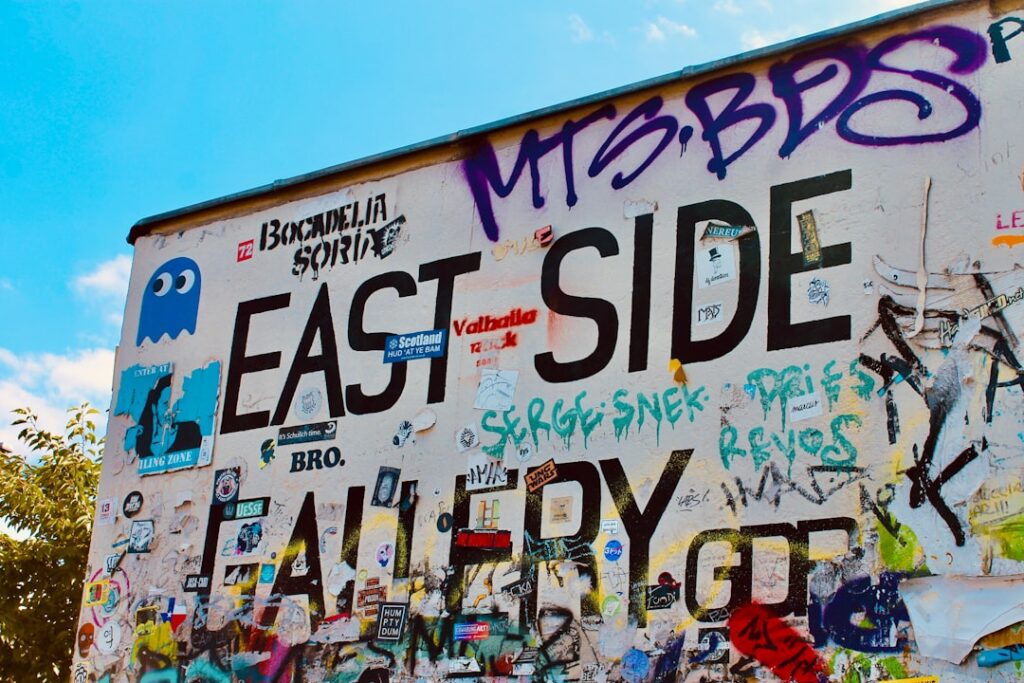
Standing along the banks of the Spree River in Berlin’s Friedrichshain neighborhood, the East Side Gallery represents one of the most powerful and colorful monuments to freedom in the world. This 1.3-kilometer stretch of the Berlin Wall has been transformed into an open-air gallery featuring 105 murals painted by artists from 21 countries, creating a vivid testament to the fall of the Iron Curtain and the reunification of Germany. More than just a tourist attraction, the East Side Gallery serves as a living canvas where history, art, and politics converge in one of Europe’s most moving memorials.
A Canvas Born from Freedom
In the spring of 1990, just months after the Berlin Wall fell on November 9, 1989, artists from around the world gathered to paint the eastern side of this concrete barrier that had divided Berlin for 28 years. Unlike the graffiti-covered western side that had been accessible throughout the Cold War, the eastern side remained pristine and untouched until German reunification. This blank canvas became an opportunity for artists to commemorate the peaceful revolution and express their hopes for a unified future.
The result is an extraordinary collection of political commentary, satirical observations, and expressions of joy and hope. Among the most famous works is Dmitri Vrubel’s “My God, Help Me to Survive This Deadly Love,” depicting the infamous socialist fraternal kiss between Soviet leader Leonid Brezhnev and East German President Erich Honecker. Equally iconic is Birgit Kinder’s “Test the Best,” showing a Trabant car breaking through the wall—a symbol of East Germans’ desire for freedom and the Western world beyond the barrier.
What to See and Experience
Walking the entire length of the East Side Gallery takes approximately 30 to 45 minutes at a leisurely pace, though many visitors spend considerably longer photographing and contemplating the artwork. The gallery runs along Mühlenstraße between the Oberbaum Bridge and the Ostbahnhof station, making it easily accessible and difficult to miss.
Beyond the two most photographed murals, take time to discover lesser-known gems like Kani Alavi’s “Es geschah im November” (It Happened in November), depicting a sea of faces surging through a breach in the wall. Thierry Noir’s colorful, cartoon-like faces represent some of the first artworks ever painted on the western side of the wall during the 1980s, later recreated here. Each mural carries its own message about freedom, unity, political change, or human rights.
At the southern end near the Oberbaum Bridge, you’ll find a visitor center with historical information, photographs from the Cold War era, and context about the wall’s construction and fall. Several original watchtowers still stand nearby, offering additional historical perspective on the border fortifications that once divided the city.
Planning Your Visit
The East Side Gallery is accessible 24 hours a day, seven days a week, and completely free to visit. However, daylight hours are strongly recommended both for safety and for properly viewing and photographing the artwork. Early morning visits, particularly on weekdays, offer the best chance to experience the gallery without crowds—a rare opportunity for unobstructed photographs of the most popular murals.
The closest public transportation options include the Warschauer Straße S-Bahn and U-Bahn station at the northern end, and the Ostbahnhof station at the southern end. Both provide excellent access, allowing you to walk the gallery in either direction. The surrounding Friedrichshain neighborhood has excellent cafés, restaurants, and bars, making it easy to combine your visit with a meal or refreshment.
Spring and fall offer the most pleasant weather for outdoor exploration, though the gallery takes on special significance during the first two weeks of November, when Berlin commemorates the anniversary of the wall’s fall with various cultural events and ceremonies. Summer brings the longest daylight hours and vibrant street life, while winter visits can be atmospheric despite the cold, especially if you’re fortunate enough to see the murals dusted with snow.
Insider Tips for Art and History Enthusiasts
While the East Side Gallery itself is free, consider joining a guided tour for deeper historical context and stories behind individual murals. Several local companies offer walking tours that combine the gallery with other Berlin Wall sites, providing a comprehensive understanding of the city’s division and reunification.
Many murals have been restored or repainted due to weather damage and vandalism, sometimes by the original artists and sometimes by others. For this reason, the paintings you see today may differ slightly from their 1990 originals—a controversial but necessary aspect of preservation. A comparative photo exhibit near the visitor center shows how some works have evolved over time.
After viewing the gallery, cross the iconic Oberbaum Bridge to explore the Kreuzberg neighborhood, or walk north along the Spree River to discover more alternative art spaces and beer gardens. The nearby RAW-Gelände, a former railway repair station turned cultural complex, offers additional street art, flea markets on weekends, and a taste of Berlin’s famous alternative culture.
Remember that the East Side Gallery is a protected monument—touching or adding your own marks to the wall is illegal and disrespectful to both the artists and the historical significance of the site. Plenty of legal graffiti walls exist elsewhere in Berlin for those seeking interactive art experiences.
Tours & experiences in Germany


Powered by Viator. Some links are affiliate links — we may earn a small commission at no extra cost to you.