
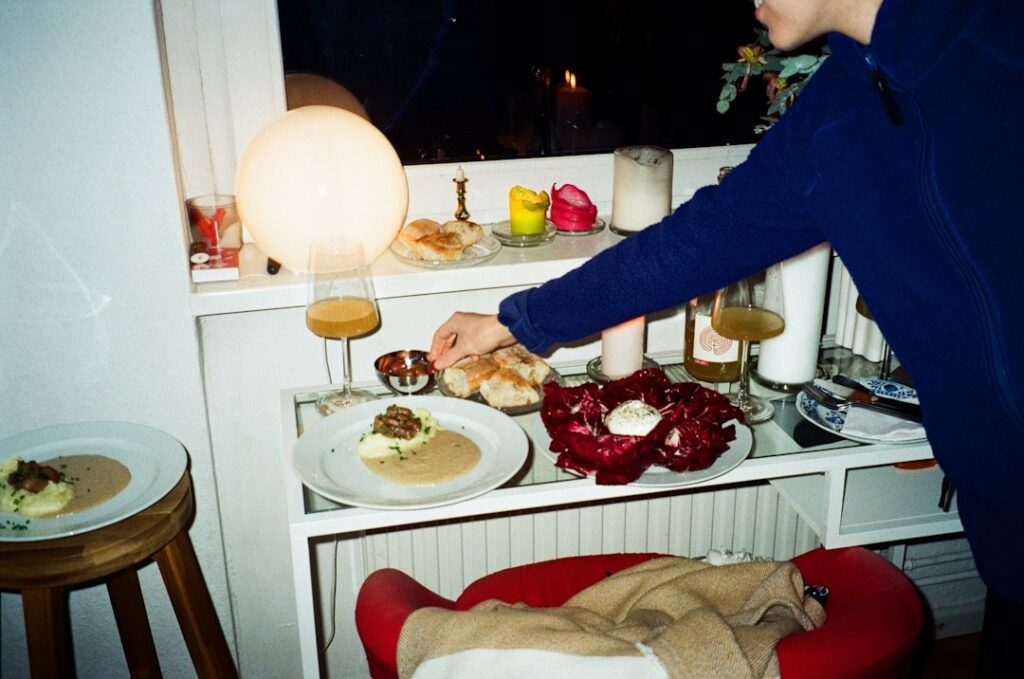
The German breakfast—Frühstück—isn’t a hurried affair of pastries grabbed on the run. It’s a spread: bread baskets piled with rolls and sliced loaves, plates of cold cuts and cheese, soft-boiled eggs presented in little china cups, sweet jams, honey, butter curls, and strong coffee. Whether you’re staying in a small Bavarian guesthouse or a Hamburg hotel, understanding what’s on the table transforms your morning from confusing to delicious.
Here’s what makes a proper German breakfast, where to find the best versions, and what to ask for when you sit down.
The Bread Basket: Heart of the Table
Germans take bread seriously, and breakfast is where that devotion shows. The basket arrives with a mix: crusty Brötchen (rolls), darker Vollkornbrot (whole-grain bread), tangy Roggenbrot (rye), and sometimes seeded Mehrkornbrötchen (multigrain rolls). Each region has its favorites—denser, darker loaves in the north; lighter rolls in Bavaria.
The ritual is simple: split a roll, spread it with butter, then layer on cold cuts or cheese. Or go sweet with jam or honey. No one’s judging if you do both.
In bakeries, ask for a Laugenbrötchen—a pretzel roll with a chewy, salty crust—if you want something more distinctive. It’s common in Bavaria and Baden-Württemberg, perfect with butter and a slice of mild cheese.
Cold Cuts, Cheese, and the Egg Cup
The German breakfast leans savory. Expect thin-sliced Aufschnitt (cold cuts): ham, salami, sometimes liverwurst or Bierschinken (a mild bologna-style sausage studded with ham). Cheese comes in variety too—Gouda, Tilsiter, Butterkäse (a mild, creamy cheese), and occasionally smoked varieties.
Then there’s the egg. Germans love a soft-boiled egg served in a china egg cup, top sliced off with a knife, yolk still runny. You scoop it out with a small spoon, often salting it lightly. Hotels and guesthouses almost always offer this, and it’s a breakfast highlight worth mastering. If you prefer scrambled, ask for Rührei.
Sweet options include jams—often several kinds, from strawberry to apricot to the tart Sauerkirschmarmelade (sour cherry). Honey, especially in rural areas, is often local and superb. Nutella makes frequent appearances, beloved across generations.
Where to Experience the Best Frühstück
Hotel breakfasts across Germany tend to be generous, but the most authentic spreads come from small, family-run guesthouses and Pensionen. In Bavaria, try a Bauernfrühstück (farmer’s breakfast) at a rural inn—you’ll get farm-fresh eggs, house-cured meats, homemade jams, and bread from the local bakery.
For an urban experience, head to a traditional café. In Munich, Café Frischhut serves excellent pastries alongside classic breakfast fare. In Berlin, Café Einstein Stammhaus offers a Viennese-style breakfast with German touches—eggs, cold cuts, and excellent coffee in a grand setting. Hamburg’s Café Paris on Rathausmarkt does a refined version with French influences but keeps the German bread basket.
Bakeries often have small seating areas where you can order a roll, a coffee, and watch locals do the same. In smaller towns along the Rhine or in Franconia, this is the most genuine way to start your day.
What to Drink and When to Arrive
Coffee is standard—strong, often served in a press pot or as Filterkaffee. Cappuccino and espresso are common now, but traditional spots might offer Milchkaffee (half coffee, half hot milk). Tea drinkers will find black tea and herbal infusions; ask for Schwarztee or Kräutertee.
Juice is almost always on the table—orange, apple, or Multivitaminsaft, a mixed fruit juice Germans drink without irony.
Breakfast is typically served from 7:00 or 8:00 a.m. until 10:00 or 11:00 a.m. Hotels may extend this on weekends, but smaller guesthouses keep stricter hours. Arrive early if you want the fullest selection and the freshest rolls.
A Ritual Worth Slowing Down For
The German breakfast isn’t flashy. There are no stacks of pancakes, no eggs Benedict. But it’s honest, generous, and designed to fuel a day of walking cobblestone streets, hiking forest trails, or exploring castles. It’s a meal that rewards patience and appreciation for simple things done well.
Take your time. Build your perfect roll. Try the liverwurst even if you’re hesitant. Pour another cup of coffee. This is how Germans start their day, and once you’ve experienced it properly, you’ll understand why they wouldn’t have it any other way.
Want more stories like this? Subscribe to the Love Germany newsletter—one short story about Germany, delivered to your inbox every day.
Tours & experiences in Germany


Powered by Viator. Some links are affiliate links — we may earn a small commission at no extra cost to you.