
Between 1880 and 1924, more than two million Jews left Eastern Europe for America, but their story begins earlier—in the German states of the mid-19th century. From the 1840s onwards, German Jews were among the first wave of Jewish immigrants to New York City, establishing communities, businesses, and synagogues that would shape the landscape for the far larger Eastern European migration that followed.
German-Jewish immigrants arrived in New York with different circumstances than their Eastern European counterparts. Many came from urban centers like Berlin, Frankfurt, and Hamburg, bringing commercial experience, craft skills, and often some capital. They settled initially in Lower Manhattan, establishing themselves as merchants, tailors, and shopkeepers. By the 1870s, successful German-Jewish families had begun moving uptown, but their legacy remained embedded in the Lower East Side’s institutional fabric.
The Infrastructure of Two Communities
When the great wave of Eastern European Jews began arriving in the 1880s—fleeing pogroms in Russia, Poland, and Romania—they encountered an established German-Jewish community. Educational Alliance, founded in 1889 on East Broadway, was created by uptown German Jews to help Americanize the downtown Eastern European arrivals.
This relationship was complex and sometimes fraught. The established German-Jewish community, anxious about their own hard-won social standing, worried that the impoverished, Yiddish-speaking masses might trigger antisemitism. Yet they also felt responsibility, funding settlement houses and schools. Meanwhile, Eastern European Jews built their own institutions: Beth Israel Hospital was founded in 1889 by Orthodox Eastern European Jews on the Lower East Side to serve their own community, specifically because existing German-Jewish hospitals uptown were unwelcoming to Eastern European immigrants.
Two Communities, One Neighbourhood
The cultural differences were stark. German Jews had largely adopted Reform Judaism and spoke German or English. The newcomers practiced Orthodox Judaism and spoke Yiddish. German Jews had embraced American dress and customs; Eastern Europeans arrived in traditional garb. Both groups shared the Lower East Side’s crowded tenements, its pushcart markets, and its synagogues—though often in separate institutions reflecting their distinct traditions and tensions.
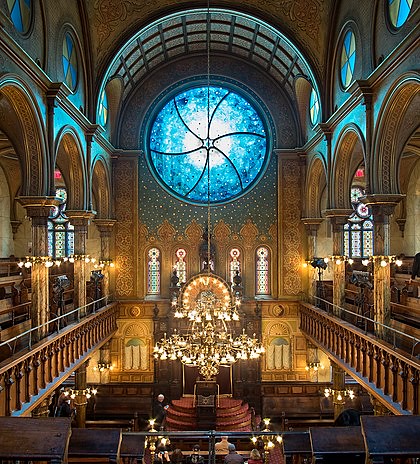
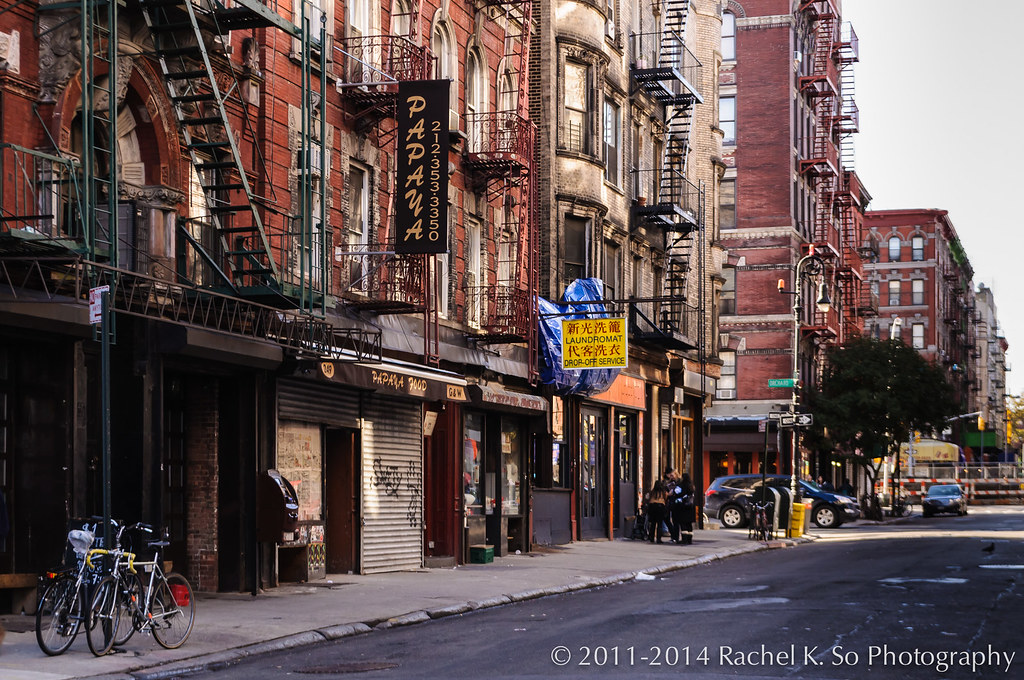
The story of this migration and the world it created is preserved today in The Lower East Side That Jewish Immigrants Built, where visitors can still walk streets that witnessed one of history’s great population movements. The Eldridge Street Synagogue, completed in 1887, stands as a monument to Eastern European Jewish ambition and self-determination.
Visiting the Legacy Today
In Germany, the Jewish Museum Berlin and the Museum Judengasse in Frankfurt document the lives German Jews left behind. In New York, the Tenement Museum on Orchard Street tells the story of what both communities built. The German-Jewish legacy is woven throughout: in the architectural styles they favored, in some of the charitable institutions they founded, and in the business district they established along Grand Street and Broadway.
For travelers tracing family history, the connection between Germany and New York’s Lower East Side represents a crucial chapter in the Jewish diaspora. Records at the Leo Baeck Institute in New York hold extensive documentation of German-Jewish immigration, while Ellis Island’s archives contain the arrival records of millions who made the journey.
This transatlantic story reminds us that immigration is rarely simple, and that the relationship between established immigrant communities and newcomers is often marked by both assistance and tension.
Tours & experiences in Germany


Powered by Viator. Some links are affiliate links — we may earn a small commission at no extra cost to you.