
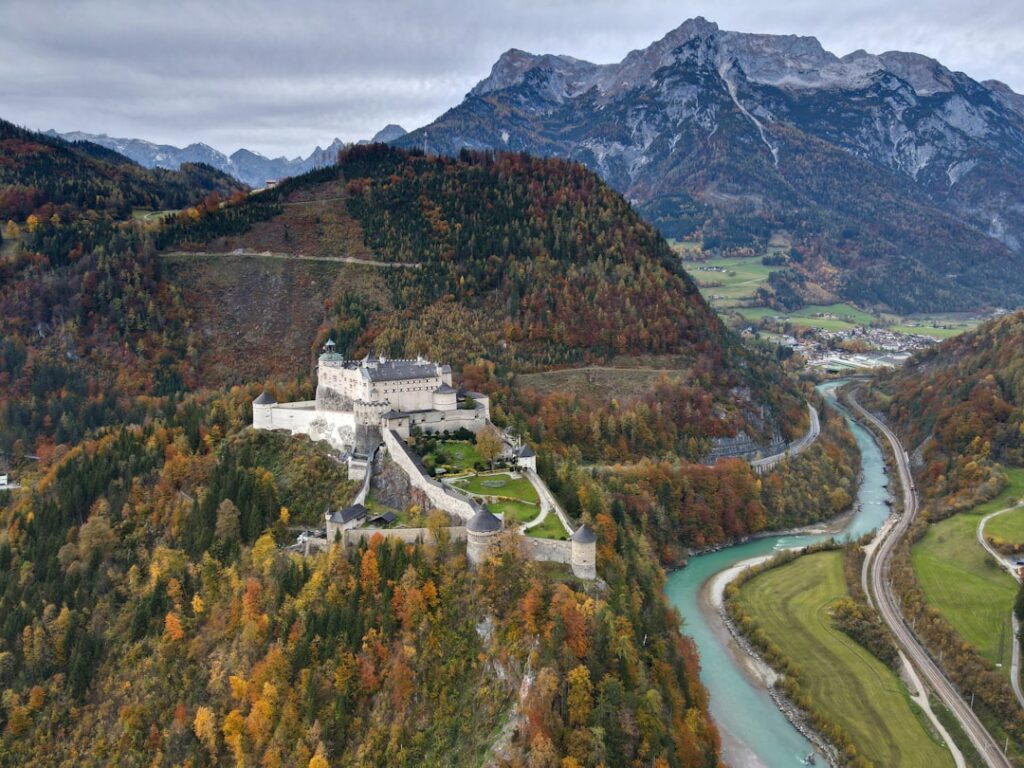
Rising above the confluence of the Rhine and Moselle rivers, Festung Ehrenbreitstein commands attention. At 118 meters above the water, this massive fortress has watched over Koblenz for two centuries, its honey-colored walls and bastions visible from miles away. It’s Europe’s second-largest preserved fortress, and unlike many German castles built for romance or display, this one meant business.
The fortress you see today dates from 1817 to 1828, built by the Prussians after Napoleon’s forces demolished an earlier structure. They designed it to be impregnable—and they nearly succeeded. The fortress never fell to enemy attack, though it came close during World War II when Allied bombing damaged parts of the complex.
Getting to the Top
You have two ways up: the scenic route or the practical one. The Seilbahn Koblenz cable car whisks you from the banks of the Rhine to the fortress plateau in about four minutes, gliding over vineyards and offering spectacular views of the Deutsches Eck below, where the two rivers meet. The cable car runs year-round except during high winds, and the ride itself is worth the admission price.
If you prefer to earn your views, take the walking path from the riverside. It’s a steep 20-minute climb through the Festungspark, but you’ll pass through old defensive positions and get a feel for just how formidable these fortifications were. The path winds through gates and tunnels designed to funnel—and trap—any attacking force.
Inside the Fortress Walls
Once inside, you’ll find the fortress is more than just military architecture. The sprawling complex houses the Landesmuseum Koblenz, with exhibits on regional history and archaeology. The photography museum showcases cameras and images spanning nearly two centuries. In summer, the courtyards host concerts and medieval festivals.
But the real draw is walking the ramparts and exploring the defensive positions. The fortress was designed as a self-contained city that could house 1,500 soldiers for months. You can peer into powder magazines, walk through ammunition storage rooms carved deep into the rock, and stand in the same positions where Prussian gunners could rain fire on any army approaching Koblenz.
The views from the main observation terrace are magnificent. You see both rivers stretching into the distance, the old town of Koblenz spread below, and on clear days, the Eifel hills to the west and the Taunus mountains to the south. Bring binoculars if you have them—river traffic on the Rhine provides constant entertainment, from massive cargo barges to small excursion boats.
Practical Information
The fortress is open daily from April through October, and weekends only in winter. Combined tickets for the cable car and fortress admission offer the best value. Plan at least two hours to explore properly—more if you want to visit the museums or linger in the café.
The on-site restaurant, Ehrenbreitstein, serves solid regional food with those million-dollar views. It’s pricier than eating in town, but the terrace seating overlooking the rivers makes lunch here memorable. Try the Flammkuchen or a simple bratwurst with local mustard.
If you’re visiting in summer, check the event calendar. The fortress hosts everything from classical concerts to medieval markets to wine festivals. The Christmas market in December transforms the main courtyard into something magical, with the lights of Koblenz twinkling below.
Wear comfortable walking shoes—the fortress covers a huge area, and many paths are cobblestone or gravel. The site is partially accessible for wheelchairs via the cable car and main level, though many defensive positions require stairs.
Festung Ehrenbreitstein works perfectly as part of a day in Koblenz. Combine it with a stroll through the old town, a visit to the Deutsches Eck monument, or a boat ride on either river. The fortress gives you the big picture—literally—of why this spot mattered so much for so long. Two rivers, multiple nations, and centuries of history all meet right here, 118 meters above the water.
Want more stories from Germany’s castles, fortresses, and historic sites delivered to your inbox? Subscribe to the Love Germany newsletter and get one short story a day—no fluff, just the Germany you came to discover.
Tours & experiences in Germany


Powered by Viator. Some links are affiliate links — we may earn a small commission at no extra cost to you.