
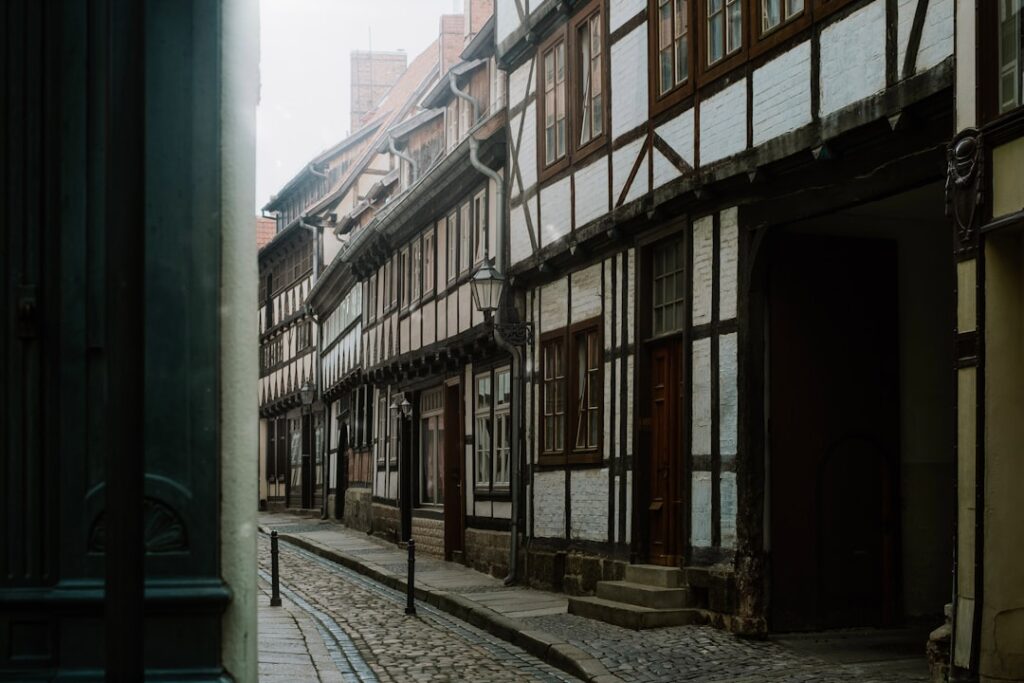
The Second World War left indelible marks on both Berlin and London, two capital cities that endured relentless aerial bombardment and emerged transformed. While Londoners sheltered in Underground stations during the Blitz, Berliners took refuge in massive flak towers and U-Bahn tunnels as Allied bombers turned the tide of the air war. Today, both cities preserve the ruins, memorials, and stories of those who lived through the firestorm.
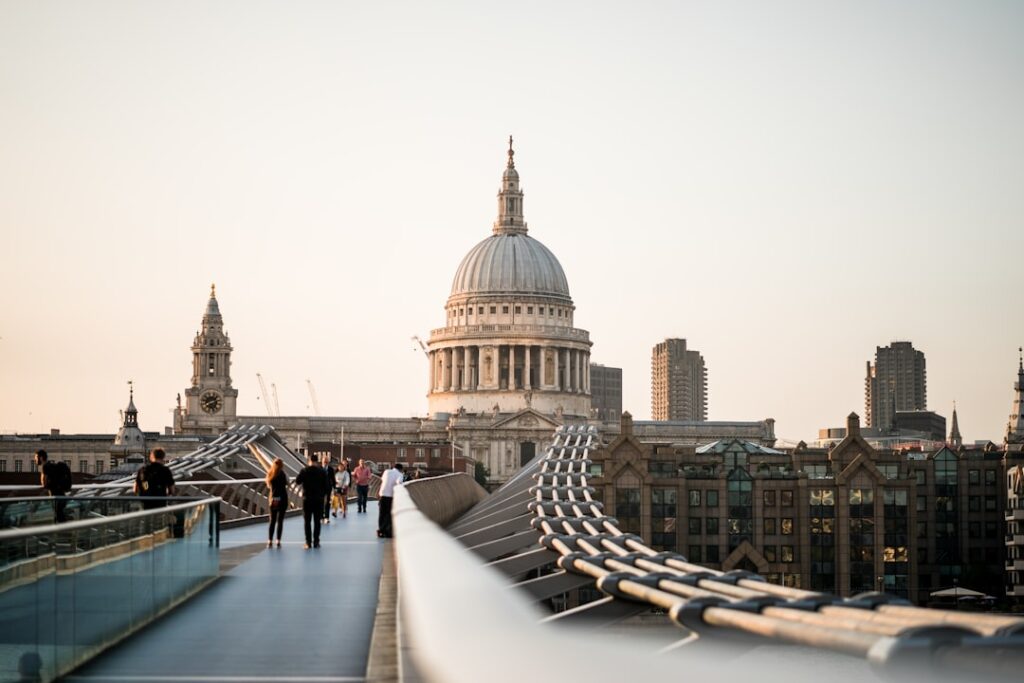
The connection between these two cities is written in rubble and remembrance. Between September 1940 and May 1941, the German Luftwaffe conducted sustained bombing raids on London, killing more than 40,000 civilians and destroying vast swaths of the East End, the City, and surrounding boroughs. London’s Blitz became a defining chapter in British wartime memory, with the dome of St Paul’s Cathedral standing defiantly amid the flames serving as an enduring symbol of resilience.
Berlin’s reckoning came later but with even greater devastation. Beginning in 1940, the Royal Air Force launched bombing campaigns against the German capital, with the United States Army Air Forces joining from 1943. By the war’s end in 1945, an estimated 20,000 to 50,000 Berliners had been killed in air raids, and roughly a third of the city’s buildings lay in ruins.
Ruins That Remain
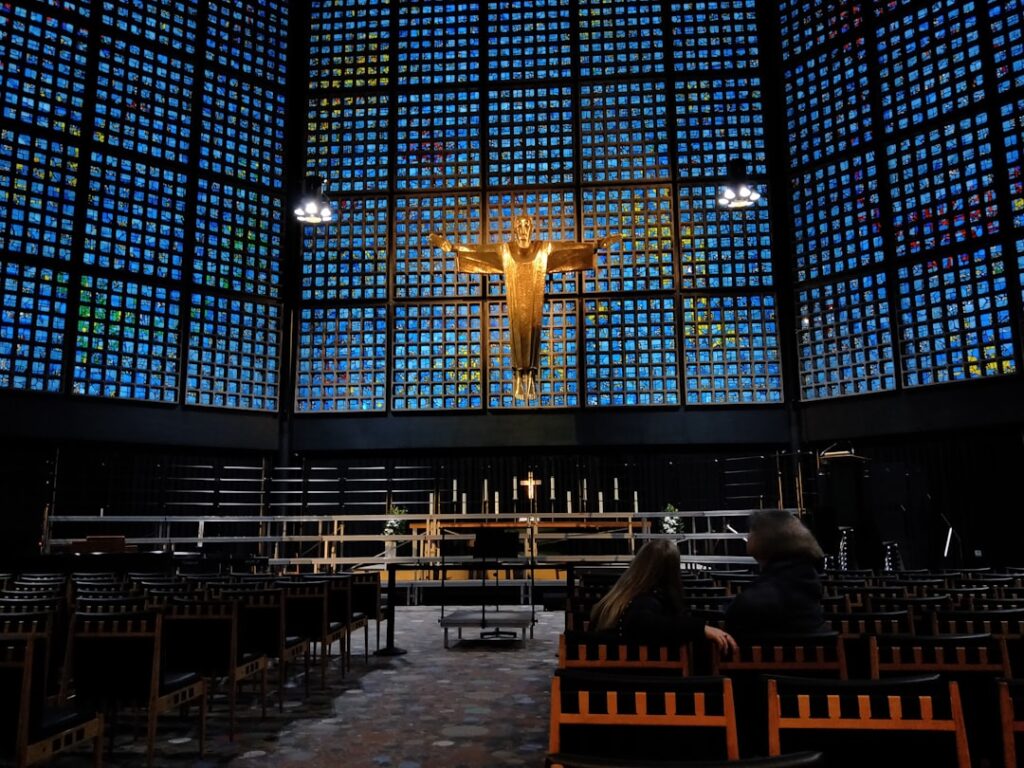
Both cities chose to preserve certain ruins as memorials rather than rebuild them completely. In Berlin, the Kaiser Wilhelm Memorial Church stands on Breitscheidplatz with its damaged spire deliberately left as a stark reminder of destruction. The hollow bell tower, its interior exposed to the sky, serves as a powerful monument to peace. Similarly, London preserved several bombed churches, whose ruined walls now frame public gardens in the heart of the City.
Underground Shelters
The civilian experience of aerial warfare created parallel underground worlds in both capitals. Londoners famously sheltered in Tube stations, with 177,000 people recorded on platforms on the peak night of 27 September 1940 during the height of the Blitz. Some stations, like the Clapham South deep-level shelter, can still be visited today.
Berlin’s shelter system was more architecturally ambitious. Massive flak towers—enormous concrete fortresses combining anti-aircraft batteries with civilian shelters—dominated the skyline. The Humboldthain Flakturm, partially demolished after the war, remains as a rubble-covered hill in a public park, its interior tunnels still accessible. Thousands more Berliners sheltered in reinforced U-Bahn stations and purpose-built bunkers, some of which now serve as museums and memorial sites.
A Shared Memory
Today, both Berlin and London grapple with how to remember the bombing campaigns—as victims, as aggressors, as survivors. The story is never simple. The same RAF crews who defended London in 1940 later carried the war to Berlin with devastating effect. German bombers that terrorized London also returned to burning cities at home.
Walking through either city, the careful observer can still read this history in the architecture: the abrupt transitions from Victorian to postwar brutalism, the isolated medieval churches surrounded by 1960s concrete, the memorials tucked into unexpected corners. These are cities rebuilt on their own rubble, forever marked by the war that connected them in tragedy.
Tours & experiences in Germany


Powered by Viator. Some links are affiliate links — we may earn a small commission at no extra cost to you.